





Buying an app from developers means hiring an individual developer, freelance development team, or professional app development company to create, customize, sell, or transfer a mobile or web application based on your business requirements. In simple terms, you are paying technical experts to turn an app idea into a working digital product. This may involve building a completely custom app from scratch, modifying a ready-made solution, purchasing existing source code, or working with a development company to design, develop, test, launch, and maintain the app for your business.
For many businesses, buying an app from developers is not just a technical decision. It is a business decision that affects launch speed, cost, product quality, customer experience, revenue, and long-term scalability. A well-built app can help a company sell products online, manage bookings, automate internal workflows, connect buyers and sellers, deliver services on demand, improve customer support, or create an entirely new digital business model. A poorly planned app purchase, however, can lead to budget overruns, weak performance, security issues, missing source code, unclear ownership, and expensive redevelopment later.
This is why understanding how to buy apps from developers is important before starting the project. Many startups, small business owners, enterprises, and non-technical founders prefer buying apps from developers instead of assembling an in-house technical team because it gives them faster access to specialized skills. Building an internal team requires hiring mobile developers, backend engineers, UI/UX designers, QA testers, DevOps specialists, project managers, and product experts. That process can take months, and it also adds fixed salaries, management overhead, recruitment costs, and long-term operational responsibility. By working with app developers or an app development company, businesses can begin faster, use an experienced team, and focus more on business strategy, customer acquisition, and market validation.
For non-technical founders, this approach is especially useful because they may have a strong business idea but lack the technical knowledge required to build the product themselves. A good developer or development company helps convert business goals into app features, user journeys, system architecture, database structure, admin panels, integrations, and launch plans. When someone asks, “How do I buy an app from developers without making costly mistakes?”, the practical answer is to start with clear requirements, choose the right development partner, confirm ownership terms, review the technical approach, test the product properly, and secure long-term support before launch.
This guide is written for startup founders, small business owners, agencies, entrepreneurs, product managers, and companies planning to buy mobile apps, web apps, SaaS platforms, marketplace apps, ecommerce apps, on-demand service apps, or custom business software. It is also useful for buyers who are comparing freelancers, app development companies, white-label app providers, and ready-made app sellers. Whether you want to launch a minimum viable product, modernize an existing business, create a customer-facing app, or build internal software for your team, the buying process must be handled carefully.
The goal of this guide is to explain how to buy apps from developers in a structured and practical way. It covers what app buying really means, the types of apps you can buy, where to find developers, how to evaluate them, what the buying process looks like, how much app development may cost, what legal and ownership terms to check, and which mistakes to avoid. By the end, you should have a clear understanding of how to approach developers with confidence and make informed decisions before investing in an app.
What Does It Mean to Buy an App from Developers?
Buying an app from developers can mean different things depending on the buyer’s business goal, budget, timeline, and technical requirements. In most cases, it means paying a developer, freelance team, or app development company to create, customize, sell, or transfer a software application that can be used by customers, employees, vendors, or business partners. The app may be a mobile app for iOS and Android, a web application, a SaaS platform, an ecommerce app, a marketplace, an internal business tool, or a fully custom digital product.
The important point is that buying an app is not always the same as buying a finished product from a shelf. Sometimes the buyer is purchasing a custom development service. Sometimes they are buying a ready-made app that can be rebranded and customized. In other cases, they may be purchasing an existing app along with its source code, admin panel, database, and documentation. Understanding these different models helps buyers avoid confusion, compare pricing correctly, and choose the right approach before speaking with developers.
-
Buying a Custom-Built App
The most common meaning of buying an app from developers is hiring them to build a custom application from scratch. In this model, the app is designed and developed around the buyer’s specific business requirements, user workflows, features, branding, integrations, and monetization goals. For example, a logistics startup may need a parcel delivery app with customer ordering, runner assignment, live tracking, pricing rules, payment collection, and admin reporting. A healthcare clinic may need an appointment booking app with patient intake forms, reminders, doctor availability, and staff dashboards. An ecommerce business may need a mobile shopping app connected to inventory, payments, shipping, coupons, and customer support.
Custom app development gives the buyer the highest level of control because the product is built according to their requirements. The user roles, feature flow, design, database structure, admin panel, integrations, security rules, and future scaling plan can all be planned from the beginning. This is useful when the business model is unique, the app needs specific workflows, or the buyer wants to create a long-term digital product instead of using a generic template. When someone asks, “Can I buy an app from developers that matches my exact business idea?”, custom development is usually the best option.
However, custom-built apps usually require more planning, a higher budget, and a longer timeline than ready-made options. The buyer must clearly define the app idea, prepare requirements, approve designs, review development milestones, test the product, and plan post-launch maintenance. The advantage is that the final product can be more aligned with the business, easier to scale, and better suited for serious commercial use.
-
Buying a Ready-Made or White-Label App
Another common way to buy an app from developers is to purchase a ready-made or white-label app. These are pre-built software products that already include core features for a specific business model. Examples include food delivery apps, grocery apps, taxi booking apps, doctor appointment apps, ecommerce apps, learning management systems, dating apps, real estate platforms, marketplace templates, SaaS starter kits, and clone apps inspired by popular platforms.
A white-label app can usually be customized with the buyer’s brand name, logo, color scheme, content, pricing rules, payment gateway, and selected feature changes. This model is attractive for businesses that want to launch quickly and do not need a fully unique product from day one. For example, a local business that wants a basic delivery app may prefer a ready-made solution instead of spending months on custom development. A startup that wants to test demand for a SaaS idea may use a starter kit and customize the product after early validation.
The main benefit of ready-made apps is speed. Since the basic system is already built, the buyer can reduce development time and sometimes lower the initial cost. The main risk is limitation. Some ready-made apps are poorly coded, difficult to customize, or built with outdated technology. Others may look good in demos but fail when real users start using them. Buyers should carefully check whether the app includes clean source code, a working backend, admin panel access, documentation, scalability, and support. A ready-made app is useful only when the underlying product is technically reliable and flexible enough for the buyer’s business needs.
-
Buying an Existing App With Source Code
Some buyers purchase an already-built app with full source code. This may happen when a developer, agency, marketplace seller, or previous app owner is selling a completed application. In this model, the buyer may receive the mobile app code, web app code, backend code, database structure, admin panel, API documentation, deployment files, and sometimes app store assets. The buyer may then rebrand, modify, relaunch, or continue improving the app.
Buying an existing app with source code can be useful when the buyer wants a faster starting point but still wants more control than a closed white-label solution allows. For example, an entrepreneur may buy a marketplace app source code and ask developers to customize the vendor flow, payment process, commission rules, and customer interface. A company may buy an internal CRM source code and modify it for its own sales team. A SaaS founder may purchase a starter codebase and build industry-specific features on top of it.
This approach requires careful technical due diligence. The buyer should confirm whether the source code is original, transferable, legally usable, and complete. They should also check whether the code uses licensed third-party components, whether documentation is available, whether the database structure is understandable, and whether the app can be deployed without depending on the original seller. If the buyer does not have technical knowledge, it is wise to hire an independent developer or technical consultant to review the code before purchase.
-
Buying App Development Services, Not Just Software
In many real-world projects, the buyer is not only purchasing an app. They are purchasing a complete app development service. This service may include business analysis, requirement gathering, UI/UX design, wireframing, frontend development, backend development, database design, API integration, payment gateway setup, testing, deployment, app store submission, cloud hosting configuration, maintenance, and long-term support.
This distinction is important because an app is not just a screen that users download. A working app usually depends on multiple connected parts. The mobile app or web interface is only one layer. Behind it, there may be an admin panel, backend server, database, APIs, notifications, analytics, authentication, payment processing, security controls, and third-party integrations. If any part is missing or poorly built, the app may not work properly in real business conditions.
For this reason, buyers should not ask only, “How much does it cost to buy an app?” A better question is, “What exactly is included when I buy this app from the developer?” The answer should clarify whether the price includes design, development, testing, source code, documentation, deployment, support, bug fixing, hosting setup, app store launch, and future maintenance. A low-cost app may become expensive later if it excludes essential services.
Buying an app from developers should therefore be viewed as a structured business and technical engagement. Whether the buyer chooses custom development, a white-label app, an existing source code purchase, or a full development service, the goal should be the same: to receive a reliable, usable, legally owned, and maintainable software product that supports the business objective.
Why Businesses Buy Apps Instead of Building from Scratch Internally
Businesses buy apps from developers instead of building them entirely with an internal team because it is often faster, more practical, and less risky, especially in the early stages of product development. Building an app internally may sound attractive because the business has full control over the team and process. However, in reality, hiring and managing an in-house product team requires time, money, technical leadership, and ongoing operational responsibility. Many startups, small businesses, enterprises, and non-technical founders choose to work with external app developers because they need a reliable product without spending months recruiting engineers, designers, testers, and project managers.
Buying an app from experienced developers does not always mean purchasing a finished product. In most cases, it means hiring specialists who already understand app architecture, UI/UX design, backend systems, mobile development, cloud deployment, third-party integrations, app store submission, and long-term maintenance. This approach gives businesses access to technical execution without forcing them to build a complete software department before they have validated the business model.
-
Faster Time to Market
One of the strongest reasons businesses buy apps from developers is faster time to market. When a company wants to launch a mobile app, web app, marketplace, SaaS platform, ecommerce app, or internal business system, speed matters. A delay of three to six months can affect customer acquisition, investor interest, competitive positioning, and revenue opportunities. If a business tries to build everything internally from day one, the first challenge is hiring the right people. Finding skilled developers, designers, QA testers, and project managers can take weeks or months. After hiring, the team still needs time to understand the idea, define the architecture, create designs, build workflows, test features, and prepare the app for launch.
Experienced app developers can shorten this process because they already have delivery systems, technical workflows, reusable components, design practices, testing methods, and project management structures in place. A professional development company can usually begin with discovery, wireframes, feature planning, and technical scoping much faster than a newly hired internal team. This reduces early-stage confusion and helps the business move from idea to working product more efficiently.
Buying an app from developers also reduces product development risk. Many first-time app buyers underestimate the complexity behind user login, dashboards, payment gateways, notifications, admin panels, database design, security, API integrations, and performance testing. A skilled development team can identify these requirements early and prevent costly mistakes. When someone asks, “Why should I buy an app from developers instead of hiring my own team first?”, the most practical answer is that external developers can help the business launch faster while avoiding many technical planning gaps that slow down internal teams.
-
Lower Initial Hiring Burden
Building an internal app development team requires more than hiring one software developer. A serious app project usually needs multiple roles. Mobile developers build the iOS and Android applications. Frontend developers create the web interface. Backend developers build the server-side logic, APIs, databases, authentication, business rules, and admin functionality. UI/UX designers plan the user experience and visual design. QA engineers test the app across devices, browsers, workflows, and user scenarios. DevOps engineers handle hosting, deployment, server configuration, monitoring, and performance. Project managers coordinate communication, timelines, milestones, and delivery. Product specialists help translate business goals into features and priorities.
For many businesses, especially startups and small companies, hiring all these roles internally before launch is financially difficult. Salaries, recruitment fees, onboarding time, software tools, management effort, and employee retention can create a heavy burden before the app generates revenue. Even if the business hires a small internal team, skill gaps may appear quickly. One developer may be good at mobile apps but not backend systems. Another may understand frontend design but not cloud deployment or payment gateway integration. These gaps can delay the project and increase dependency on external help later.
Buying an app from developers allows the business to access a ready team without carrying the full hiring burden. The buyer pays for the project, milestone, or engagement instead of building a permanent department immediately. This is especially useful when the business wants to launch an MVP, test demand, digitize a workflow, or create a first version of a product before committing to a larger internal team. After the app proves traction, the business can decide whether to continue with the external team, build an internal team gradually, or use a hybrid model.
-
Access to Specialized Technical Skills
Modern app development requires specialized technical skills across multiple platforms, frameworks, and infrastructure layers. A buyer may need a native iOS app, native Android app, Flutter app, React Native app, web dashboard, backend system, cloud setup, admin panel, analytics, AI integration, payment gateway, SMS integration, email automation, map API, and third-party business software integration. Each of these areas requires different expertise.
For example, a mobile-first app may need developers who understand Swift or Kotlin for native development, or Flutter and React Native for cross-platform development. A SaaS platform may require backend development with Node.js, Laravel, Python, Django, or similar frameworks. An ecommerce or marketplace app may need payment gateway integration, order management, inventory logic, seller dashboards, commission handling, refund workflows, and notification systems. An AI-powered app may require AI model integration, prompt engineering, vector databases, document processing, chat interfaces, or workflow automation. A scalable product may need cloud infrastructure on AWS, Azure, or Google Cloud, along with database design, API security, server monitoring, and backup planning.
Buying an app from experienced developers gives businesses access to these skills without hiring separate specialists for every technical area. This is one of the main reasons companies prefer external development teams for complex or multi-platform projects. A reliable app development company can assign the right people to the right parts of the project, such as UI/UX design, mobile development, backend engineering, quality testing, and deployment. This reduces technical risk and improves the chances of building an app that works properly in real business conditions.
-
Better for Non-Technical Founders
For non-technical founders, buying an app from developers is often the most realistic path to launching a digital product. Many founders understand the market, customer problem, revenue model, and business opportunity, but they may not know how to define software architecture, choose a technology stack, design APIs, plan a database, review code quality, or manage development sprints. This gap can make internal hiring difficult because the founder may not know how to evaluate technical talent or guide the team effectively.
Working with professional developers gives non-technical founders access to technical execution without requiring them to manage every engineering detail. A good technical partner can help convert the business idea into clear features, user roles, app screens, workflows, database logic, admin functions, integrations, and launch phases. Instead of trying to explain everything in technical terms, the founder can describe the business objective, target users, and desired outcome. The development team can then translate those requirements into a practical build plan.
This does not mean the founder should be passive. The buyer still needs to review designs, approve features, test workflows, give feedback, and make product decisions. However, they do not need to personally write code, configure servers, or solve technical implementation problems. When the collaboration is structured properly, the founder remains focused on customers, sales, operations, fundraising, and market validation, while the development team handles the technical build.
-
Suitable for MVPs and Market Testing
Buying an app from developers is especially suitable for MVPs and market testing. A minimum viable product is the first usable version of an app that includes the core features needed to test whether customers actually want the product. For many businesses, building and launching an MVP is smarter than investing heavily in a full-scale product before validating demand. It allows the company to test real user behavior, pricing, workflows, marketing channels, and operational assumptions with a controlled budget.
An MVP app may include only the essential features needed to prove the idea. For example, a marketplace MVP may start with user registration, listings, search, inquiry flow, payment, and admin management. A delivery app MVP may begin with order placement, runner assignment, live status updates, pricing, and basic support. A SaaS MVP may include user accounts, subscription plans, core dashboard features, reports, and billing. Once the business receives user feedback, the next version can include automation, advanced analytics, AI features, loyalty programs, integrations, or mobile enhancements.
Buying an MVP from developers helps businesses avoid overbuilding. Many founders are tempted to include every possible feature in the first version, but this increases cost, delays launch, and creates unnecessary complexity. Experienced developers can help prioritize must-have features and separate them from future enhancements. This makes the first version easier to build, test, and improve.
For startups and growing businesses, the main advantage is flexibility. They can buy a focused app from developers, launch it to real users, collect feedback, measure demand, and then decide whether to scale. This reduces financial risk and gives the business more evidence before making larger investments. In that sense, buying an app from developers is not only a way to get software built. It is a practical route to test a business idea, enter the market faster, and make smarter product decisions based on real user response.
Types of Apps You Can Buy from Developers
Businesses can buy many different types of apps from developers, depending on the industry, target users, business model, and level of customization required. Some buyers need a mobile app for customers. Others need a web platform for internal operations, a SaaS product for subscription revenue, an ecommerce app for online sales, or an AI-powered tool to automate workflows. The right type of app depends on what the business wants to achieve, who will use the product, how the app will generate value, and how much technical flexibility is required after launch.
Before buying an app from developers, it is important to understand the main app categories available in the market. This helps buyers ask better questions, compare proposals correctly, and avoid paying for features they do not need. A startup building a marketplace will have very different requirements from a company buying an employee portal or a clinic purchasing an appointment booking system. The app type affects design, development cost, timeline, technology stack, integrations, testing needs, and maintenance planning.
-
Mobile Apps
Mobile apps are one of the most common types of apps businesses buy from developers. These apps are built for smartphones and tablets and are usually distributed through the Apple App Store and Google Play Store. A mobile app may be customer-facing, employee-facing, vendor-facing, or used by field teams. Examples include delivery apps, fitness apps, ecommerce apps, healthcare booking apps, education apps, social apps, travel apps, finance apps, and local service apps.
There are three main development approaches for mobile apps: native Android apps, native iOS apps, and cross-platform apps. Native Android apps are built specifically for Android devices, usually using Kotlin or Java. Native iOS apps are built specifically for Apple devices, usually using Swift. Native development is often preferred when the app requires high performance, advanced device-level features, complex animations, or deep integration with operating system capabilities.
Cross-platform apps are built using frameworks such as Flutter or React Native. These frameworks allow developers to create apps for both Android and iOS using a shared codebase. For many startups and small businesses, this is an attractive option because it can reduce development time and cost compared to building two separate native apps. Cross-platform development is commonly used for MVPs, ecommerce apps, booking apps, service apps, social platforms, dashboards, and business apps where speed and budget efficiency matter.
When buying a mobile app from developers, businesses should clarify whether the quote includes Android only, iOS only, or both platforms. They should also confirm whether the app includes backend development, admin panel, API integrations, push notifications, analytics, payment gateways, app store deployment, and post-launch updates. A mobile app is rarely just the visible app interface. It usually depends on a backend system that manages users, data, content, transactions, notifications, and business rules.
-
Web Apps
Web apps are software applications accessed through a browser rather than downloaded from an app store. Businesses buy web apps from developers when they need platforms that can be used on desktops, laptops, tablets, and mobile browsers. Web apps are common for admin dashboards, customer portals, vendor portals, SaaS platforms, CRMs, ERPs, marketplaces, learning platforms, business management systems, analytics tools, and internal workflow systems.
A web app is different from a basic website. A website usually presents information, while a web app allows users to log in, perform actions, manage data, submit requests, view dashboards, process transactions, communicate with other users, and complete workflows. For example, a real estate marketplace web app may allow property owners to list properties, buyers to search and inquire, agents to manage leads, and admins to approve listings. A business management web app may allow employees to manage inventory, generate reports, track approvals, and assign tasks.
Buying a web app from developers can be a strong option when the product does not need app store distribution or heavy device-specific functionality. Web apps are easier to update because changes can be deployed on the server without requiring users to download a new app version. They can also serve as the backend dashboard for mobile apps. Many serious app projects include both a customer-facing mobile app and a web-based admin panel, making web development a central part of the overall purchase.
-
Ecommerce Apps
Ecommerce apps are built to help businesses sell products or services online. These apps may include product catalogs, search, filters, shopping carts, wishlists, user accounts, coupons, order management, payment gateways, shipping integration, inventory tracking, reviews, returns, refunds, and customer support. Businesses can buy ecommerce apps as mobile apps, web apps, or both.
There are different types of ecommerce apps depending on the business model. A single-vendor ecommerce app is suitable for a business selling its own products directly to customers. A grocery delivery app may include product categories, time-slot delivery, substitutions, wallet payments, delivery partner assignment, and live order tracking. A B2B ecommerce platform may include bulk ordering, quote requests, custom pricing, credit limits, purchase approvals, and company-level buyer accounts. A multi-vendor marketplace app allows multiple sellers to list products while the platform owner manages commissions, payments, disputes, and seller performance.
When buying an ecommerce app from developers, buyers should focus on operational features, not only design. The app should support inventory accuracy, order flow, payment reliability, shipping rules, tax configuration, product management, return handling, and admin control. Many ecommerce projects fail because the buyer focuses on the customer interface but ignores backend operations. A good ecommerce app must work smoothly for customers, sellers, delivery teams, support staff, and administrators.
-
On-Demand Service Apps
On-demand service apps connect customers with service providers in real time or near real time. These apps are popular because customers expect fast booking, transparent pricing, live status updates, and convenient digital payments. Common examples include food delivery apps, parcel delivery apps, taxi booking apps, bike taxi apps, home service apps, healthcare appointment booking apps, logistics apps, beauty service apps, laundry apps, repair service apps, and local service platforms.
An on-demand app usually has multiple user roles. A food delivery app may include customers, restaurants, delivery partners, and administrators. A parcel delivery app may include senders, runners, support teams, and operations managers. A taxi app may include riders, drivers, dispatchers, and admins. Because of this, buying an on-demand app is more complex than buying a simple mobile app. The system may require live tracking, pricing algorithms, service availability, provider assignment, route management, real-time notifications, ratings, wallet management, cancellation rules, and dispute handling.
Businesses buying on-demand apps should be clear about their operational model before development starts. For example, will orders be assigned automatically or manually? Will customers pay online, in cash, or both? Will providers have their own app? Will there be service zones, surge pricing, commissions, cancellation fees, or scheduled bookings? These decisions affect the app structure and must be planned early.
-
SaaS Products
SaaS products are subscription-based software applications that users access online. Instead of selling the software once, the business charges customers monthly, yearly, or based on usage. SaaS products are common in project management, appointment scheduling, accounting, HR management, CRM, marketing automation, analytics, workflow automation, document management, customer support, booking systems, and AI-powered business tools.
Buying a SaaS product from developers is different from buying a simple app because SaaS platforms usually need multi-tenant architecture, user roles, subscription billing, plan-based access, team management, usage limits, onboarding flows, dashboards, reports, notifications, security controls, and admin-level management. The platform owner also needs the ability to manage customers, subscriptions, invoices, feature access, support requests, and usage data.
For founders asking, “Can I buy a SaaS app from developers and launch it as a subscription business?”, the answer is yes, but the project must be planned carefully. SaaS products need long-term thinking because users expect reliability, data security, regular improvements, and continuous support. The first version may start as an MVP with limited features, but the architecture should allow future upgrades, integrations, and scaling.
-
AI-Powered Apps
AI-powered apps use artificial intelligence to automate tasks, improve decision-making, personalize experiences, or assist users through intelligent features. Businesses can buy AI-powered apps from developers for customer support, document automation, content generation, recommendation systems, voice assistants, AI chatbots, AI agents, image recognition, fraud detection, workflow automation, predictive analytics, and internal knowledge management.
For example, an ecommerce app may use AI to recommend products based on browsing behavior. A healthcare app may use AI to summarize patient intake forms or automate appointment reminders. A real estate app may use AI chatbots to qualify leads. A logistics app may use AI to assist with route planning, delivery updates, or support queries. An enterprise app may use AI agents to process documents, answer employee questions, or automate repetitive workflows.
When buying an AI-powered app from developers, buyers should understand that AI features require more than adding a chatbot interface. The app may need clean data, API access to AI models, prompt design, workflow logic, human review controls, privacy safeguards, model monitoring, and fallback handling. AI can improve the app’s value, but only when it is connected properly to business workflows and user needs.
-
Internal Business Apps
Internal business apps are built for employees, managers, operations teams, field staff, or back-office users. These apps may not be visible to customers, but they can have a major impact on productivity, accuracy, reporting, and operational control. Common examples include employee portals, inventory systems, operations dashboards, approval management systems, reporting tools, workflow systems, HR portals, field service apps, warehouse apps, procurement systems, and task management platforms.
Businesses often buy internal apps when spreadsheets, emails, WhatsApp messages, and manual processes are no longer enough to manage daily operations. For example, a company may need an inventory app to track stock across multiple locations, an approval app to manage purchase requests, a field reporting app for sales teams, or an operations dashboard to monitor orders, staff performance, and customer issues. These apps help standardize workflows and reduce dependency on scattered manual communication.
The main advantage of buying an internal business app is customization. Off-the-shelf software may not match how a company actually works. A custom internal app can be built around specific approval rules, user roles, reports, data fields, permissions, and workflows. This makes it easier for teams to use the system and for management to get reliable business visibility.
Choosing the right app type is one of the first major decisions when buying from developers. A mobile app, web app, ecommerce app, on-demand platform, SaaS product, AI-powered app, or internal business system will each require different planning. The clearer the buyer is about the app category and business objective, the easier it becomes to estimate cost, define features, choose developers, and build a product that performs well after launch.
Where to Find Developers or App Development Companies
Finding the right developer is one of the most important steps when buying an app. A good app idea can fail if the development partner lacks technical depth, communication discipline, product understanding, or post-launch support. On the other hand, the right developer or app development company can help refine the idea, reduce technical risk, create a better user experience, and build a product that can grow with the business. Buyers should not look only for someone who can write code. They should look for a reliable technical partner who understands the app’s business purpose, user journey, backend requirements, integrations, testing needs, ownership terms, and maintenance expectations.
There are several places where businesses can find developers or app development companies. The best option depends on the project size, budget, timeline, technical complexity, and the buyer’s ability to manage development. A simple prototype may be suitable for a freelancer. A full mobile app with backend, admin panel, payment gateway, APIs, and long-term support is usually better handled by a professional app development company. A buyer looking for a fast launch may explore ready-made app marketplaces, while a founder with a unique business model may need custom development from a dedicated team.
-
App Development Companies
App development companies are often the safest choice for full app projects because they provide a structured team instead of relying on one person. A serious app project usually needs UI/UX designers, frontend developers, backend developers, mobile developers, QA engineers, DevOps support, project managers, and sometimes business analysts. A development company can bring these roles together under one delivery process, which makes the project easier to manage and less dependent on a single developer.
This matters because buying an app is rarely limited to coding. The project may require requirement analysis, wireframes, user journey planning, UI design, database architecture, API development, admin panel creation, payment gateway integration, security checks, testing, deployment, app store submission, and maintenance. A company is more likely to have processes for each stage, including documentation, sprint planning, milestone reviews, quality assurance, and support after launch. This structure helps reduce misunderstandings and gives the buyer more accountability.
For businesses asking, “Where can I find developers to build a complete app for my company?”, an app development company is usually the most practical answer when the project involves multiple users, business workflows, custom features, integrations, or future scaling. Companies are also better suited for non-technical founders because they can guide the buyer through technical decisions without expecting them to manage every detail. The cost may be higher than hiring an individual freelancer, but the added project management, testing, design quality, and long-term reliability can make the investment safer.
When evaluating app development companies, buyers should review their portfolio, case studies, client testimonials, technology expertise, team structure, communication process, support policy, and source code ownership terms. A strong company should be able to explain how it will take the project from idea to launch, not just quote a price based on a feature list.
-
Freelance Platforms
Freelance platforms are another common place to find app developers. These platforms allow businesses to hire individual developers, designers, testers, and technical specialists for specific tasks or full app projects. Freelancers can be useful for MVPs, small apps, bug fixing, UI changes, prototype development, code review, or specific technical work such as payment gateway integration, Flutter development, React Native development, backend API development, or app store deployment.
The main advantage of freelance platforms is flexibility. Buyers can compare developers based on skills, hourly rates, reviews, portfolios, location, and availability. Freelancers may also be more affordable than full-service agencies, especially for narrow tasks or smaller projects. A startup with a limited budget may hire one mobile developer, one backend developer, and one designer separately to build the first version of an app.
However, freelance hiring requires careful vetting. The buyer must check whether the freelancer has experience with similar apps, whether their past work is real, whether they can communicate clearly, and whether they can handle deadlines. Freelance projects can become risky when the app requires multiple disciplines and the buyer has to coordinate everything alone. If one freelancer disappears, delivers poor code, or misunderstands the requirement, the project can slow down quickly.
Buyers should also be careful about unclear ownership, incomplete source code delivery, missing documentation, weak testing, and lack of maintenance. Before hiring freelancers, the buyer should define the scope clearly, set milestones, confirm deliverables, request access to the code repository, and agree on communication frequency. Freelancers can be a good option when the buyer knows how to manage development or has a technical advisor. For non-technical buyers building a serious commercial app, a company or managed team may be safer.
-
Developer Marketplaces
Developer marketplaces are useful for buyers who want ready-made source code, app templates, SaaS starter kits, clone apps, marketplace templates, and white-label app solutions. These marketplaces usually list pre-built software products that buyers can purchase, download, customize, and deploy. Common examples include ecommerce templates, food delivery app scripts, taxi app clones, booking platforms, CRM systems, admin dashboards, SaaS boilerplates, mobile app UI kits, and marketplace source code.
This option is attractive when the buyer wants to reduce development time. Instead of building every feature from scratch, the buyer can start with an existing codebase and ask developers to customize it. For example, a business may buy a ready-made grocery app source code and customize the branding, payment gateway, delivery zones, product categories, and admin panel. A SaaS founder may buy a starter kit with authentication, billing, user roles, and dashboard structure already included, then add industry-specific features.
The main risk is quality. Many marketplace templates look impressive in demos but may have poor code quality, outdated libraries, weak security, limited documentation, or difficult customization paths. Some products may not be suitable for real business use without major redevelopment. Buyers should not assume that buying a template means the app is launch-ready. They should ask whether the code is clean, whether it includes backend and admin features, whether documentation is complete, whether the license allows commercial use, and whether customization support is available.
Developer marketplaces are best used as a starting point, not a shortcut that removes the need for technical review. If the buyer does not have technical knowledge, they should ask an experienced developer or development company to review the code before committing to the solution. A cheap template can become expensive if it needs to be rebuilt later.
-
Referrals and Professional Networks
Referrals are one of the safest ways to find reliable app developers because they come with some level of trust. A recommendation from another founder, business owner, agency, consultant, investor, or professional contact can reduce hiring risk. When someone has already worked with a developer and had a good experience, the buyer gets useful insight into communication quality, delivery reliability, technical competence, pricing behavior, and post-launch support.
Professional networks are especially valuable because app development is not only about technical skills. A developer may be talented but unreliable. Another may be affordable but poor at documentation. A company may show a strong portfolio but fail at communication. Referrals help reveal these practical details before the buyer starts the project. They can also help identify developers who have experience in a specific industry, such as healthcare, ecommerce, logistics, fintech, education, real estate, or SaaS.
Buyers can ask their network for recommendations by sharing a short description of the app, required platforms, preferred budget range, timeline, and type of developer needed. For example, a founder may ask other founders if they know a reliable team for building a Flutter app with a Node.js backend and payment integration. A business owner may ask an agency partner if they know a company that can build a custom marketplace. A product manager may ask former colleagues for development teams that have handled SaaS dashboards or enterprise software.
Even with referrals, due diligence is still necessary. A developer who performed well on one project may not be suitable for another. Buyers should still review portfolios, ask technical questions, check references, discuss ownership terms, and request a proper proposal before signing an agreement.
-
LinkedIn and Direct Outreach
LinkedIn and direct outreach can also help buyers find developers and app development companies. Many agencies, software companies, freelance developers, CTOs, product studios, and technical consultants maintain active LinkedIn profiles and portfolio pages. Buyers can search for terms such as mobile app development company, Flutter developer, React Native developer, SaaS development company, ecommerce app developer, marketplace app development, AI app developer, or custom software development company. They can then review company pages, founder profiles, employee skills, client posts, case studies, testimonials, and shared project examples.
LinkedIn is useful because it allows buyers to see both company-level and people-level credibility. A development company may have a polished website, but LinkedIn can show whether the team is active, whether employees have relevant experience, whether leadership communicates clearly, and whether clients or partners engage with the company. Buyers can also use LinkedIn to ask for references, connect with founders who have worked with a company, or compare multiple agencies before starting conversations.
Direct outreach through company websites is also effective. Many app development companies publish portfolios, case studies, service pages, industry pages, technology expertise, and contact forms. A buyer can shortlist companies, send a clear project brief, and request discovery calls or proposals. The first response itself often reveals a lot. A reliable company will usually ask thoughtful questions about the business model, users, features, timeline, integrations, and launch goals. A weak vendor may simply quote a price without understanding the scope.
When searching through LinkedIn, portfolio pages, case studies, and founder networks, buyers should avoid choosing developers based only on surface-level claims. The goal is to find a partner who can understand the business, explain the technical route, provide realistic pricing, commit to clear deliverables, and support the app after launch. The best place to find developers is not always a single platform. It is often a combination of app development companies, vetted freelancers, developer marketplaces, referrals, professional networks, and direct outreach. The stronger the vetting process, the better the chances of buying an app that is reliable, maintainable, and suitable for long-term business use.
How to Evaluate an App Developer Before Buying
Evaluating an app developer before buying is one of the most important steps in the entire app purchase process. A developer may have an attractive website, polished sales pitch, or low price, but that does not automatically mean they can build a reliable app for your business. The right developer should understand your business model, ask detailed questions, explain the technical approach clearly, provide realistic estimates, and show evidence of past delivery. The goal is not only to find someone who can write code. The goal is to find a developer or development company that can build, test, launch, and support an app that works in real business conditions.
Many app projects fail because buyers choose developers too quickly. They may select the cheapest quote, trust a basic demo, or assume that all developers can build the same quality of product. In reality, app development requires multiple capabilities, including product planning, UI/UX design, frontend engineering, backend development, database architecture, mobile app development, API integration, testing, deployment, security, and maintenance. Before buying an app from developers, buyers should evaluate whether the developer has the experience, technical depth, process, and support structure needed for the project.
-
Review Their Portfolio
The first step is to review the developer’s portfolio. A portfolio shows the type of apps the developer has built before, the industries they have served, the technologies they have used, and the level of design and functionality they can deliver. Buyers should not only look at screenshots. They should check whether the developer has built apps similar to the one they want to buy.
For example, if you want to build a marketplace app, look for experience with buyer-seller workflows, vendor dashboards, product listings, commissions, payments, dispute handling, and admin moderation. If you want to buy a food delivery or parcel delivery app, check whether the developer has experience with live tracking, order assignment, delivery partner apps, pricing rules, notifications, and operational dashboards. If you want to build a SaaS platform, look for subscription billing, user roles, plan-based access, analytics, team management, and multi-tenant architecture.
The closer the portfolio is to your industry, technology, or business model, the lower the learning curve. This does not mean the developer must have built the exact same app before, but they should have relevant experience with similar workflows and technical challenges. A developer who has only built static websites may not be suitable for a complex mobile app with backend logic, real-time updates, and payment systems. A company that has built ecommerce apps may be a better fit for marketplace or retail platforms than a developer who only works on brochure websites.
Buyers should also ask whether the portfolio projects are live, whether they can test them, and what role the developer played in each project. Some developers show work where they were only minor contributors. A serious buyer should understand whether the developer handled the full project, only the frontend, only the backend, or only maintenance.
-
Check Technical Expertise
Technical expertise is a major factor when evaluating app developers. A good app is not only about visual design. It requires a strong technical foundation across the frontend, backend, mobile app, database, cloud infrastructure, APIs, payment systems, security, and scalability. If any of these layers are weak, the app may look fine during a demo but fail when real users start using it.
Frontend expertise matters because users interact with the app through screens, forms, buttons, dashboards, menus, and workflows. The developer should understand responsive design, loading speed, accessibility, usability, and browser compatibility for web apps. For mobile apps, they should understand native iOS, native Android, Flutter, React Native, app performance, device compatibility, push notifications, offline behavior, and app store requirements.
Backend expertise is equally important because the backend controls the business logic behind the app. It manages user accounts, permissions, data processing, transactions, notifications, reports, APIs, admin functions, and integrations. Buyers should ask what backend technologies the developer uses, such as Node.js, Laravel, Python, Django, Ruby on Rails, Java, or .NET. The right choice depends on the project, but the developer should be able to justify why a particular technology is suitable.
Database knowledge is also essential. The developer should understand how to design the database structure, manage relationships between data, optimize performance, protect sensitive information, and plan backups. Cloud and DevOps capabilities matter because the app must be hosted, deployed, monitored, updated, and secured after launch. Developers should understand platforms such as AWS, Azure, Google Cloud, DigitalOcean, or similar hosting environments.
Buyers should also check experience with APIs, payment gateways, third-party tools, maps, SMS services, email systems, analytics, CRM integrations, ERP integrations, AI integrations, and other external services. If the app needs Stripe, PayPal, Razorpay, Google Maps, Twilio, Firebase, OpenAI, WhatsApp API, or custom enterprise integrations, the developer should have practical experience with similar systems.
Security and scalability should not be treated as optional. The developer should understand authentication, access control, secure API design, encrypted data transfer, role-based permissions, secure file handling, audit logs, server security, and protection against common vulnerabilities. Even if the first version is an MVP, the technical structure should not create major problems when the app grows.
-
Ask for Case Studies
Case studies reveal more than screenshots because they explain the problem, business context, solution approach, technical decisions, and final outcome. A screenshot may show that an app looks good, but it does not explain whether the app solved a real business problem, handled complex workflows, scaled to many users, improved efficiency, or generated measurable results.
A good case study should explain what the client needed, what challenges were involved, what solution was built, which technologies were used, and what results were achieved. For example, a case study for a logistics app should ideally explain how orders were placed, how drivers or delivery partners were assigned, how tracking worked, how pricing was calculated, and how admins managed operations. A SaaS case study should explain the subscription model, user roles, billing flow, dashboard features, analytics, and customer management system.
Case studies also show how the developer thinks. Do they understand business goals or only list technical tasks? Do they explain trade-offs? Do they mention performance, security, integrations, and user experience? Do they show measurable outcomes such as faster operations, higher conversion, reduced manual work, improved reporting, or successful product launch? These details help buyers understand whether the developer can act as a technical partner, not just a coding vendor.
When reviewing case studies, buyers should ask follow-up questions. What was the project timeline? What was the team size? What challenges came up during development? Was the project built from scratch or customized from an existing product? Is the app still maintained by the same developer? What post-launch improvements were made? These questions help separate experienced developers from vendors who only present surface-level examples.
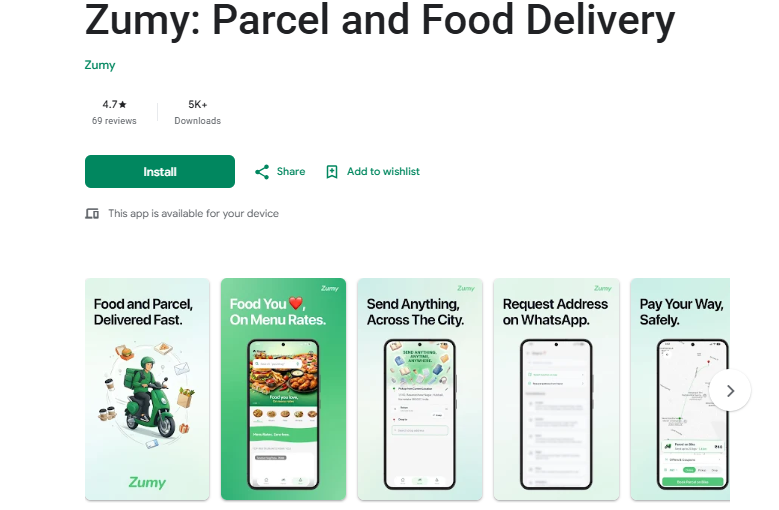
As an example, we built and delivered Zumy, a hyperlocal delivery and mobility product designed for local city operations. The project required more than designing a customer-facing app. It involved customer ordering, runner workflows, pickup and drop coordination, order status updates, transparent pricing, and an admin system to manage daily operations.
-
Evaluate Communication
Communication quality matters as much as coding skill, especially for non-technical buyers. App development involves many decisions, revisions, dependencies, and trade-offs. If the developer does not communicate clearly, the project can suffer from misunderstandings, delays, wrong assumptions, and budget disputes. A technically skilled developer who cannot explain things properly may still be difficult to work with.
Good communication starts before the project begins. A reliable developer will ask questions about your business model, target users, features, workflows, platforms, integrations, budget, timeline, and launch goals. They will not rush to quote a price without understanding the project. They should be able to explain technical choices in plain language and help you understand what is possible, what is risky, and what should be prioritized.
For non-technical founders, this is especially important. The developer should not expect the buyer to understand every technical detail. Instead, they should explain the app structure, development phases, milestones, dependencies, and risks in a way that helps the buyer make informed decisions. If a developer uses confusing technical language without clarifying it, avoids direct answers, or gives unrealistic promises, that is a warning sign.
Buyers should also evaluate response time, documentation quality, meeting discipline, and project reporting. How quickly does the developer reply? Do they summarize discussions after calls? Do they provide written estimates and scope documents? Do they use project management tools? Do they share progress updates? Do they explain delays honestly? Strong communication reduces uncertainty and builds trust throughout the development process.
-
Understand Their Development Process
A professional developer should have a clear development process. Buying an app should not begin with coding immediately. The process should start with discovery, where the developer understands the business problem, user roles, core workflows, required features, technical dependencies, and launch goals. Discovery helps prevent incorrect assumptions and creates a foundation for the rest of the project.
After discovery, the developer should prepare documentation. This may include a requirement document, feature list, user flow, technical scope, milestone plan, assumptions, exclusions, and delivery timeline. Documentation is important because it defines what will be built and reduces disagreement later. Without clear documentation, the buyer and developer may have different expectations about what the app includes.
Wireframes and UI/UX design should usually come before development. Wireframes show the structure of screens and user journeys. UI design shows the visual experience, branding, layout, colors, typography, and interactions. Reviewing these before coding helps the buyer see how the app will work and request changes early. It is much cheaper to change a wireframe than to rebuild a completed feature.
The development phase should be organized into milestones or sprints. The buyer should receive regular demos or staging builds to review progress. Testing should be included throughout the process, not only at the end. A proper development process includes functional testing, usability testing, mobile device testing, browser testing, performance testing, security checks, and user acceptance testing.
Deployment and launch should also be part of the process. The developer should explain how the app will be hosted, how the mobile app will be submitted to app stores, how production data will be handled, and how issues will be monitored after launch. Finally, the process should include post-launch support, bug fixing, updates, and future improvements.
-
Review Client Feedback
Client feedback helps buyers understand how the developer performs in real projects. Testimonials, ratings, third-party review platforms, references, and client retention can provide valuable signals. A developer’s own website may show selected testimonials, but third-party review platforms and direct references can give a more balanced view.
Buyers should look for patterns in feedback. Do clients mention reliable delivery, clear communication, technical quality, problem-solving, and post-launch support? Or do they mention delays, unclear scope, poor testing, weak communication, or disappearing after payment? A single negative review may not tell the full story, but repeated complaints should not be ignored.
References are also useful for larger projects. Buyers can ask the developer to connect them with past clients, especially clients who built similar apps. When speaking with references, ask practical questions. Was the project delivered on time? Was communication clear? Did the developer handle changes professionally? Was the final code maintainable? Did the app perform well after launch? Did the developer provide support when issues came up?
Client retention is another strong indicator. If businesses continue working with the same development company for maintenance, upgrades, and new projects, it suggests trust and reliability. App development is a long-term relationship in many cases, so repeated client engagement can be more meaningful than one-time project claims.
-
Assess Post-Launch Support
Post-launch support is one of the most overlooked factors when buying an app. Many buyers focus heavily on development cost and launch timeline but forget that every app needs ongoing maintenance. After launch, apps may require bug fixes, operating system updates, server monitoring, performance improvements, security patches, third-party API updates, analytics review, user feedback changes, and new feature development.
Mobile apps are especially dependent on platform updates. Apple and Google regularly update operating systems, app store policies, SDK requirements, privacy rules, and device standards. Web apps also need updates for browsers, frameworks, hosting environments, security libraries, and integrations. Third-party services such as payment gateways, SMS providers, map APIs, email tools, and AI APIs can also change over time. Without support, an app that works today may develop problems later.
Buyers should clarify what support is included after launch. Does the developer provide a warranty period for bug fixing? Are maintenance plans available? How are urgent issues handled? Who monitors the server? Who updates libraries and dependencies? Who manages backups? Who handles app store updates? What is the cost for future features? These questions should be discussed before signing the contract.
A reliable developer should not disappear after deployment. They should provide source code, documentation, credentials, deployment details, and support options. They should also help the buyer understand how the app will be maintained over time. For serious business apps, post-launch support is not a bonus. It is part of responsible app ownership.
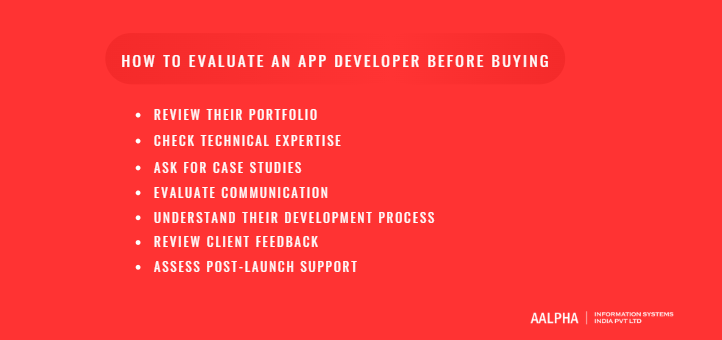
Evaluating an app developer before buying is ultimately about reducing risk. The buyer should review the portfolio, check technical expertise, ask for case studies, evaluate communication, understand the process, review client feedback, and confirm post-launch support. A strong developer will welcome these questions because they show that the buyer is serious. The more carefully the developer is evaluated before the project begins, the better the chances of buying an app that is useful, secure, maintainable, and aligned with the business goal.
Step-by-Step Process to Buy an App from Developers
Buying an app from developers should follow a structured process. Many buyers make the mistake of contacting developers with only a rough idea and asking for a price immediately. That approach usually leads to vague estimates, incomplete scopes, missed features, and disagreements later. A better approach is to move step by step: define the idea, decide the type of app you need, document requirements, shortlist developers, request proposals, review design, sign contracts, build in milestones, test properly, collect source code and documentation, launch the app, and plan long-term maintenance.
This process helps both the buyer and the developer. The buyer gets clarity on cost, timeline, ownership, deliverables, and responsibilities. The developer gets a clear understanding of what must be built, how the app should work, and what success looks like. When someone asks, “How do I buy an app from developers without losing money or control?”, the practical answer is to treat the purchase as a business and technical project, not a casual software transaction.
-
Define the App Idea Clearly
The first step is to define the app idea clearly. Before approaching developers, buyers should document the business problem the app will solve, who the target users are, what actions users will perform, and what outcome the business expects from the app. A vague idea such as “I want an app like Uber” or “I need an ecommerce app” is not enough. Developers need more context to estimate the project correctly and recommend the right approach.
A clear app idea should explain the target audience, app type, main user roles, core features, preferred platforms, and business goals. For example, a delivery app may include customers, delivery partners, merchants, and administrators. A SaaS platform may include account owners, team members, managers, and super admins. An ecommerce app may include customers, vendors, warehouse teams, delivery staff, and support teams. Each user role has different permissions, screens, actions, and workflows.
Buyers should also define whether the app needs to be mobile-first, web-first, or available on both mobile and web. A customer-facing app may need Android and iOS versions, while an admin panel may work best as a web dashboard. A business management system may not need a mobile app at all in the first version. The expected outcome should also be clear. Is the goal to generate online sales, reduce manual work, test a startup idea, manage internal operations, automate bookings, or create a subscription product? Clear goals help developers suggest the right scope and avoid unnecessary features.
-
Decide Whether You Need a Custom App or Ready-Made App
After defining the idea, the buyer should decide whether a custom app, white-label solution, template, or existing source code purchase is the right fit. Custom app development means the app is built from scratch around the buyer’s exact requirements. This is the best option when the business model is unique, the workflows are specific, the app needs long-term scaling, or the buyer wants full control over features and architecture.
A ready-made or white-label app is a pre-built product that can be customized with branding, content, payment gateways, and selected feature changes. This can be useful when the buyer wants to launch faster and the business model is fairly standard, such as food delivery, grocery delivery, taxi booking, ecommerce, appointment booking, or marketplace operations. The advantage is speed, but the limitation is flexibility. Heavy customization can become expensive if the original codebase is not built well.
Templates and starter kits are another option. These may include UI screens, admin dashboards, authentication, billing modules, or basic app structures. They can help reduce early development work, but they are not complete business-ready products in most cases. Existing source code purchases can also be useful when the buyer wants a faster starting point with more control than a closed white-label app. However, source code must be reviewed carefully for quality, licensing, documentation, and deployability.
The right choice depends on budget, timeline, uniqueness, scalability, and technical risk. A buyer testing a simple idea may start with a ready-made solution. A business building a serious SaaS platform, marketplace, AI app, or operations system should usually choose custom development or a carefully reviewed codebase.
-
Prepare a Requirement Document
A requirement document is one of the most important assets in the app buying process. It explains what the app must include, how users will interact with it, what the admin can control, which systems need integration, and what should be included in the first launch version. Without a requirement document, developers may make assumptions, and those assumptions can create disputes later.
The document should include user roles, features, workflows, admin panel requirements, integrations, payment gateways, reports, notifications, security needs, and launch priorities. User roles define who will use the app and what each person can do. For example, a marketplace app may include buyers, sellers, delivery staff, support agents, and admins. Features describe what each user can do, such as register, log in, browse listings, place orders, make payments, upload products, approve requests, or generate reports.
Workflows explain the sequence of actions. For example, in a booking app, the workflow may include selecting a service, choosing a time slot, making payment, receiving confirmation, getting reminders, checking in, and receiving follow-up messages. Admin panel requirements are equally important because businesses need control over users, content, pricing, orders, payments, reports, support issues, and settings.
Integrations should be listed clearly. These may include payment gateways, SMS providers, email tools, maps, CRM systems, ERP systems, analytics tools, accounting software, AI APIs, shipping providers, or social login. The document should also define notification types, reporting needs, permission rules, data privacy expectations, and security requirements. Finally, buyers should separate must-have launch features from future enhancements. This helps control cost and avoids overbuilding the first version.
-
Shortlist Developers or App Development Companies
Once requirements are clear, buyers can shortlist developers or app development companies. The shortlist should be based on more than pricing. Buyers should compare agencies, freelancers, portfolios, timelines, costs, technical expertise, communication style, development process, and support capacity. The right choice depends on the size and complexity of the project.
Freelancers can be suitable for small apps, prototypes, UI fixes, specific integrations, or MVPs with limited scope. However, full app projects often require multiple skills, including mobile development, backend engineering, UI/UX design, database planning, testing, deployment, and support. For that reason, app development companies are usually safer for serious commercial apps, especially when the buyer does not have technical management experience.
A good shortlist should include developers who have built similar apps or solved similar technical problems. A company with marketplace experience is more suitable for a multi-vendor app than one that mainly builds brochure websites. A team with SaaS experience is more suitable for subscription software than a general mobile app freelancer. Buyers should review portfolios, case studies, client testimonials, third-party reviews, technology expertise, and communication quality before starting proposal discussions.
Communication style should be evaluated from the first interaction. Reliable developers ask detailed questions about the business model, users, workflows, integrations, timeline, and priorities. Weak vendors often give quick prices without understanding the project. Buyers should choose developers who explain clearly, document discussions, and show interest in solving the business problem, not just completing tasks.
-
Request a Proposal and Cost Estimate
After shortlisting developers, buyers should request a formal proposal and cost estimate. A proper proposal should include the project scope, timeline, technology stack, milestones, assumptions, deliverables, testing approach, support terms, and payment structure. It should not be only a one-line price. The proposal is the foundation for the working relationship, so it must be specific enough to prevent confusion.
The scope should explain which platforms are included, such as Android, iOS, web app, admin panel, backend, or API development. It should list the major modules and features included in the estimate. The timeline should break the project into phases, such as discovery, UI/UX design, development, testing, deployment, and launch. Milestones should explain when payments are due and what deliverables will be completed at each stage.
The technology section should explain the recommended frontend, backend, mobile, database, and hosting approach. Buyers do not need to understand every technical detail, but the developer should be able to justify the choices. The proposal should also state assumptions and exclusions. For example, third-party API fees, app store fees, hosting charges, paid plugins, SMS costs, or payment gateway charges may not be included in the development price.
Testing and support terms should be clearly stated. Buyers should know whether QA testing is included, how bugs will be handled, how long post-launch support lasts, and what future maintenance will cost. Payment terms should be milestone-based whenever possible, so the buyer pays as progress is delivered rather than paying everything upfront.
-
Review the UI/UX and Prototype Before Development
Before full development begins, buyers should review the UI/UX design and prototype. This step reduces misunderstandings because it allows everyone to see how the app will work before developers start coding major features. Wireframes, user journeys, clickable prototypes, and design approvals help translate written requirements into visible screens and flows.
Wireframes show the structure of the app without focusing too much on visual styling. They help confirm screen layout, navigation, user actions, and workflow logic. User journeys show how different users move through the app, such as registration, product search, booking, payment, order tracking, or admin approval. A clickable prototype allows the buyer to experience the app flow before development begins.
This stage is especially useful for non-technical buyers. It is easier to review screens and flows than to understand backend logic or code. The buyer can identify missing steps, confusing navigation, unnecessary features, or incorrect assumptions early. Design approval also helps developers build with confidence because the visual direction and user experience have already been confirmed.
Skipping this step can be costly. If the buyer first sees the app after development is mostly complete, changes may require rebuilding screens, workflows, and backend logic. A proper UI/UX review saves time, improves usability, and creates alignment between business expectations and technical execution.
-
Sign a Contract and NDA
Before development starts, buyers should sign a contract and, where necessary, a non-disclosure agreement. The contract protects both parties by clearly defining ownership, confidentiality, payment terms, source code rights, intellectual property, timelines, support, cancellation terms, and dispute handling. Without a written agreement, misunderstandings can become difficult to resolve.
Ownership terms are especially important. The contract should state who owns the source code, design files, database structure, documentation, and final app after payment is completed. Buyers should confirm whether the developer can reuse any part of the code, whether third-party libraries are included, and whether the app is being built exclusively for the buyer.
An NDA is useful when the buyer is sharing confidential business ideas, customer data, internal processes, pricing strategy, product plans, or investor-related information. It creates a confidentiality obligation and gives the buyer more confidence when discussing sensitive details.
Payment terms should define milestones, amounts, due dates, and what happens if the scope changes. Timelines should include delivery phases and review responsibilities. Support terms should explain bug fixing, warranty period, maintenance options, and response time for issues. Cancellation terms should explain what happens if either party ends the project early. A clear agreement prevents many future disputes.
-
Start Development in Milestones
Development should be done in milestones rather than as one large hidden build. Milestone-based development gives the buyer visibility into progress and allows feedback before the project moves too far in the wrong direction. Each milestone should include specific deliverables, such as UI design approval, backend setup, user registration, admin panel, payment integration, order workflow, reporting module, testing build, or launch preparation.
Sprint reviews and regular demos are useful during development. The developer can show completed features on a staging server or test build, and the buyer can review whether the app matches expectations. This process helps identify issues early and keeps the project aligned with business requirements.
Progress tracking should be structured. Developers may use tools such as Jira, Trello, Asana, ClickUp, GitHub, or similar project management systems. Buyers do not need to manage every technical task, but they should have visibility into what is completed, what is in progress, what is delayed, and what decisions are pending.
Milestone development also helps with payment control. Instead of paying the full amount upfront, the buyer pays based on agreed progress. This creates accountability and reduces financial risk. It also gives the developer a clear path for delivery and payment.
-
Test the App Properly
Testing is a critical step before launching any app. Buyers should not assume that development completion means the app is ready for users. Testing verifies whether the app works correctly, performs reliably, protects data, and provides a usable experience. A proper testing process should include functional testing, usability testing, performance testing, security testing, device testing, browser testing, and user acceptance testing.
Functional testing checks whether each feature works as expected. For example, users should be able to register, log in, place orders, make payments, receive notifications, update profiles, and complete workflows without errors. Usability testing checks whether the app is easy to understand and navigate. Performance testing checks whether the app loads quickly and handles expected usage levels. Security testing checks authentication, permissions, data handling, and protection against common vulnerabilities.
Device testing is important for mobile apps because the app may behave differently across Android phones, iPhones, tablets, screen sizes, and operating system versions. Browser testing is important for web apps because users may access the platform through Chrome, Safari, Firefox, Edge, or mobile browsers. User acceptance testing allows the buyer or selected users to test real workflows before launch.
Testing should not be rushed. A buggy app can damage the brand, frustrate users, create support pressure, and reduce trust. It is better to fix critical issues before launch than to discover them after real customers start using the product.
-
Get Source Code, Credentials, and Documentation
After payment terms are completed as agreed, buyers should receive all required source code, credentials, and documentation. This is one of the most important parts of buying an app from developers because it determines whether the buyer truly controls the product. Without proper handover, the buyer may remain dependent on the original developer for even basic changes.
The buyer should receive source code for the mobile app, web app, backend, admin panel, and any other custom modules included in the project. Git repository access should be provided through platforms such as GitHub, GitLab, or Bitbucket. Admin credentials, database access, cloud hosting access, API keys, payment gateway setup details, deployment documentation, and app store account access should also be handed over where applicable.
Technical documentation should explain how the app is structured, how to deploy it, how to configure environments, how APIs work, what third-party services are used, and how major modules function. Documentation does not need to be overly complex, but it should be clear enough for another qualified developer to understand and maintain the system if needed.
Buyers should also confirm ownership of accounts. The Apple Developer account, Google Play Console account, domain, hosting account, cloud account, payment gateway account, SMS provider account, email service account, and analytics account should ideally be owned by the buyer, not permanently controlled by the developer.
-
Launch the App
Once the app has been tested and approved, the next step is launch. Launch may include app store submission, Google Play Store release, server deployment, domain setup, SSL configuration, database migration, analytics setup, payment gateway activation, production monitoring, and final production checks. The launch process should be planned carefully because small mistakes can affect user access, payments, notifications, or app availability.
For mobile apps, developers need to prepare store listings, icons, screenshots, descriptions, privacy policies, app permissions, and compliance details. Apple and Google may review apps before publication, so buyers should allow time for approval. For web apps, the launch may involve connecting the domain, deploying the production server, setting up backups, configuring email, enabling analytics, and testing all live workflows.
Before launch, the buyer should run final checks. Are payments working? Are emails and SMS messages being delivered? Are admin users able to manage the system? Are notifications working? Is the app connected to the correct production database? Are analytics tracking important events? Are support contact details visible? Are privacy policy and terms pages available?
A soft launch is often safer than a large public launch. The app can first be released to a limited group of users, internal staff, or early customers. Their feedback can help identify final issues before broader promotion.
-
Plan Maintenance and Future Upgrades
Buying an app is not the end of the project. Every app needs regular maintenance, bug fixes, security patches, platform upgrades, performance monitoring, and feature improvements. Mobile operating systems change. App store rules change. Browsers change. Third-party APIs change. Payment gateways update their requirements. Security vulnerabilities are discovered over time. User expectations also change after launch.
A maintenance plan should define who will fix bugs, monitor hosting, update dependencies, manage backups, handle security patches, and release new versions. It should also define how future features will be planned and priced. For example, after launching an MVP, the buyer may want to add advanced reporting, AI features, loyalty programs, subscription billing, automation, integrations, or mobile improvements.
Analytics should guide future upgrades. Instead of guessing what to build next, buyers should track user behavior, drop-off points, conversion rates, feature usage, support tickets, and customer feedback. This helps prioritize improvements based on real data.
A good development partner will help the buyer think beyond launch. They will explain how the app can be improved, scaled, secured, and maintained over time. This long-term view is important because an app is a living product, not a one-time purchase. The most successful app buyers treat development as an ongoing business asset. They start with clear requirements, launch carefully, learn from users, and continue improving the product based on market demand.
Cost of Buying an App from Developers
The cost of buying an app from developers depends on what you are actually buying. A simple app with limited screens and basic functionality will cost far less than a custom marketplace, SaaS platform, ecommerce system, on-demand delivery app, or AI-powered business application. Some buyers assume app cost is based only on the number of screens, but the real cost is shaped by the business logic behind those screens. User roles, backend systems, admin controls, integrations, security requirements, reports, payment flows, scalability needs, and post-launch support all affect the final price.
When someone asks, “How much does it cost to buy an app from developers?”, the most accurate answer is that the cost varies based on complexity, development approach, team location, technology stack, and the quality of execution required. A ready-made app may cost less upfront, but it may not fit the business properly. A custom app may require a higher initial investment, but it can be built around the buyer’s exact workflows and long-term goals. The right question is not only “What is the cheapest way to buy an app?” but “What level of app quality, ownership, flexibility, and support does my business need?”
Key Factors That Affect App Cost
Several factors influence the cost of buying an app from developers. The first factor is app complexity. A basic informational app or simple booking app may require fewer development hours. A complex app with multiple user roles, real-time updates, payments, dashboards, maps, reports, notifications, and integrations will require more planning, development, testing, and support. Complexity increases when the app has different user journeys for customers, vendors, delivery partners, staff, managers, and administrators.
The number of platforms also affects cost. An Android-only app is usually less expensive than building separate Android, iOS, web app, backend, and admin panel versions. Cross-platform frameworks such as Flutter or React Native can reduce effort in some cases because developers can build Android and iOS apps using a shared codebase. However, the backend, admin panel, API logic, testing, and deployment still require separate work.
Design quality is another important factor. A basic interface costs less than a carefully designed app with custom UI/UX, user journey planning, brand styling, clickable prototypes, animations, responsive layouts, and usability testing. Good design is not only about appearance. It affects conversions, user retention, task completion, and customer trust.
Backend requirements often have a major impact on cost. Apps that require user accounts, databases, admin controls, permissions, content management, payments, notifications, reports, file uploads, chat, location tracking, or analytics need a strong backend. Integrations also add cost. Payment gateways, SMS providers, email systems, maps, CRMs, ERPs, shipping APIs, AI tools, and third-party data sources all require technical setup, testing, and error handling.
Security, scalability, and support also influence pricing. Apps that manage payments, personal data, healthcare records, financial information, business documents, or enterprise workflows need stronger security controls. Apps expected to support a growing user base need better architecture, cloud setup, database planning, monitoring, and performance optimization. Post-launch support, bug fixing, upgrades, and maintenance should also be included in the total cost calculation.
Custom App Development Cost
Custom app development costs vary widely because the app is built around specific requirements. A small MVP may cost significantly less than a full-scale product with advanced features, multiple platforms, admin dashboards, third-party integrations, and ongoing support. The final cost depends on the number of features, app complexity, technology stack, development team size, geography, and delivery timeline.
Geography plays a major role because developer rates differ by region. Developers in North America, Western Europe, Eastern Europe, India, Southeast Asia, and Latin America may charge very different hourly or project-based rates. A company in the United States or the United Kingdom may charge more than an offshore app development company, but pricing should not be evaluated only by location. The quality of planning, code, communication, testing, and support matters more than hourly rate alone.
The development team size also affects the cost. A custom app may require a business analyst, UI/UX designer, mobile developer, frontend developer, backend developer, QA engineer, DevOps specialist, and project manager. A smaller app may need only a few roles, while a larger product may need a full team working across multiple months. Faster delivery may also increase cost if more developers are assigned to the project or if the timeline requires parallel work.
Buyers should also understand that custom development is not just coding. It includes discovery, requirement planning, wireframes, design, architecture, development, testing, deployment, documentation, and support. A lower quote may exclude some of these services, which can create extra expenses later. A proper custom app estimate should clearly explain what is included, what is excluded, what assumptions are made, and what happens if the scope changes.
Ready-Made App or White-Label App Cost
Ready-made and white-label apps usually cost less upfront than custom-built apps because the core product is already developed. The buyer pays to use, customize, rebrand, configure, or deploy the existing solution. This can be attractive for businesses that want to launch quickly or test a standard business model such as food delivery, grocery delivery, taxi booking, ecommerce, appointment booking, or marketplace operations.
However, the initial price does not always represent the total cost. Ready-made apps can become expensive when heavy customization is required. For example, if the buyer wants to change workflows, add new user roles, modify payment logic, integrate local services, redesign the user experience, rebuild the admin panel, or add business-specific features, the developer may need to make major changes to the original codebase. If the code is poorly written or not designed for customization, even small changes can become costly.
White-label solutions may also come with licensing limits. Some providers may not give full source code access. Others may charge recurring license fees, customization fees, support fees, or hosting fees. Buyers should ask whether the price includes source code, backend access, admin panel access, deployment support, documentation, branding changes, and future updates. They should also check whether the app can be modified by another developer later or whether they will remain dependent on the original provider.
Ready-made apps can be useful when speed matters and the business model is straightforward. But buyers should compare the short-term savings against long-term flexibility. A cheap ready-made app that cannot scale or adapt to the business may cost more than a carefully planned custom app.
Freelancer vs Agency Cost
Freelancers usually cost less than app development companies, especially for small projects, prototypes, bug fixes, UI changes, or specific technical tasks. A buyer may hire a freelance Flutter developer, React Native developer, backend developer, UI designer, or QA tester at an hourly or fixed price. This can work well when the project is clearly defined and the buyer knows how to manage development.
The main limitation is that one freelancer rarely covers every skill required for a complete app. A full app may need mobile development, backend engineering, database design, UI/UX design, API integration, cloud deployment, testing, security, documentation, and maintenance. If the buyer hires multiple freelancers, the buyer may become responsible for coordinating them. This can be difficult for non-technical founders.
App development companies usually cost more, but they provide team depth, process, project management, QA, design, accountability, and post-launch support. A company can assign different specialists to different parts of the project. This reduces dependency on one person and improves continuity if a team member becomes unavailable. Agencies are also more suitable for larger apps, long-term products, enterprise platforms, and projects requiring multiple technologies.
The right choice depends on project risk. A freelancer may be suitable for a small MVP or limited module. A company is usually safer when the app is central to the business, includes payments, has multiple users, requires long-term support, or needs reliable delivery. Buyers should compare not only cost but also risk, communication, documentation, testing, accountability, and maintenance.
Hidden Costs to Consider
Many buyers focus on development cost but overlook hidden and recurring costs. Hosting is one of the first ongoing expenses. Web apps, backends, databases, file storage, and APIs need servers or cloud infrastructure. The cost may be small at the beginning, but it can grow as user traffic, data storage, and processing needs increase.
Maintenance is another important cost. Apps need updates, bug fixes, library upgrades, security patches, server monitoring, and compatibility updates. Mobile apps may need updates when Apple or Google changes operating system requirements or app store policies. Web apps may need updates for browsers, frameworks, and hosting environments.
App store fees should also be considered. Apple Developer Program and Google Play Console accounts may require registration fees. Third-party API costs can include SMS, email, maps, payment gateways, AI models, analytics tools, push notification services, chat tools, verification services, and data providers. Payment gateways may charge transaction fees. SMS and email systems may charge based on usage. AI-powered apps may have usage-based API costs that increase as users interact with the system.
Bug fixing and feature updates should also be budgeted. Even after testing, real users may discover issues or request changes. Businesses often need new features after launch, such as reports, integrations, automation, referral programs, loyalty systems, advanced dashboards, or admin controls. Buyers should keep a separate budget for post-launch improvements rather than spending everything on the first build.
Why the Cheapest Option Can Become Expensive
The cheapest app development option can become expensive when it leads to poor code quality, missing documentation, weak security, incomplete testing, scalability problems, or lack of post-launch support. A low-cost developer may deliver something that looks acceptable in a demo but fails under real usage. The app may be slow, difficult to modify, poorly structured, insecure, or dependent on hardcoded settings.
Technical debt is one of the biggest risks. Technical debt happens when shortcuts are taken during development, creating problems that must be fixed later. For example, the developer may skip proper database design, write messy code, ignore security rules, avoid documentation, or build features in a way that cannot scale. The buyer may save money initially but later spend more on repairs, redevelopment, or migration.
Missing documentation also creates long-term problems. If the buyer does not receive clear source code, setup instructions, API documentation, deployment details, and admin guidance, future developers may struggle to maintain the app. This increases dependency on the original developer and makes every future change slower and more expensive.
Security issues can be even more costly. Apps that handle user accounts, payments, personal data, business records, or customer communication must be developed with proper security practices. Weak authentication, poor access control, exposed API keys, insecure file uploads, or unprotected databases can create serious business risk.
A low-cost app may also lack post-launch support. If the developer disappears after delivery, the buyer may have no one to fix bugs, update dependencies, manage hosting, or handle urgent production issues. For a serious business app, reliability matters more than the lowest price.
The best approach is to evaluate total value, not just upfront cost. A good app developer should provide clear scope, realistic pricing, clean development practices, proper testing, source code handover, documentation, deployment support, and maintenance options. Buying an app is an investment in a business asset. Choosing the right developer may cost more at the beginning, but it often saves money, time, and stress over the life of the product.
Common Mistakes to Avoid When Buying an App
Buying an app from developers can save time, reduce hiring complexity, and help a business launch faster, but the process can become risky when buyers make decisions without proper planning. Many app projects fail not because the original idea was weak, but because the buyer started without clear requirements, selected the wrong developer, ignored ownership terms, skipped testing, or failed to plan long-term maintenance. An app is not only a design and code package. It is a business system that needs the right architecture, user experience, backend controls, security, documentation, and support.
Avoiding common mistakes can protect the buyer from delays, budget overruns, disputes, poor performance, and expensive redevelopment. Before buying an app from developers, every buyer should understand what can go wrong and how to prevent it.
-
Buying Without Clear Requirements
One of the biggest mistakes is buying an app without clear requirements. A buyer may have a general idea, such as building a delivery app, ecommerce app, marketplace, booking platform, or SaaS product, but that is not enough for accurate planning. Developers need to understand user roles, workflows, features, platforms, admin controls, integrations, reports, payment logic, notification rules, security expectations, and launch priorities.
Unclear requirements lead to wrong estimates because the developer has to make assumptions. For example, a buyer may ask for a “food delivery app,” but that could mean many different things. Does the app need separate panels for customers, restaurants, delivery partners, and admins? Should orders be assigned automatically or manually? Does it need live tracking, wallet payments, coupons, refunds, restaurant commissions, scheduled delivery, and customer support? Each decision affects cost and timeline.
When requirements are not documented, missed features become common. The buyer may assume something is included, while the developer may assume it is outside scope. This leads to disputes, extra costs, delays, and frustration. The best way to avoid this mistake is to prepare a clear requirement document before requesting a proposal. Even a simple document with user roles, key features, workflows, integrations, and launch priorities can make the buying process much safer.
-
Choosing Only Based on Price
Cost matters, but choosing a developer only because they are the cheapest option is a serious mistake. A low quote may look attractive at the beginning, especially for startups and small businesses, but it can become expensive if the app is poorly built. The cheapest developer may not provide reliable architecture, clean code, proper testing, documentation, security, deployment support, or post-launch maintenance.
A professional app requires more than screen development. It needs backend logic, database structure, API design, user permissions, error handling, performance optimization, payment integration, admin controls, and security practices. If these areas are ignored, the app may work during a demo but fail under real user conditions. The business may later need to hire another developer to fix bugs, rewrite code, rebuild features, or migrate the system.
The right approach is to compare value, not just price. Buyers should review the developer’s portfolio, communication quality, technical expertise, proposal clarity, support terms, and ownership policy. A higher-quality developer may cost more initially, but they can reduce long-term risk by building a cleaner, more maintainable, and more reliable app.
-
Not Asking About Source Code Ownership
Many buyers forget to ask who owns the source code after the app is built. This can create serious problems later. Source code is the foundation of the app. Without proper rights to the code, the buyer may not be able to modify, maintain, scale, or transfer the app freely. If the developer controls the source code, the buyer may remain dependent on them for every future update.
Source code ownership should be clarified before the project starts, not after development is completed. The contract should clearly state whether the buyer receives full source code ownership after final payment. It should also mention whether the developer can reuse any part of the code, whether third-party components are included, and whether the buyer receives access to the Git repository, backend code, mobile app code, web app code, admin panel code, database structure, and deployment files.
This is especially important when buying ready-made apps, white-label apps, templates, or existing source code. Some sellers provide only usage rights, not full ownership. Others may restrict customization or prevent transfer to another developer. Buyers should always confirm the legal and technical handover terms before making payment.
-
Ignoring Admin Panel Requirements
Many buyers focus only on the user-facing app and forget the admin panel. This is a common mistake because the visible app is only one part of the system. Behind most apps, there must be a backend dashboard that allows the business to manage users, content, payments, orders, bookings, services, vendors, reports, analytics, support requests, pricing, notifications, and settings.
For example, an ecommerce app needs an admin panel to manage products, inventory, categories, orders, refunds, coupons, customer accounts, and reports. A marketplace app needs controls for vendors, listings, commissions, approvals, disputes, and payouts. A delivery app needs dashboards for order assignment, delivery partners, pricing, tracking, cancellations, and operational reports. A SaaS platform needs admin controls for subscriptions, user accounts, billing, feature access, and usage analytics.
Without a proper admin panel, the business may need developers for routine changes that staff should be able to handle themselves. This increases dependency, slows operations, and raises maintenance costs. Buyers should define admin panel requirements from the beginning and include them in the project scope.
-
Skipping Testing
Skipping testing or treating it as a minor final step is another costly mistake. An app should be tested before launch, not after users start reporting problems. Poor testing can lead to broken workflows, failed payments, login issues, incorrect notifications, slow loading, device compatibility problems, security gaps, and poor user experience.
Testing should include functional testing, usability testing, performance testing, security testing, device testing, browser testing, and user acceptance testing. Functional testing checks whether features work correctly. Usability testing checks whether users can complete tasks easily. Performance testing checks whether the app can handle expected usage. Security testing checks whether user data and system access are protected. Device and browser testing are necessary because apps may behave differently across phones, operating systems, screen sizes, and browsers.
User acceptance testing is also important. Before public launch, the buyer or selected users should test real workflows from start to finish. For example, they should place an order, make a payment, receive a notification, update account details, use the admin panel, generate a report, and check support flows. Testing before launch protects the brand and reduces the risk of losing early users.
-
Not Planning Maintenance
Many buyers think the project ends once the app is launched. In reality, every app needs maintenance. Mobile operating systems change, app store rules change, APIs get updated, payment gateways modify requirements, security vulnerabilities appear, user expectations shift, and business needs grow. Without maintenance, even a well-built app can become outdated, unstable, or insecure over time.
Maintenance may include bug fixes, performance improvements, server monitoring, database backups, security patches, library upgrades, operating system compatibility updates, app store updates, API updates, analytics review, and feature improvements. For apps that handle payments, personal data, business records, or customer communication, maintenance is not optional. It is part of responsible app ownership.
Buyers should discuss maintenance before signing the contract. They should ask whether the developer provides a warranty period, monthly support plans, emergency support, hosting assistance, security updates, and future feature development. They should also budget for ongoing improvements after launch. A successful app usually changes based on user feedback, analytics, customer support requests, and business growth.
Avoiding these mistakes makes the app buying process more predictable and less risky. Buyers should start with clear requirements, avoid choosing only on price, confirm source code ownership, define admin panel needs, test properly, and plan maintenance from the beginning. When these areas are handled carefully, buying an app from developers becomes a structured investment rather than a risky transaction.
Why Buying from a Reliable App Development Company Matters
Buying an app from a reliable mobile app development company matters because an app is not only a coding project. It is a business asset that must be planned, designed, developed, tested, launched, maintained, and improved over time. Many buyers initially look for the fastest or cheapest developer, but serious app projects need more than one person writing code. They need structured execution, technical judgment, design quality, backend reliability, security awareness, testing discipline, and long-term support. This is especially true when the app includes payments, customer accounts, admin dashboards, marketplace workflows, SaaS subscriptions, AI features, business data, or third-party integrations.
A reliable app development company reduces project risk by bringing process, experience, and accountability to the buying journey. Instead of depending on a single freelancer or an unstructured team, the buyer gets access to multiple specialists who can handle different parts of the product. This makes the development process more predictable and gives the business a stronger foundation for launch and future growth.
-
You Get a Full Team, Not Just One Developer
A professional app development company can provide a complete team for the project. This may include UI/UX designers, mobile app developers, backend developers, frontend developers, QA engineers, project managers, DevOps specialists, cloud engineers, and support teams. Each role contributes to a different part of the app. The designer plans the user experience and interface. Mobile developers build Android and iOS apps. Backend developers create the server-side logic, APIs, databases, admin panel, authentication, and business workflows. QA engineers test the app before launch. DevOps specialists help with hosting, deployment, monitoring, backups, and server performance.
This team-based approach is important because most apps require multiple skills. A customer-facing mobile app may look simple on the surface, but behind it there may be payment processing, order management, notifications, analytics, admin controls, API integrations, user permissions, reports, and cloud infrastructure. One developer may not have deep experience in all these areas. When a business works with a reliable company, the right specialist can handle the right part of the project.
For buyers asking, “Should I buy an app from a freelancer or an app development company?”, the answer depends on project size and risk. A freelancer may be suitable for small updates, prototypes, or narrow technical tasks. A company is usually safer when the app is a serious business product that needs design, backend engineering, mobile development, testing, deployment, and long-term support.
-
Better Process and Accountability
A reliable app development company usually follows a structured process. This includes discovery, requirement documentation, wireframes, UI/UX design, development milestones, quality checks, testing, deployment, and support. A defined process helps the buyer understand what will happen at each stage and reduces the chance of missed expectations. It also gives the development team a clear delivery path.
Structured project management is especially valuable for non-technical buyers. The company can break the project into milestones, explain what will be delivered in each phase, schedule reviews, share progress updates, and manage feedback. Instead of waiting until the end to see the finished app, the buyer can review designs, staging builds, demos, and test versions throughout development. This makes it easier to identify issues early and avoid costly changes later.
Documentation is another key advantage. A professional company can prepare requirement documents, scope definitions, technical notes, API references, deployment instructions, and handover documents. This documentation protects the buyer because it clarifies what is included and helps future developers understand the system if needed. Quality checks also matter because a company usually has QA processes to test features, workflows, compatibility, performance, and security before launch.
Accountability is one of the biggest reasons to choose a reliable company. If one team member is unavailable, the company can assign another person. If a bug appears, there is a support process. If the app needs future upgrades, the same team or company can continue working on it. This is much safer than relying on an individual developer with limited availability.
-
Long-Term Technical Support
An app needs long-term technical support after launch. Even if the first version is well built, the product will still require maintenance, bug fixing, operating system updates, dependency upgrades, API changes, server monitoring, security patches, performance improvements, analytics review, and new features. Mobile apps must remain compatible with Android and iOS updates. Web apps must keep working across browsers and devices. Backend systems must be monitored for uptime, data integrity, security, and scalability.
Businesses also change after launch. Customers may request new features. Internal teams may need better reports. Payment flows may need changes. Admin users may need more control. The business may expand to new cities, new markets, new user types, or new pricing models. A reliable app development company can help maintain, improve, and scale the app as these needs change.
Long-term support is also important for risk management. If the app handles payments, customer data, business records, healthcare information, logistics workflows, or enterprise operations, downtime and security issues can directly affect revenue and trust. A dependable technical partner can respond faster, investigate issues properly, and recommend improvements before problems become serious.
-
Choosing the Right Development Partner
Businesses looking to buy a custom mobile app, web app, SaaS product, marketplace app, ecommerce app, or enterprise platform should work with a development partner that can handle the full product lifecycle. This includes custom development, UI/UX design, backend engineering, API integrations, cloud deployment, testing, documentation, and long-term support. The right company should not only build what is requested, but also help the buyer make practical decisions about scope, technology, launch priorities, and future improvements.
Experienced development partners such as Aalpha Information Systems can be suitable for businesses that need custom app development with reliable technical execution. This is especially relevant when the project requires a combination of mobile apps, web dashboards, backend systems, third-party integrations, cloud infrastructure, and ongoing support. For startups, agencies, SMEs, and enterprises, working with a structured app development company can reduce the risk of incomplete delivery and provide a stronger foundation for long-term product growth.
Choosing a reliable app development company is ultimately about protecting the investment. A poorly built app may cost less at the start, but it can create hidden expenses through bugs, delays, security issues, missing documentation, weak architecture, and redevelopment. A professional company brings team depth, process, accountability, and support, which are all essential when the app is expected to support real users and real business operations.
Conclusion
Buying an app from developers is a practical way to turn a business idea into a working digital product without building a full in-house technical team from day one. Whether you choose a custom-built app, ready-made solution, white-label product, or existing source code, the buying process should be handled carefully. Clear requirements, the right development partner, proper contracts, source code ownership, testing, documentation, and post-launch support all play a major role in the success of the app.
The best app buyers do not focus only on price. They focus on reliability, technical quality, ownership, scalability, and long-term value. A well-built app can support customer growth, automate operations, create new revenue streams, and improve business efficiency. A poorly planned app purchase can lead to delays, hidden costs, security risks, and expensive redevelopment.
If you are planning to buy or build a custom mobile app, web app, SaaS platform, marketplace, ecommerce app, or enterprise software solution, connect with Aalpha Information Systems to discuss your project requirements and get expert guidance from an experienced app development team.