


An AI diet planner app is a software system that uses artificial intelligence to create, adapt, and manage personalized nutrition plans based on individual user data. Unlike traditional diet apps that rely on static calorie charts or generic meal plans, AI-driven diet planners continuously learn from user behavior, health indicators, and outcomes to provide dynamic and context-aware dietary guidance. These applications typically ingest data such as age, gender, body composition, dietary preferences, allergies, activity levels, medical conditions, and lifestyle habits, then translate that information into actionable meal recommendations and nutrition insights.
At the core of an AI diet planner app is a recommendation engine powered by machine learning models. These models analyze historical data and real-time inputs to predict what dietary choices are most likely to support a user’s goals, whether those goals involve weight management, muscle gain, metabolic health, or clinical nutrition needs. More advanced systems also integrate food databases, nutritional science rules, and behavior-tracking mechanisms to adjust meal plans when users miss targets, change routines, or show signs of disengagement.
Importantly, AI diet planner apps are not limited to consumer fitness use cases. Many are designed to support dietitians, wellness coaches, and healthcare providers by automating repetitive planning tasks while preserving professional oversight. This combination of personalization, automation, and adaptability is what fundamentally distinguishes AI diet planner apps from earlier generations of nutrition software and positions them as a critical component of modern digital health ecosystems.
Why AI Is Transforming Nutrition and Diet Planning
Artificial intelligence is reshaping nutrition and diet planning because human dietary needs are complex, dynamic, and highly individualized. Traditional diet plans often fail because they assume static calorie requirements and uniform behavioral patterns, ignoring factors such as metabolic variability, adherence challenges, cultural food habits, and lifestyle changes. AI addresses these limitations by processing large volumes of data and identifying patterns that are difficult for manual planning methods to capture consistently.
One of the primary reasons AI is effective in nutrition planning is its ability to adapt recommendations over time. Machine learning models can analyze how users respond to specific meal plans, track progress against goals, and refine future suggestions accordingly. This feedback-driven approach aligns with evidence from behavioral nutrition research, which shows that adaptive interventions lead to better long-term adherence than fixed plans. AI systems can also incorporate data from wearables, such as activity levels, sleep quality, and heart rate variability, enabling nutrition recommendations that reflect real physiological demand rather than estimated averages.
AI is also improving the scalability and accessibility of nutrition guidance. According to the World Health Organization, poor diet is a leading risk factor for noncommunicable diseases globally, yet access to qualified nutrition professionals remains limited in many regions. AI-powered diet planning tools help bridge this gap by delivering personalized guidance at scale, while still allowing human experts to intervene when necessary. As a result, AI is not replacing nutritional science or professional judgment, but operationalizing it in a way that is more responsive, data-driven, and accessible to a broader population.
Who Uses AI Diet Planner Apps and Why Demand Is Growing
AI diet planner apps are used by a diverse and rapidly expanding set of user groups, reflecting broader shifts in health awareness, digital adoption, and preventive care. The largest segment consists of health-conscious consumers seeking personalized solutions for weight management, fitness, and everyday wellness. These users are increasingly dissatisfied with one-size-fits-all diet plans and expect recommendations that align with their preferences, schedules, and progress over time.
Another significant user group includes fitness professionals, nutritionists, and wellness coaches who use AI diet planner apps as decision-support tools. For these professionals, AI systems reduce manual workload by automating meal calculations, tracking compliance, and generating progress reports, allowing them to focus on higher-value coaching and clinical decision-making. In healthcare settings, AI diet planner apps are gaining traction for managing chronic conditions such as diabetes, obesity, and cardiovascular disease, where ongoing dietary adjustments are critical to outcomes.
Demand is also growing among employers, insurers, and digital health platforms that view nutrition as a foundational element of preventive health strategies. Research from McKinsey indicates that personalized digital health interventions are associated with higher engagement and retention compared to generic wellness programs. As consumers become more comfortable sharing health data in exchange for tangible benefits, AI diet planner apps are increasingly positioned as trusted tools rather than novelty features. This convergence of personalization expectations, preventive healthcare priorities, and scalable technology is driving sustained demand for AI diet planner app development across consumer and enterprise markets.
How an AI Diet Planner App Works (End-to-End Architecture)
-
User Data Collection and Profile Creation
An AI diet planner app begins with structured and progressive user data collection, which forms the foundation for all personalization and recommendations. Unlike traditional onboarding that relies on a single questionnaire, modern AI diet apps use a layered profile creation approach. The initial layer captures core demographic and physiological inputs such as age, gender, height, weight, dietary preferences, allergies, cultural food habits, and high-level goals like weight loss, muscle gain, or medical nutrition support. This data establishes baseline nutritional requirements and constraint boundaries.
The second layer focuses on lifestyle and behavioral context. Users are asked about activity levels, work schedules, sleep patterns, eating routines, cooking habits, budget sensitivity, and dining preferences. This information is critical because nutrition success depends as much on feasibility as on nutritional accuracy. A plan that ignores time constraints, food availability, or cultural preferences may be nutritionally correct but practically unsustainable. AI diet planner apps therefore treat lifestyle inputs as first-class data rather than optional metadata.
Advanced systems also support dynamic data enrichment after onboarding. This includes optional integrations with wearables, fitness apps, or health platforms to ingest step counts, activity intensity, sleep duration, and other signals that affect caloric needs and appetite. Over time, the user profile evolves through implicit signals such as food logging frequency, skipped meals, repeated substitutions, and adherence patterns. The result is a living profile that reflects how the user actually behaves rather than how they initially described themselves. This evolving profile is essential for AI-driven personalization and distinguishes intelligent diet planners from static nutrition tools.
-
AI Models Used in Diet Planning and Recommendation Systems
At the core of an AI diet planner app is a multi-model architecture that combines rule-based nutrition logic with machine learning and, increasingly, generative AI components. Rule-based systems grounded in established nutritional guidelines are typically used to enforce safety, dietary constraints, and minimum nutritional adequacy. These rules ensure that recommendations respect medical restrictions, allergy exclusions, and macro- or micronutrient thresholds. They act as guardrails that prevent AI outputs from drifting into unsafe or unrealistic territory.
Machine learning models are then layered on top to personalize and optimize recommendations. Common approaches include supervised learning models trained on historical user data to predict outcomes such as adherence likelihood, expected weight change, or satisfaction with certain meal types. Recommendation systems, often inspired by collaborative filtering and content-based filtering techniques, are used to suggest meals, recipes, and food substitutions based on similarity to past successful choices and preferences of similar users. These models help the app move beyond generic suggestions toward patterns that are empirically associated with better engagement and outcomes.
More advanced AI diet planner apps incorporate natural language processing and computer vision models. NLP models support conversational interfaces, allowing users to log meals via text or ask questions about food choices in natural language. Computer vision models enable image-based food recognition, which reduces friction in food logging by estimating portion size and nutritional content from photos. In some architectures, generative AI models are used to assemble meal plans, generate explanations for recommendations, or adapt recipes to specific dietary constraints. Crucially, these generative components operate within the boundaries defined by nutritional rules and predictive models, ensuring that creativity does not compromise accuracy or safety.
-
Real-Time Adaptation Based on User Behavior and Progress
Real-time adaptation is one of the defining characteristics of an AI diet planner app. Rather than waiting for weekly or monthly check-ins, the system continuously monitors user behavior and progress signals to adjust recommendations dynamically. These signals include food logs, meal timing, calorie intake variance, activity levels, sleep data, and explicit feedback such as hunger ratings or satisfaction scores. When deviations occur, the AI does not treat them as failures but as inputs that inform the next decision.
For example, if a user consistently under-consumes protein despite planned targets, the system may respond by simplifying protein sources, adjusting portion sizes, or recommending foods that better align with the user’s preferences and routine. If progress stalls, the AI can evaluate multiple contributing factors such as reduced activity, inconsistent meal timing, or declining adherence, then propose targeted adjustments rather than blanket calorie cuts. This adaptive behavior mirrors how an experienced human nutritionist would respond, but at a frequency and scale that manual coaching cannot sustain.
Real-time adaptation also supports contextual responsiveness. When users travel, experience schedule changes, or face periods of high stress, AI systems can temporarily shift goals toward maintenance, simplify meal choices, or prioritize consistency over optimization. This flexibility improves user trust and long-term retention because the app feels supportive rather than punitive. From an architectural perspective, this requires low-latency data pipelines, event-driven triggers, and recommendation engines capable of recalculating plans without disrupting the user experience.
-
Feedback Loops, Learning Cycles, and Continuous Optimization
Feedback loops are the mechanism through which an AI diet planner app improves over time, both at the individual and system-wide levels. At the individual level, each interaction generates data that feeds back into the user’s profile. Meal completions, substitutions, skipped recommendations, and explicit feedback help the system learn what works for that person. Over time, this reduces cognitive load for the user because recommendations become more aligned with habits and preferences, requiring fewer manual adjustments.
At the system level, aggregated and anonymized data supports continuous model refinement. Product teams analyze patterns across users to identify which recommendations drive adherence, which features reduce drop-off, and where the AI struggles to predict outcomes accurately. These insights inform model retraining, feature updates, and rule adjustments. Importantly, responsible AI diet planner architectures separate model learning from real-time decision-making, allowing updates to be tested, validated, and deployed without destabilizing the user experience.
Continuous optimization also includes explainability and trust-building mechanisms. Modern AI diet planner apps increasingly provide users with understandable reasons for recommendations, such as explaining how activity levels or previous choices influenced a meal suggestion. This transparency strengthens engagement and mitigates skepticism toward automated guidance. Architecturally, this requires models that can surface interpretable signals alongside predictions. When feedback loops, learning cycles, and explainability are designed together, the AI diet planner evolves into a reliable long-term companion rather than a short-lived novelty tool.
Core Features of an AI Diet Planner App
-
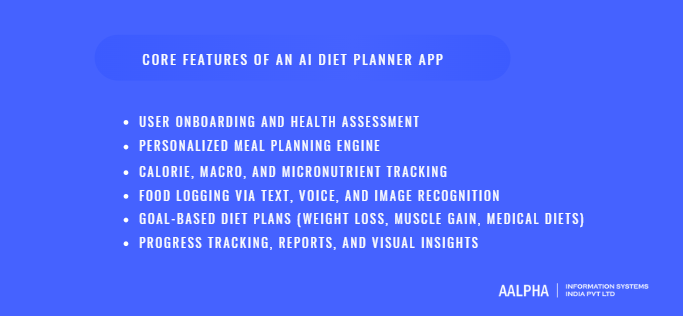
User Onboarding and Health Assessment
User onboarding and health assessment define the quality ceiling of an AI diet planner app. If the initial data capture is shallow or poorly structured, downstream personalization becomes unreliable. Effective AI diet planners treat onboarding not as a one-time form but as a guided health discovery process that balances data depth with user effort. The first stage typically captures essential demographic and physiological inputs such as age, gender, height, weight, dietary preferences, allergies, and high-level objectives. These inputs establish baseline energy requirements and exclusion rules that ensure recommendations remain safe and relevant.
The second stage of onboarding focuses on contextual health and lifestyle factors. Users are guided through questions related to activity level, occupation, sleep habits, eating patterns, cooking frequency, cultural food preferences, and budget sensitivity. This layer is critical because nutrition success is constrained by feasibility, not just nutritional correctness. AI diet planners that fail to model real-life constraints often generate plans that look ideal on paper but collapse under everyday conditions.
Advanced onboarding systems also incorporate conditional logic and progressive disclosure. Rather than overwhelming users with long questionnaires, the app adapts follow-up questions based on earlier answers. For example, users indicating medical conditions such as diabetes or hypertension are prompted for additional details that influence diet safety rules. Over time, onboarding continues implicitly through observed behavior, such as meal skips, substitutions, or consistent deviations. This approach creates a living health profile that becomes more accurate with usage, reducing friction while increasing personalization depth.
-
Personalized Meal Planning Engine
The personalized meal planning engine is the functional core of an AI diet planner app. Its purpose is not simply to generate meals, but to translate health goals, constraints, and preferences into daily decisions users can realistically follow. Unlike static meal templates, AI-powered planners continuously balance nutritional adequacy, variety, user preferences, and adherence likelihood. This requires a hybrid system that combines nutritional science rules with data-driven optimization.
At a foundational level, the engine calculates calorie targets and macro distributions based on user goals and physiological inputs. These targets act as boundaries rather than rigid prescriptions. Within those boundaries, the AI selects meals and recipes from a structured food database, ensuring that dietary restrictions, allergies, and cultural preferences are respected. Over time, the system learns which meals a user completes, modifies, or ignores, and adjusts future plans accordingly.
Personalization extends beyond ingredients and calories. Advanced planners consider meal timing, portion sizing, cooking complexity, and even repetition tolerance. For example, users who prefer routine may see repeated breakfasts with slight variations, while novelty-seeking users are offered broader rotation. The system also supports dynamic substitutions, allowing users to swap meals without breaking nutritional balance. This flexibility is essential for long-term engagement, as it reduces the psychological burden of strict compliance while preserving overall diet quality. The most effective meal planning engines behave less like rigid schedulers and more like adaptive decision-support systems.
-
Calorie, Macro, and Micronutrient Tracking
Calorie, macro, and micronutrient tracking is a foundational feature, but its implementation determines whether it supports or undermines user experience. Traditional diet apps often overemphasize calorie counting, which can lead to fatigue or disengagement. AI diet planner apps take a more nuanced approach by contextualizing tracking data and reducing manual effort wherever possible.
At the macro level, the system tracks carbohydrates, proteins, and fats in relation to individualized targets. These targets are dynamically adjusted based on progress, activity levels, and adherence patterns rather than remaining static. For example, a user engaged in higher-than-usual physical activity may see temporary macro shifts that support recovery and performance. At the micronutrient level, AI planners monitor vitamins and minerals to identify persistent gaps that may not be obvious through calorie-focused tracking alone. This is particularly relevant for users following restrictive diets or managing health conditions.
Crucially, AI systems do not expect perfect logging. Instead, they estimate uncertainty and work with partial data. If users miss logs or approximate portion sizes, the system compensates by identifying trends rather than relying on exact numbers. Insights are framed in actionable terms, such as highlighting recurring low fiber intake or insufficient protein at breakfast, rather than overwhelming users with raw nutrient tables. This interpretation layer transforms tracking from a burdensome accounting task into a supportive feedback mechanism that reinforces better choices over time.
-
Food Logging via Text, Voice, and Image Recognition
Food logging is one of the most significant friction points in nutrition apps, and AI-driven multimodal input is central to reducing that friction. Modern AI diet planner apps support food logging through text input, voice commands, and image recognition, allowing users to choose the method that best fits their context. This flexibility increases consistency, which in turn improves recommendation quality.
Text-based logging leverages natural language processing to interpret free-form descriptions such as meal names, ingredients, or portion estimates. Voice logging builds on the same NLP foundation but prioritizes convenience, especially for users logging meals on the go. Image recognition uses computer vision models to identify foods and estimate portion sizes from photos, often supplemented by user confirmation to improve accuracy. While image-based logging is not perfectly precise, it significantly lowers the effort barrier and captures useful approximations.
From an architectural perspective, these inputs are normalized into a unified nutritional representation. The system maps detected foods to standardized entries in the nutrition database, applies portion adjustments, and estimates nutrient values with confidence ranges. Over time, the AI learns individual logging habits and improves interpretation accuracy. The key product insight is that reducing logging effort has a compounding effect: higher logging frequency leads to better personalization, which reinforces perceived value and retention.
-
Goal-Based Diet Plans (Weight Loss, Muscle Gain, Medical Diets)
Goal-based diet planning is where AI diet planner apps demonstrate their versatility. Rather than offering a single generic plan, the system supports multiple goal frameworks, each with distinct nutritional strategies and safety considerations. Weight loss plans typically emphasize sustainable calorie deficits, appetite regulation, and adherence support rather than aggressive restriction. AI systems monitor progress and adjust deficits gradually to avoid plateaus and burnout.
Muscle gain and performance-oriented plans focus on adequate energy intake, protein distribution, and timing relative to training. The AI adapts recommendations based on activity data, recovery indicators, and consistency. Medical diet plans require stricter rule enforcement and often involve collaboration with healthcare professionals. Conditions such as diabetes, hypertension, or gastrointestinal disorders impose constraints that the AI must respect at all times, prioritizing safety over optimization.
What differentiates AI-driven goal planning is the ability to transition between goals without restarting from scratch. For example, a user moving from weight loss to maintenance retains learned preferences and habits, allowing the system to recalibrate rather than rebuild. This continuity reflects real-world health journeys and supports long-term engagement. The AI’s role is not to impose goals, but to translate them into practical daily guidance that adapts as circumstances evolve.
-
Progress Tracking, Reports, and Visual Insights
Progress tracking and visual insights close the feedback loop between effort and outcome. AI diet planner apps use dashboards and reports to help users understand not just what happened, but why it happened. Key metrics such as weight trends, body measurements, adherence rates, and nutrient balance are presented through clear visualizations that emphasize patterns over isolated data points.
Effective reporting focuses on interpretability. Instead of presenting raw charts, the system highlights meaningful correlations, such as improved energy levels during weeks with consistent breakfast protein intake or stalled progress during periods of irregular logging. AI-generated summaries translate data into plain language insights that reinforce learning and motivation. For professional users such as nutritionists or coaches, more detailed reports support oversight and intervention without manual analysis.
From a retention perspective, progress tracking also serves an emotional function. By making incremental improvements visible, the app reinforces a sense of progress even when major outcomes change slowly. This is particularly important in nutrition, where results often lag effort. When designed thoughtfully, progress insights transform the app from a tracking tool into a trusted guide that helps users stay engaged through realistic expectations and evidence-based feedback.
Advanced AI-Powered Features That Differentiate Premium Diet Apps
-
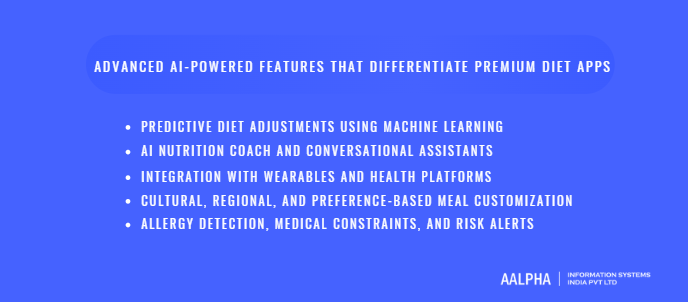
Predictive Diet Adjustments Using Machine Learning
Predictive diet adjustment is one of the most important capabilities that separates premium AI diet planner apps from basic tracking tools. Instead of reacting after a user fails to meet goals, predictive systems anticipate likely outcomes and intervene earlier. Machine learning models analyze historical user behavior, adherence patterns, activity trends, and physiological responses to forecast scenarios such as plateaus, dropout risk, nutrient deficiencies, or over-restriction. This shifts diet planning from a reactive workflow to a preventive and adaptive one.
For example, if the system detects that users with similar profiles tend to abandon plans after repeated late-night snacking, the AI can proactively adjust meal timing, recommend higher-satiety evening meals, or introduce planned snacks before adherence drops. In weight loss scenarios, predictive models can identify when a calorie deficit is likely to stall metabolic response and recommend controlled adjustments rather than escalating restriction. These predictions are not deterministic instructions but probabilistic signals that guide more intelligent recommendations.
From an architectural standpoint, predictive adjustments rely on supervised learning models trained on longitudinal data. Features include meal completion rates, variance from targets, time-of-day eating patterns, activity fluctuations, and previous response to plan changes. Premium apps invest in continuous model retraining and validation to ensure predictions remain relevant as user populations evolve. The result is a system that feels proactive, supportive, and informed, closely mirroring how experienced nutrition professionals anticipate challenges before they become visible problems.
-
AI Nutrition Coach and Conversational Assistants
An AI nutrition coach transforms the diet planner from a static interface into an interactive guidance system. Conversational assistants powered by natural language processing allow users to engage with the app in a human-like manner, asking questions, seeking clarification, or requesting adjustments without navigating complex menus. This interaction model aligns with how users naturally seek guidance and significantly lowers cognitive friction.
The AI coach can explain why a specific meal is recommended, suggest alternatives when cravings arise, or provide encouragement when progress slows. For example, users may ask how to handle an unplanned restaurant meal or whether a specific food fits their plan. The assistant responds within the boundaries of nutritional rules and personal constraints, offering practical guidance rather than generic advice. Over time, the system adapts its tone, level of detail, and intervention frequency based on user engagement patterns.
In premium applications, the AI coach also serves as a behavior-change tool. It can prompt users at moments of high relevance, such as reminding them to hydrate after intense activity or suggesting simpler meals during busy days. Importantly, these interactions are contextual rather than intrusive. The assistant uses signals such as missed logs or declining adherence to determine when to intervene. This conversational layer strengthens trust and engagement by making the app feel responsive and supportive rather than prescriptive.
-
Integration with Wearables and Health Platforms
Deep integration with wearables and health platforms is a defining feature of premium AI diet planner apps. Rather than treating activity and sleep data as optional add-ons, advanced systems incorporate these signals directly into nutritional decision-making. Wearables provide continuous, objective data on movement, energy expenditure, sleep duration, and sometimes stress indicators, which are difficult for users to self-report accurately.
When integrated effectively, this data enables more precise calorie and macro adjustments. For example, increased training load detected through wearable data can trigger higher carbohydrate recommendations to support recovery. Poor sleep patterns may prompt simpler meal suggestions or emphasize protein and fiber for appetite regulation. These adjustments reinforce the perception that recommendations are grounded in real physiological demand rather than static formulas.
Premium apps also integrate with platform-level health repositories such as Apple Health and Android Health Connect. These integrations reduce friction for users by consolidating data sources and standardizing consent management. From a product strategy perspective, seamless integration improves data completeness and retention, as users are less likely to disengage when the app adapts automatically to their lifestyle. The ability to explain how wearable data influenced diet recommendations further enhances transparency and user trust.
-
Cultural, Regional, and Preference-Based Meal Customization
Cultural and regional relevance is increasingly recognized as a critical success factor in nutrition apps. Premium AI diet planners move beyond generic Western-centric food databases and incorporate region-specific cuisines, cooking methods, and ingredient availability. This ensures that recommendations align with users’ lived realities rather than imposing unfamiliar or impractical meal options.
AI-driven customization allows the system to model dietary patterns across cultures while maintaining nutritional balance. For example, a user following a South Asian diet may receive meal plans built around traditional staples while still meeting macro and micronutrient targets. Preference modeling extends beyond cuisine to include taste profiles, repetition tolerance, cooking skill level, and budget constraints. Over time, the AI learns which foods users consistently accept or reject and refines recommendations accordingly.
This level of customization has direct implications for adherence and scalability. Apps that ignore cultural context often see higher drop-off rates, especially in non-Western markets. Premium platforms treat food preference as a dynamic signal rather than a fixed setting, allowing plans to evolve as users’ tastes or circumstances change. By respecting cultural identity and practical constraints, AI diet planners position themselves as inclusive and globally relevant solutions.
-
Allergy Detection, Medical Constraints, and Risk Alerts
Safety and risk management are essential differentiators for premium AI diet planner apps, particularly those operating in health-adjacent or clinical contexts. Allergy detection and medical constraint enforcement are not optional features but foundational safeguards. Advanced systems implement strict rule-based filters that prevent prohibited ingredients or nutrient levels from appearing in recommendations under any circumstances.
Medical constraints require additional layers of intelligence. Conditions such as diabetes, hypertension, kidney disease, or gastrointestinal disorders impose complex nutritional rules that must be consistently respected. AI systems encode these rules explicitly and validate all generated outputs against them. In premium applications, the AI also monitors user behavior for potential risk signals, such as recurring hypoglycemia patterns inferred from meal timing or excessive restriction trends that may indicate disordered eating risk.
Risk alerts are designed to be informative rather than alarmist. The system may prompt users to review certain behaviors, suggest consulting a professional, or adjust plans conservatively when uncertainty is high. From an architectural perspective, this requires clear separation between predictive optimization and safety enforcement. Premium diet apps invest heavily in testing, validation, and explainability to ensure that automated guidance remains trustworthy. These safeguards not only protect users but also build long-term credibility for the product in regulated and enterprise environments.
Benefits of Building an AI Diet Planner App for Businesses
-
Benefits for Fitness Startups and Health Tech Companies
For fitness startups and health tech companies, an AI diet planner app represents a high-impact product layer that directly influences user outcomes, engagement, and lifetime value. Nutrition is a daily decision-making domain, which means users interact with diet-related features more frequently than with most fitness or wellness tools. By embedding AI-driven diet planning into their ecosystem, companies can significantly increase daily active usage and reduce churn driven by stalled progress or lack of guidance.
AI diet planners allow fitness platforms to move beyond generic calorie calculators and differentiate through personalization at scale. Startups can offer adaptive meal recommendations that align with training intensity, recovery cycles, and evolving goals, creating a tighter feedback loop between workouts and nutrition. This integrated experience strengthens the perception that the platform understands the user holistically rather than treating fitness and diet as disconnected modules.
From a business perspective, AI-driven nutrition features also unlock premium positioning. Personalized diet planning is widely perceived as high-value, especially when it adapts over time and explains its reasoning. Health tech companies can justify higher subscription tiers or bundled plans by offering continuous, intelligent guidance rather than static content. Importantly, AI automation reduces marginal cost per user, enabling startups to scale personalized services without proportionally increasing operational expenses. This combination of higher perceived value and scalable delivery makes AI diet planner apps a strategically attractive investment for growth-focused health technology businesses.
-
Benefits for Clinics, Nutritionists, and Wellness Brands
For clinics, nutritionists, and wellness brands, AI diet planner apps function as force multipliers rather than replacements for professional expertise. One of the primary challenges in nutrition practice is the time-intensive nature of personalized meal planning, monitoring adherence, and generating progress reports. AI-powered systems automate these repetitive tasks, allowing professionals to focus on diagnosis, coaching, and complex decision-making where human judgment is most valuable.
AI diet planners also improve continuity of care between consultations. Patients or clients receive ongoing guidance and plan adjustments based on real-world behavior rather than relying solely on periodic check-ins. This leads to more consistent adherence and better outcomes, particularly in chronic condition management where diet plays a central role. From a clinical governance perspective, structured data collection and standardized reporting improve documentation quality and support evidence-based practice.
Wellness brands benefit from AI diet planner apps by extending their engagement beyond episodic programs or content consumption. Instead of selling one-time plans or courses, brands can offer ongoing, personalized experiences that adapt to individual progress. This shift supports subscription-based models and strengthens brand loyalty. Additionally, aggregated and anonymized insights from AI systems help organizations refine their offerings, identify common challenges, and design more effective interventions without relying solely on anecdotal feedback.
-
User Retention, Engagement, and Long-Term Monetization Benefits
User retention is one of the most compelling business benefits of AI diet planner apps. Nutrition is inherently iterative, and progress often unfolds gradually. Apps that fail to adapt or provide meaningful feedback during plateaus or setbacks see higher dropout rates. AI-driven personalization addresses this issue by making the experience feel responsive and supportive, even when results are not immediately visible.
Engagement improves when users perceive that recommendations are tailored to their behavior rather than imposed by rigid rules. Features such as adaptive meal suggestions, contextual nudges, and explanatory insights reinforce a sense of partnership between the user and the system. This perception is critical for long-term adherence, as users are more likely to continue using tools that acknowledge real-life constraints and adjust accordingly.
From a monetization standpoint, AI diet planner apps enable diversified revenue models. Subscription tiers can be differentiated based on personalization depth, coaching access, or advanced analytics. Businesses can introduce premium add-ons such as specialized plans, professional oversight, or integration with broader health services. Because AI systems improve with continued usage, the value of the product increases over time, aligning business incentives with user retention. This creates a virtuous cycle where engagement drives better personalization, which in turn supports higher lifetime value and sustainable revenue growth.
-
Competitive Advantage Through Personalization and Automation
Personalization and automation together create a durable competitive advantage that is difficult to replicate with manual processes or static content. AI diet planner apps continuously learn from user interactions, building proprietary insights into behavior patterns, preferences, and adherence dynamics. Over time, this data advantage compounds, making the product more accurate and relevant for its specific audience.
Automation enables businesses to deliver individualized experiences at scale without sacrificing consistency or safety. Tasks that would otherwise require large teams of nutrition professionals can be handled reliably by AI systems operating within well-defined constraints. This operational efficiency allows organizations to expand into new markets, serve diverse user segments, and maintain quality standards as they grow.
In competitive markets where many apps offer similar surface-level features, the ability to deliver adaptive, explainable, and culturally relevant nutrition guidance becomes a key differentiator. Businesses that invest early in AI-driven diet planning position themselves not just as content providers, but as intelligent health platforms capable of supporting long-term behavior change. This strategic positioning strengthens brand credibility and resilience as consumer expectations continue to rise.
User Experience and Design Considerations for Diet Planning Apps
-
Designing for Habit Formation and Daily Engagement
Effective diet planning apps are built around habit formation rather than short-term motivation. Nutrition success depends on repeated daily actions, many of which occur under time pressure, stress, or low motivation. User experience design must therefore reduce reliance on willpower and instead support automatic, low-effort behaviors. This begins with designing predictable, lightweight daily touchpoints that fit naturally into a user’s routine. Features such as morning meal previews, gentle reminders aligned with eating times, and end-of-day summaries help anchor usage to existing habits rather than forcing users to remember to open the app.
Consistency is reinforced through clear feedback loops. When users complete small actions such as logging a meal or following a recommendation, the app should immediately reflect the impact in simple, meaningful terms. Visual indicators of streaks, progress trends, or nutritional balance reinforce the connection between action and outcome. Importantly, these signals should emphasize continuity rather than perfection. Penalizing missed days or deviations often leads to disengagement, whereas designs that normalize flexibility support long-term use.
AI plays a critical role in habit-centric design by adapting engagement intensity. During periods of strong adherence, the app can reduce prompts and operate quietly in the background. When engagement drops, it can surface more guidance or simplify tasks. This adaptive cadence prevents notification fatigue while maintaining relevance. Well-designed AI diet apps feel present but not demanding, supporting behavior change through subtle, timely interventions rather than constant reminders.
-
Reducing Friction in Food Logging and Meal Tracking
Food logging is the most frequent interaction users have with a diet planning app, and it is also the primary source of drop-off when poorly designed. Reducing friction in this workflow is therefore essential. The goal is not perfect data capture, but consistent, usable input that supports personalization. Interfaces should minimize the number of steps required to log a meal and offer multiple input options so users can choose what works in a given context.
Design patterns such as quick-add buttons for frequent meals, recent foods, or favorites significantly reduce effort. Smart defaults based on time of day or past behavior further streamline the process. For example, presenting likely breakfast options in the morning reduces search and decision fatigue. When more detailed logging is required, the interface should guide users progressively rather than presenting complex forms upfront.
AI-supported inputs such as natural language text entry, voice logging, and photo-based recognition must be designed with transparency and control. Users should be able to quickly confirm or correct detected foods without navigating away from the main flow. Clear confidence indicators and editable portions help maintain trust even when estimates are imperfect. By prioritizing speed and forgiveness over precision, successful apps maintain high logging consistency, which ultimately produces better long-term personalization than sporadic but detailed entries.
-
Accessibility, Simplicity, and Behavioral Psychology Principles
Accessibility and simplicity are not secondary concerns in diet app design. They directly influence who can use the product consistently and who abandons it. Interfaces must accommodate a wide range of users, including those with limited nutritional knowledge, varying literacy levels, visual impairments, or cognitive load constraints. Clear language, readable typography, sufficient contrast, and intuitive navigation are baseline requirements rather than optional enhancements.
Behavioral psychology principles provide a framework for designing experiences that align with how people actually make decisions. Concepts such as choice architecture, loss aversion, and cognitive load reduction are particularly relevant. Presenting too many options can overwhelm users, even if all options are technically valid. Well-designed apps limit visible choices, recommend defaults, and allow exploration without pressure. This supports decision-making without inducing anxiety or fatigue.
Another critical principle is self-efficacy. Users are more likely to persist when they feel capable of succeeding. Design choices should therefore frame recommendations as achievable steps rather than idealized targets. Progress indicators should highlight improvements and learning rather than deficits. When users deviate from plans, the interface should respond with neutral, supportive messaging instead of warnings or guilt-inducing language. This tone matters because diet-related behavior is emotionally charged, and judgmental interfaces often accelerate disengagement.
By combining accessibility standards with psychologically informed design, AI diet planner apps can serve a broader audience while supporting sustained engagement. The result is an experience that feels intuitive, respectful, and aligned with real human behavior, which is ultimately the foundation of long-term success in nutrition-focused products.
Data Privacy, Security, and Compliance in AI Diet Apps
-
Handling Sensitive Health and Nutrition Data
AI diet planner apps operate in a category where user trust is directly tied to how responsibly sensitive data is handled. Nutrition data may appear benign at first glance, but when combined with health conditions, lifestyle patterns, and behavioral signals, it becomes highly sensitive personal health information. This includes details such as weight history, eating habits, medical constraints, allergies, metabolic indicators, and in some cases wearable-derived physiological data. Mishandling this information can lead to privacy violations, reputational damage, and regulatory exposure.
A robust data-handling strategy begins with data minimization. AI diet apps should collect only the information required to deliver personalization and clearly communicate why each data point is needed. Excessive or opaque data collection erodes trust and increases compliance risk. Sensitive attributes should be stored using strong encryption at rest and in transit, with strict access controls that limit exposure to authorized systems and personnel only. Modern architectures often separate personally identifiable information from behavioral and analytical data to reduce blast radius in the event of a breach.
Equally important is lifecycle management. Users must be able to view, update, export, and delete their data easily. Retention policies should define how long data is stored and under what conditions it is anonymized or purged. For AI systems, this also includes managing training datasets responsibly, ensuring that historical user data used for model improvement is anonymized and aggregated. Secure data handling is not just a technical requirement but a product expectation that directly influences adoption and long-term engagement.
-
Regulatory Considerations (HIPAA, GDPR, Regional Health Laws)
Regulatory compliance is a defining requirement for AI diet planner apps, particularly as they expand into healthcare-adjacent or enterprise use cases. The applicable regulations depend on geography, user base, and the nature of the services offered. In the United States, the Health Insurance Portability and Accountability Act (HIPAA) becomes relevant when diet apps operate in collaboration with covered entities such as clinics, hospitals, or insurers, or when they handle protected health information on their behalf. In such cases, strict requirements apply to data storage, access logging, breach notification, and business associate agreements.
In the European Union and many other jurisdictions, the General Data Protection Regulation (GDPR) governs how personal and health-related data is collected and processed. GDPR emphasizes lawful basis for processing, explicit consent for sensitive data, data minimization, and user rights such as access, rectification, and erasure. AI diet apps must also provide transparency around automated decision-making, especially when recommendations could materially influence health-related behavior. Similar principles are echoed in other regional frameworks, including data protection laws in the United Kingdom, India, and parts of Asia-Pacific.
Compliance is not a one-time checkbox but an ongoing operational responsibility. Product teams must design consent flows, data storage architectures, and audit mechanisms that support regulatory obligations by default. As AI diet apps evolve toward more advanced features such as predictive health insights or medical diet planning, regulatory scrutiny typically increases. Businesses that treat compliance as a core design constraint rather than a post-launch add-on are better positioned to scale across markets without costly rework or legal exposure.
-
Ethical AI Use, Bias Reduction, and Transparency
Beyond formal regulation, ethical AI practices play a critical role in sustaining credibility and user trust. AI diet planner apps influence daily behavior and health-related decisions, which places a responsibility on developers to ensure recommendations are fair, explainable, and aligned with user well-being. One of the primary ethical challenges is bias. Training data that overrepresents certain populations, dietary patterns, or cultural norms can lead to recommendations that are less effective or inappropriate for other groups.
Bias reduction begins with diverse data sourcing and continuous monitoring of model performance across different demographics, dietary preferences, and health conditions. It also requires explicit safeguards to prevent the system from reinforcing harmful behaviors, such as excessive restriction or disordered eating patterns. Ethical systems prioritize safety and sustainability over aggressive optimization, even when short-term metrics might suggest otherwise.
Transparency is another cornerstone of ethical AI use. Users should understand, at a high level, how recommendations are generated and what factors influence them. This does not require exposing proprietary algorithms, but it does require clear explanations of inputs, constraints, and limitations. When users can see why a suggestion was made and how it relates to their behavior or data, trust increases and engagement improves. Ethical AI design ultimately aligns business success with user well-being, ensuring that AI diet planner apps support healthier decisions without exploiting data asymmetry or behavioral vulnerabilities.
Cost of AI Diet Planner App Development
-
Factors That Influence Development Cost
The cost of developing an AI diet planner app is shaped by far more than visual design or the number of screens. At its core, pricing is driven by the depth of personalization, AI sophistication, and regulatory expectations tied to health-related data. Businesses that underestimate these dimensions often face cost overruns or expensive rework post-launch.
One of the primary cost drivers is data complexity. Apps that rely solely on user-entered data and static food databases are significantly cheaper to build than systems that integrate wearables, third-party health platforms, or continuous behavioral signals. Each additional data source increases engineering effort, data normalization requirements, and testing scope. Similarly, supporting multiple diet types, medical constraints, and regional food databases adds both development and quality assurance overhead.
Another major factor is the AI architecture itself. Rule-based personalization is comparatively inexpensive, while machine learning-driven recommendations, predictive modeling, image recognition, and conversational AI require specialized expertise, longer development cycles, and higher infrastructure costs. The choice between off-the-shelf AI services and custom-trained models also has significant budget implications. While prebuilt APIs reduce initial cost, they can increase long-term operating expenses and limit differentiation.
Compliance and security requirements further influence cost. If the app operates in regulated environments or supports medical nutrition use cases, additional investment is required for secure data storage, audit logging, consent management, and compliance workflows. Finally, platform scope matters. Supporting both iOS and Android, offline functionality, multilingual interfaces, and scalability for large user bases increases both upfront and ongoing costs. Together, these factors determine whether an AI diet planner app can be built as a lightweight consumer product or must be treated as a robust health technology platform.
-
Cost Breakdown by Features and Complexity
Development cost varies significantly depending on the feature set and level of intelligence built into the app. At a foundational level, core features such as user onboarding, basic meal planning, calorie tracking, and manual food logging form the baseline. These features typically involve standard backend logic, UI development, and integration with nutrition databases. While not trivial, they represent the lower end of the cost spectrum.
Costs increase as AI-driven personalization is introduced. Personalized meal planning engines that adapt over time require machine learning pipelines, data storage for behavioral history, and model evaluation workflows. Adding macro and micronutrient optimization further increases complexity due to rule enforcement and nutritional validation layers. Multimodal food logging using text, voice, and image recognition introduces additional expense through NLP models, computer vision pipelines, and user confirmation flows to maintain accuracy.
Advanced features such as predictive diet adjustments, conversational AI nutrition coaches, and wearable integrations significantly raise development cost. These capabilities require event-driven architectures, real-time data processing, and sophisticated model orchestration. Cultural and regional meal customization adds cost through expanded food databases, localization logic, and testing across dietary contexts. Medical diet support and allergy enforcement require strict validation layers and extensive edge-case handling, which increases both development and testing time.
From a budgeting perspective, it is important to recognize that feature cost is not linear. Each advanced capability compounds testing, maintenance, and compliance requirements. Businesses that attempt to include every premium feature in an initial release often overspend without validating user demand. A phased feature roadmap tied to measurable outcomes is usually more cost-effective than a single, feature-heavy build.
-
MVP vs Full-Scale AI Diet App Cost Comparison
The cost difference between an MVP and a full-scale AI diet planner app is substantial, and choosing the right starting point is a strategic decision. An MVP typically focuses on a narrow set of use cases, such as personalized meal plans based on user input, basic tracking, and limited AI-driven adjustments. The goal is to validate core assumptions around user engagement, adherence, and willingness to pay without building a fully autonomous AI system.
An MVP often relies on a combination of rule-based logic and lightweight machine learning, avoids complex integrations, and limits platform scope. This approach reduces upfront investment and shortens time to market, allowing businesses to gather real user data before committing to deeper AI development. MVP costs are primarily driven by product design, backend logic, and limited AI integration.
In contrast, a full-scale AI diet planner app includes predictive modeling, real-time adaptation, multimodal logging, wearable integrations, and robust reporting. It is built for scale, long-term retention, and enterprise readiness. This level of sophistication requires more extensive data infrastructure, higher security standards, and ongoing model optimization. While the initial investment is significantly higher, full-scale platforms are better positioned for premium subscriptions, B2B partnerships, and healthcare integration.
The key difference is not just cost, but risk profile. MVPs minimize risk by testing demand early, while full-scale builds assume validated demand and focus on defensibility and scale. Many successful products follow a staged approach, launching with an MVP and progressively investing in advanced AI features as usage data and revenue justify expansion.
-
Ongoing Costs: AI Model Training, Maintenance, and Compliance
Development cost does not end at launch. AI diet planner apps incur ongoing operational expenses that must be planned from the outset. One of the largest recurring costs is AI model maintenance. Models require periodic retraining to account for new user behavior, dietary trends, and evolving data distributions. This includes data engineering work, validation processes, and monitoring to ensure performance does not degrade over time.
Infrastructure costs also scale with usage. Hosting user data securely, running recommendation engines, processing images, and supporting real-time adaptations require cloud resources that grow as the user base expands. Apps that rely heavily on third-party AI services face variable costs tied directly to usage volume, which can impact margins if not carefully managed.
Compliance introduces additional recurring expenses. Security audits, penetration testing, data protection reviews, and regulatory updates are ongoing responsibilities, particularly in regions governed by GDPR, HIPAA, or similar frameworks. As features expand into predictive health insights or medical diet support, compliance costs often increase due to heightened scrutiny.
Finally, product iteration itself is an ongoing cost. User expectations evolve, food databases require updates, and new devices or platforms emerge. Successful AI diet planner apps budget for continuous improvement rather than treating launch as the finish line. Businesses that plan for these ongoing costs upfront are better positioned to sustain quality, trust, and profitability over the long term.
Monetization Models for AI Diet Planner Apps
-
Subscription-Based Models
Subscription-based monetization is the most common and sustainable revenue model for AI diet planner apps because nutrition is an ongoing process rather than a one-time transaction. Users derive value from continuous guidance, adaptive recommendations, and long-term progress tracking, which aligns naturally with recurring billing. Subscriptions are typically structured on a monthly or annual basis, with pricing tiers reflecting the depth of personalization and feature access.
At the basic subscription level, users may receive personalized meal plans, calorie and macro tracking, and limited AI-driven adjustments. Higher tiers often unlock advanced capabilities such as predictive diet adjustments, wearable integrations, or conversational AI coaching. This tiered approach allows businesses to serve a broad audience while capturing additional value from users who seek deeper guidance. Annual plans are commonly incentivized with discounted pricing to improve cash flow and reduce churn.
From a business perspective, subscription models provide predictable revenue and facilitate long-term planning. They also create incentives to continuously improve the product, as retention becomes a primary growth lever. AI diet planner apps that clearly communicate ongoing value through adaptive features and measurable progress tend to justify recurring fees more effectively than those that rely on static content or one-time plans.
-
Freemium, Premium Plans, and Upselling Strategies
Freemium models play a critical role in user acquisition for AI diet planner apps, particularly in competitive consumer markets. A well-designed free tier lowers the barrier to entry and allows users to experience core functionality before committing financially. Typical free features include basic onboarding, limited meal recommendations, or simplified tracking, with clear boundaries that highlight the benefits of upgrading.
Premium plans build on this foundation by offering deeper personalization, advanced analytics, and enhanced convenience. Upselling strategies often focus on removing friction or adding intelligence rather than restricting basic usability. For example, users may upgrade to access automated meal adjustments, image-based food logging, or more detailed nutrient insights. This approach frames premium features as enablers of success rather than artificial limitations.
Effective upselling relies on timing and relevance. AI systems can identify moments when users are most likely to perceive value, such as during plateaus, after consistent engagement, or when seeking answers to specific challenges. Contextual upgrade prompts that align with user needs are more effective than generic paywalls. When executed thoughtfully, freemium models balance growth and monetization without undermining trust or user experience.
-
Enterprise, B2B, and White-Label Opportunities
Beyond direct-to-consumer monetization, AI diet planner apps offer significant opportunities in enterprise and B2B contexts. Corporations increasingly invest in wellness programs to improve employee health, engagement, and productivity. AI-powered nutrition platforms can be licensed as part of broader wellness initiatives, with pricing based on user volume, feature scope, or contract duration. These arrangements provide stable revenue streams and reduce dependence on individual subscriptions.
Healthcare providers, insurers, and wellness brands also represent valuable B2B partners. Clinics may license AI diet planner technology to support patient care, while insurers may integrate nutrition tools into preventive health offerings. In these cases, monetization often involves per-member-per-month pricing or bundled service agreements. Regulatory compliance and data governance become particularly important in these contexts, but so does the opportunity to deliver high-impact, evidence-based interventions.
White-label solutions extend monetization further by allowing organizations to brand the AI diet planner as their own. Fitness chains, wellness apps, or regional health platforms can deploy customized versions without building the technology from scratch. This model scales efficiently and leverages existing distribution channels. For AI diet planner providers, B2B and white-label strategies diversify revenue, reduce reliance on consumer acquisition, and position the platform as a foundational infrastructure rather than a standalone app.
Challenges, Risks, and Common Mistakes to Avoid
-
Data Quality and Accuracy Risks
Data quality is one of the most significant risk factors in AI diet planner apps, yet it is often underestimated during development. AI systems are only as reliable as the data they receive, and nutrition data is inherently noisy. Users frequently log meals inconsistently, underestimate portion sizes, or skip entries altogether. Wearable data, while valuable, can also be incomplete or inaccurate due to device limitations, inconsistent usage, or synchronization failures. When these imperfections are not accounted for, AI models may produce misleading recommendations.
A common mistake is treating logged data as ground truth rather than probabilistic input. Effective AI diet planners model uncertainty and focus on patterns over time instead of individual data points. Systems that rely too heavily on exact calorie counts or rigid thresholds are particularly vulnerable to compounding errors. Another risk arises from food databases that lack regional coverage or up-to-date nutritional values, leading to inaccurate macro and micronutrient calculations.
Mitigating these risks requires deliberate design choices. Validation layers, confidence ranges, and anomaly detection help prevent extreme recommendations based on flawed data. Regular database updates and user-friendly correction mechanisms improve accuracy over time. Teams that invest early in data governance and quality monitoring are better positioned to deliver consistent, trustworthy guidance as their user base scales.
-
Overpromising Medical Outcomes
Overpromising outcomes is a critical mistake that exposes AI diet planner apps to legal, ethical, and reputational risk. Nutrition plays an important role in health, but it is rarely a standalone solution, particularly for medical conditions. Claims suggesting guaranteed weight loss, disease reversal, or clinical outcomes can mislead users and attract regulatory scrutiny.
This risk is amplified when AI-driven personalization creates an illusion of certainty. Users may assume that algorithmic recommendations are clinically validated or medically prescriptive, even when the app is intended for general wellness. Without clear boundaries and disclaimers, businesses risk crossing into regulated medical territory without the appropriate safeguards or approvals.
Responsible products frame outcomes in terms of support, guidance, and probability rather than certainty. They emphasize behavior change, consistency, and incremental improvement instead of promising specific results. In medical or clinical use cases, AI diet planners should be positioned as decision-support tools that complement professional care rather than replace it. Clear communication around scope and limitations protects both users and businesses while preserving long-term credibility.
-
AI Explainability and User Trust Issues
User trust is a prerequisite for sustained engagement in AI diet planner apps, and explainability is central to earning that trust. When users do not understand why a recommendation was made or perceive it as arbitrary, they are less likely to follow it consistently. Black-box systems that produce opaque outputs often struggle with adoption, even if their predictions are technically accurate.
A common mistake is prioritizing optimization over transparency. Highly complex models may achieve marginal performance gains but at the cost of interpretability. Without accessible explanations, users may question whether recommendations reflect their goals, preferences, or constraints. This skepticism is especially pronounced in culturally diverse or medically sensitive contexts where trust is fragile.
Effective AI diet planners address this challenge by pairing recommendations with concise, human-readable explanations. These explanations focus on key drivers, such as recent behavior, activity levels, or nutritional gaps, rather than exposing technical details. Providing users with the ability to adjust inputs and see how recommendations change reinforces a sense of control and agency. Trust is further strengthened when the system acknowledges uncertainty and adapts gracefully to feedback. By designing for explainability from the outset, teams reduce abandonment risk and build products users are willing to rely on over the long term.
Why Aalpha for AI Diet Planner App Development
Building an AI diet planner app is not a generic software project. It sits at the intersection of nutrition science, behavioral psychology, data engineering, artificial intelligence, and regulatory responsibility. Aalpha approaches this category with a clear understanding that success depends on far more than assembling features. It requires designing a system that users can trust daily, businesses can scale confidently, and regulators can scrutinize without risk.
Aalpha brings deep experience in developing AI-powered, data-intensive applications across healthcare, wellness, and consumer platforms, operating in a manner similar to how a specialized AI development company approaches complex, data-driven product builds. Rather than relying on one-size-fits-all templates, Aalpha designs AI diet planner solutions around specific business goals, user demographics, and compliance requirements. This includes carefully architecting personalization engines that balance rule-based nutrition logic with machine learning, ensuring recommendations remain safe, explainable, and adaptable over time. The outcome is not merely an application that generates meal plans, but a continuously evolving system that improves as user behavior, preferences, and contextual data change.
One of Aalpha’s core strengths is its end-to-end product thinking. From early discovery and requirements definition to AI model selection, data pipelines, and long-term scalability planning, Aalpha treats diet planner development as a lifecycle investment. This is particularly important in nutrition products, where early architectural decisions directly affect future costs, regulatory exposure, and feature expansion. Aalpha helps businesses avoid common pitfalls such as overengineering AI too early, underestimating data quality challenges, or building personalization that cannot scale beyond a small user base.
Compliance and data responsibility are integral to Aalpha’s delivery approach. AI diet planner apps often handle sensitive health and lifestyle data, which demands strong security, transparent consent flows, and regulatory awareness from day one. Aalpha designs systems with privacy-by-design principles, clear data boundaries, and readiness for frameworks such as GDPR and healthcare-adjacent compliance requirements. This allows businesses to expand into new markets or enterprise partnerships without costly rework.
Equally important is Aalpha’s focus on real-world usability. Many AI nutrition apps fail not because the algorithms are weak, but because the user experience does not align with how people actually eat, log food, or sustain habits. Aalpha emphasizes practical UX design, friction reduction, and explainable AI outputs so users understand and trust the guidance they receive. This approach directly supports higher engagement, retention, and long-term monetization.
For businesses looking to build an AI diet planner app that is technically robust, commercially viable, and trusted by users, Aalpha offers a combination of AI expertise, healthcare domain understanding, and scalable product engineering. The focus is not on delivering a feature checklist, but on building a sustainable AI-powered nutrition platform that can grow with user needs and market expectations.
Conclusion
Building an AI diet planner app represents a strategic move into one of the most behavior-driven and data-rich segments of digital health. Nutrition influences daily decisions, long-term health outcomes, and user engagement more consistently than most wellness features. As consumer expectations shift toward personalization, adaptability, and real-time guidance, static meal plans and generic calorie trackers no longer meet market demand. AI-driven diet planning addresses this gap by translating complex nutrition science and behavioral data into practical, day-to-day decisions users can follow.
For founders and product teams, the opportunity lies not simply in launching another nutrition app, but in designing a system that users trust enough to rely on daily. Successful AI diet planner apps treat personalization as an ongoing process, not a configuration step. They adapt to real behavior, respect cultural and medical constraints, explain their recommendations clearly, and balance automation with safety. When built correctly, these systems drive higher retention, stronger monetization, and long-term defensibility through accumulated learning and user insight.
At the same time, AI diet planner development demands disciplined execution. Costs are shaped by data complexity, AI architecture choices, compliance requirements, and long-term maintenance, not just initial build effort. Products that overpromise medical outcomes, ignore data quality limitations, or treat privacy as an afterthought struggle to scale and attract enterprise or healthcare partnerships. Strategic planning, phased development, and early alignment between product goals and technical architecture are essential for controlling risk and maximizing return on investment.
From a business perspective, AI diet planner apps support multiple growth paths. They fit naturally into subscription models, enable premium upsells through deeper personalization, and open B2B and white-label opportunities across fitness, wellness, and healthcare ecosystems. More importantly, they position organizations as long-term health partners rather than short-term content providers. This shift is what allows AI nutrition platforms to move beyond engagement spikes and build sustainable value.
If you are exploring AI diet planner app development, the next step is clarity. Define the user segment you want to serve, the level of personalization you need to deliver, and the regulatory environments you plan to operate in. Align those decisions with a technical and product roadmap that supports learning, scalability, and trust from day one.
Aalpha works with businesses to design and build AI diet planner platforms that are grounded in real user behavior, responsible data practices, and scalable AI architecture. If you are ready to move from concept to a production-ready AI nutrition product, this is the stage where the right technical and strategic partner makes the difference.
If you are planning to build an AI diet planner app, early technical clarity can significantly reduce risk and rework. Contact us to discuss how Aalpha can support your AI nutrition product from concept to production.