


E-prescription app development represents a structural shift in how medications are prescribed, transmitted, and fulfilled across healthcare systems. Instead of relying on handwritten notes, scanned PDFs, or verbally communicated prescriptions, e-prescription apps enable licensed healthcare providers to generate, sign, and transmit prescriptions digitally to patients and pharmacies through secure, standardized systems. This transition is not cosmetic or convenience-driven. It directly addresses long-standing issues in healthcare such as medication errors, illegible handwriting, prescription fraud, delayed treatment, and fragmented patient records. According to the World Health Organization, medication errors are one of the leading causes of avoidable harm in healthcare systems worldwide, and prescription-stage mistakes account for a significant portion of these errors. hjsgdfysgdfhf
From a technology perspective, e-prescription apps sit at the intersection of clinical workflows, regulatory compliance, interoperability standards, and patient experience design. They must operate reliably in high-stakes environments where accuracy, auditability, and data protection are mandatory. As healthcare systems across the US, Europe, and several parts of Asia move toward value-based care and digital-first delivery models, e-prescription apps have become foundational infrastructure rather than optional add-ons. They serve as a connective layer between doctors, patients, pharmacies, insurers, and electronic health record systems, enabling safer prescribing and faster medication access at scale.
What Is an E-Prescription App
An e-prescription app is a regulated healthcare software solution that allows authorized medical practitioners to create, manage, and transmit prescriptions electronically instead of issuing paper-based prescriptions. At its core, the app digitizes the prescribing process while enforcing clinical, legal, and safety checks that are difficult to guarantee with manual methods. A typical e-prescription app includes interfaces for doctors to select medications from standardized drug databases, specify dosage and duration, digitally sign prescriptions, and send them directly to a patient’s chosen pharmacy or a centralized prescription exchange.
Unlike simple document-sharing tools, an e-prescription app operates within strict regulatory frameworks. It validates prescriber credentials, logs every prescription event for audit purposes, and integrates with national or regional drug databases to prevent invalid or unsafe medication orders. Many systems also include real-time checks for drug interactions, allergy conflicts, and duplicate therapies, reducing the likelihood of adverse drug events. For patients, the app acts as a secure repository where prescriptions can be viewed, shared, refilled, or forwarded to pharmacies without the risk of loss or tampering.
Importantly, an e-prescription app is not limited to a mobile interface. It often consists of a multi-layered platform that includes doctor dashboards, patient-facing apps or portals, pharmacy systems, and backend services connected to electronic medical records. This makes e-prescription app development a specialized discipline within healthcare software, requiring deep understanding of clinical workflows, interoperability standards such as HL7 and FHIR, and region-specific prescribing laws.
Why E-Prescriptions Are Becoming Mandatory in Modern Healthcare
The growing mandate for e-prescriptions is driven by a combination of patient safety concerns, regulatory pressure, and systemic efficiency goals. Governments and healthcare authorities have increasingly recognized that paper prescriptions are prone to errors, misuse, and delays that digital systems can significantly reduce. In the United States, for example, federal regulations have pushed for mandatory electronic prescribing of controlled substances to combat opioid misuse and prescription fraud, while the Centers for Medicare and Medicaid Services have tied e-prescribing adoption to reimbursement incentives and penalties. Similar regulatory frameworks exist across the European Union, where countries such as Sweden, Denmark, and Estonia have achieved near-universal e-prescription adoption.
Another key driver is traceability. E-prescriptions create a complete digital audit trail that records who prescribed what, when, and under which clinical context. This traceability is essential for monitoring controlled substances, identifying prescribing patterns, and ensuring accountability across healthcare networks. During public health emergencies, such as pandemics or drug shortages, digital prescribing systems allow authorities to analyze prescribing data in near real time and respond more effectively.
Beyond regulation, patient expectations have also shifted. As telemedicine, digital pharmacies, and remote care become mainstream, patients increasingly expect prescriptions to be issued and fulfilled without physical visits or paperwork. E-prescriptions enable continuity of care across in-person and virtual consultations, ensuring that treatment does not break down due to administrative friction. For healthcare providers, mandatory e-prescribing also reduces administrative overhead, lowers malpractice risk linked to prescription errors, and aligns clinical practices with modern digital standards.
How E-Prescription Apps Fit into the Digital Healthcare Ecosystem
E-prescription apps function as a critical interoperability layer within the broader digital healthcare ecosystem. They do not operate in isolation but are tightly integrated with electronic health records, telemedicine platforms, pharmacy management systems, insurance verification services, and clinical decision support tools. When a doctor issues an e-prescription, the app often pulls patient data from the electronic health record, applies clinical rules based on diagnosis and history, and transmits structured prescription data to pharmacy systems that can process it automatically.
This integration enables a more connected and data-driven care journey. Prescriptions become part of the patient’s longitudinal health record, allowing future providers to see medication history, adherence patterns, and prior treatment outcomes. Pharmacies can prepare medications in advance, check inventory automatically, and communicate clarifications digitally with prescribers. Insurers and payers can validate coverage and formulary compliance earlier in the process, reducing claim rejections and delays.
E-prescription apps also play a growing role in automation and population health management. Aggregated prescription data can reveal trends related to chronic disease management, antibiotic overuse, or medication adherence gaps. When combined with analytics and AI systems, this data supports preventive care strategies and more informed clinical decision-making. In messaging-first healthcare models, e-prescription apps are increasingly delivered through secure channels such as patient portals or compliant messaging platforms, further reducing friction in medication access.
Within the digital healthcare ecosystem, e-prescription app development is therefore not just about replacing paper. It is about enabling safer, faster, and more coordinated care by ensuring that medication workflows are fully integrated, compliant, and ready for scale in an increasingly digital health environment.
How E-Prescription Systems Work End-to-End
Understanding how an e-prescription system functions end to end is essential for healthcare providers, product owners, and technology leaders evaluating digital prescribing solutions. Unlike paper-based prescribing, which relies heavily on manual handoffs and human interpretation, e-prescription systems are designed as tightly controlled digital workflows. Each stage, from clinical decision-making to medication fulfillment, is governed by validation rules, secure data exchange, and audit mechanisms. This end-to-end structure is what enables e-prescriptions to reduce errors, improve traceability, and scale across healthcare networks without compromising safety or compliance.
-
Traditional Prescription Workflow vs Digital Prescription Workflow
In a traditional prescription workflow, the process begins with a doctor writing a prescription by hand or generating a printed document after a consultation. This prescription is then physically handed to the patient, who carries it to a pharmacy of their choice. The pharmacist must interpret the handwriting or printed instructions, manually enter the medication details into their system, and often call the doctor’s office if there are ambiguities around dosage, drug name, or duration. This workflow introduces multiple points of failure, including illegible handwriting, transcription errors, lost prescriptions, unauthorized alterations, and delays caused by back-and-forth communication.
By contrast, a digital prescription workflow replaces manual steps with structured, system-driven processes. During a consultation, the doctor selects medications from a standardized digital drug database within the e-prescription app. Dosage, frequency, and duration are entered using predefined fields rather than free text, reducing ambiguity. The prescription is digitally signed and transmitted securely to the patient’s selected pharmacy or a centralized prescription exchange. There is no physical document to lose or alter, and pharmacists receive prescriptions in a machine-readable format that can be processed directly by their systems.
The digital workflow also enables real-time safeguards that are not possible in traditional prescribing. Drug interaction checks, allergy alerts, duplicate therapy warnings, and regulatory validations occur before the prescription is finalized. From an operational perspective, digital workflows shorten fulfillment times, reduce administrative follow-ups, and create a complete audit trail of prescribing activity. This shift is not merely about convenience. It fundamentally restructures how responsibility, accuracy, and accountability are enforced across the medication lifecycle.
-
Core Components of an E-Prescription System
An e-prescription system is not a single application but a coordinated set of interfaces and services designed to serve different stakeholders while maintaining a unified data model. The doctor interface is the clinical entry point of the system. It allows authorized prescribers to search medications, configure prescriptions, attach diagnoses or clinical notes, and digitally sign orders. This interface must align closely with real-world clinical workflows, offering speed and clarity without compromising safety checks or compliance requirements.
The patient interface serves as the access and management layer for prescriptions once they are issued. Patients can view active and past prescriptions, share them with pharmacies, request refills where permitted, and receive reminders related to medication adherence. In many implementations, this interface is delivered through a mobile app, web portal, or secure messaging channel, ensuring accessibility without exposing sensitive data.
The pharmacy interface is responsible for receiving, validating, and processing incoming prescriptions. It integrates with pharmacy management systems to match prescriptions with inventory, flag issues such as unavailable drugs, and record dispensing events. Pharmacists can communicate digitally with prescribers for clarifications, reducing delays and documentation gaps.
Behind these interfaces sits the backend infrastructure, which handles authentication, authorization, data storage, encryption, and audit logging. The backend enforces regulatory rules, maintains prescription history, and ensures that every action is traceable. Integrations form the final critical component. These include connections to electronic health record systems, national drug databases, insurance and formulary services, and regulatory reporting systems. Together, these components create a cohesive platform capable of supporting secure, compliant digital prescribing at scale.
Step-by-Step Flow of an E-Prescription
The end-to-end flow of an e-prescription begins during a clinical consultation, whether conducted in person or via telemedicine app. The doctor accesses the e-prescription system and reviews the patient’s medical history, allergies, and current medications, often pulled directly from an electronic health record. Based on the diagnosis, the doctor selects the appropriate medication from the system’s drug database and specifies dosage, frequency, and duration using structured inputs.
Before the prescription can be finalized, the system performs automated validations. These checks may include verifying the prescriber’s credentials, ensuring the medication is permitted for the given diagnosis, checking for drug interactions or allergy conflicts, and confirming compliance with regional prescribing regulations. If issues are detected, the system alerts the prescriber and requires resolution before proceeding.
Once validated, the prescription is digitally signed and securely transmitted. Depending on the implementation, it may be sent directly to a selected pharmacy, made available to the patient for pharmacy selection, or routed through a centralized prescription exchange. The patient receives confirmation and can view the prescription through their designated interface.
At the pharmacy, the prescription is received electronically and imported into the pharmacy system without manual re-entry. The pharmacist reviews the prescription, checks inventory, and prepares the medication. If clarification is needed, communication occurs digitally within the system, preserving a clear record of all interactions. After dispensing, the fulfillment status is updated in the system, closing the loop and making the information available to both the patient and the prescribing provider.
This structured, end-to-end flow ensures that prescriptions move seamlessly from clinical decision to medication delivery, with accuracy, traceability, and safety embedded at every step.
Types of E-Prescription Apps and Use Cases
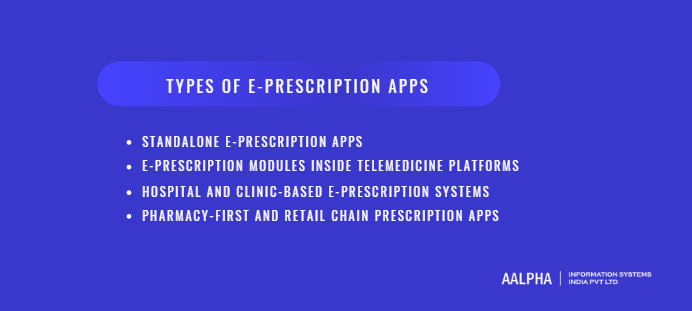
E-prescription apps are not deployed in a single, uniform format. Their structure, feature depth, and integration requirements vary significantly depending on who initiates prescriptions, how medications are fulfilled, and where the system sits within the broader healthcare workflow. Understanding these variations is essential for founders, healthcare administrators, and technology teams planning an e-prescription app development initiative. Each type of e-prescription app solves a distinct operational problem and is shaped by different regulatory, clinical, and commercial priorities.
-
Standalone E-Prescription Apps
Standalone e-prescription apps are purpose-built platforms focused exclusively on digital prescribing without being tightly coupled to broader care delivery systems. These apps are typically used by independent physicians, small clinics, or specialty practices that need a compliant way to issue electronic prescriptions without investing in a full electronic health record system. The primary value of a standalone app lies in speed of deployment and simplicity. Doctors can onboard quickly, verify their credentials, and begin issuing digital prescriptions through a lightweight interface that emphasizes prescribing efficiency.
From a use-case perspective, standalone e-prescription apps are common in outpatient practices, follow-up consultations, and chronic care scenarios where prescriptions are the primary clinical output. They are also used in regions where regulations mandate electronic prescribing but do not require full EHR adoption. While these apps may integrate with basic patient records or pharmacy networks, they intentionally avoid the complexity of hospital-grade systems. This makes them cost-effective and easier to maintain, though they may offer limited clinical context compared to more integrated solutions.
-
E-Prescription Modules Inside Telemedicine Platforms
E-prescription modules embedded within telemedicine platforms are designed to support remote consultations and digital-first care models. In this setup, e-prescribing is not a standalone activity but a natural extension of virtual doctor-patient interactions. After a video or chat consultation, the doctor issues a prescription directly within the telemedicine interface, which is then transmitted electronically to the patient or pharmacy. This integration ensures continuity of care without requiring patients to switch platforms or handle separate apps.
The use cases for this model have expanded rapidly with the growth of virtual care. Telemedicine platforms serving primary care, mental health, dermatology, and urgent care rely heavily on integrated e-prescription modules to deliver complete treatment experiences. These systems often include additional safeguards, such as identity verification, consultation recording, and clinical decision support tailored to remote assessments. Because telemedicine platforms operate across jurisdictions, their e-prescription modules must also manage region-specific prescribing rules and pharmacy integrations. As a result, this type of e-prescription app is more complex to build but offers higher patient convenience and stronger engagement.
-
Hospital and Clinic-Based E-Prescription Systems
Hospital and clinic-based e-prescription systems are enterprise-grade solutions embedded deeply within clinical information systems. Unlike standalone or telemedicine-focused apps, these systems are designed to support high patient volumes, multiple departments, and complex care pathways. Prescriptions are issued as part of a broader clinical workflow that includes diagnostics, lab results, inpatient orders, and discharge planning. Integration with electronic health records is not optional in this context but fundamental to how the system operates.
Use cases for hospital-based e-prescription systems include inpatient medication orders, discharge prescriptions, specialist referrals, and long-term treatment management. These systems often support advanced healthcare features such as role-based access control, multi-level approvals, and detailed audit trails required for accreditation and regulatory compliance. Because hospitals manage controlled substances and high-risk medications at scale, their e-prescription systems must enforce stringent validation and reporting requirements. While development and implementation costs are higher, these systems deliver significant value through reduced medication errors, streamlined workflows, and improved coordination between departments and affiliated pharmacies.
-
Pharmacy-First and Retail Chain Prescription Apps
Pharmacy-first e-prescription apps are designed around the medication fulfillment experience rather than the prescribing encounter. In this model, pharmacies or retail chains build or adopt platforms that receive digital prescriptions, manage refills, and engage patients directly. Patients can receive prescriptions from multiple providers and have them consolidated within a single pharmacy app, where they can track fulfillment status, request refills, and receive adherence reminders.
These apps are commonly used by large retail pharmacy chains and digital pharmacy startups seeking to improve customer retention and operational efficiency. From a use-case standpoint, pharmacy-first apps are particularly effective in chronic disease management, where ongoing medication adherence and refill automation are critical. They also support features such as inventory optimization, automated substitution approvals, and direct communication with prescribers. While these systems may not initiate prescriptions, they play a crucial role in closing the loop between prescribing and medication consumption. As digital health ecosystems mature, pharmacy-first e-prescription apps increasingly act as patient engagement hubs, reinforcing the central role of medication management in modern healthcare delivery.
Key Stakeholders and User Roles in E-Prescription Apps
E-prescription apps are multi-stakeholder systems where value is created only when the needs of all participants are addressed simultaneously. Doctors, patients, and pharmacists interact with the same prescription data, but each role has distinct priorities, responsibilities, and risk exposure. Effective e-prescription app development requires a clear understanding of these user roles and how their workflows intersect. When one stakeholder’s needs are ignored, adoption suffers and the system fails to deliver its intended safety and efficiency gains.
-
Doctor and Healthcare Provider Perspective
For doctors and healthcare providers, an e-prescription app is primarily a clinical tool that must support fast, accurate, and defensible decision-making. Providers operate under time pressure and legal responsibility, so the prescribing interface must reduce cognitive load rather than add complexity. From their perspective, the app should surface the right information at the right moment, including patient history, allergies, current medications, and relevant clinical guidelines, without forcing excessive navigation or data entry.
Healthcare providers also rely on e-prescription systems to protect them from avoidable errors and liability. Automated checks for drug interactions, contraindications, and dosage limits act as a second layer of clinical validation, especially in high-volume outpatient or telemedicine settings. Digital audit trails are equally important. Every prescription must be traceable to the prescriber, time, diagnosis context, and approval flow, ensuring accountability and compliance with medical regulations.
Beyond safety, providers value workflow continuity. An effective e-prescription app integrates seamlessly with electronic health records (EHR) and consultation tools so that prescribing feels like a natural extension of patient care rather than a separate administrative task. When designed correctly, the system saves time, reduces follow-up calls from pharmacies, and allows doctors to focus more on clinical outcomes than paperwork.
-
Patient Perspective
From the patient’s perspective, an e-prescription app represents access, clarity, and control over their medication journey. Patients often struggle with lost paper prescriptions, unclear instructions, or delays in filling medications, all of which can directly affect treatment outcomes. Digital prescriptions eliminate these issues by making medication information available in a secure, accessible format that can be retrieved anytime without relying on physical documents.
Patients expect e-prescription apps to be simple and transparent. They want to view active and past prescriptions, understand dosage instructions clearly, and know where and when medications can be collected or delivered. In chronic care scenarios, patients also rely on features such as refill requests, medication reminders, and adherence tracking to manage long-term treatment plans. These capabilities are especially important for elderly patients and individuals managing multiple conditions.
Trust is a critical factor for patients. Because prescriptions contain sensitive health data, patients need confidence that their information is secure and shared only with authorized parties. A well-designed e-prescription app provides clear consent mechanisms, visibility into who has accessed their prescription, and reassurance that the system complies with healthcare data protection laws. When patients feel informed and empowered rather than confused or excluded, adoption and adherence improve significantly.
-
Pharmacy and Pharmacist Perspective
Pharmacists view e-prescription apps through the lens of accuracy, efficiency, and operational reliability. Traditional paper prescriptions often require interpretation, manual data entry, and frequent clarification calls, all of which slow down dispensing and increase the risk of errors. E-prescription systems address these issues by delivering prescriptions in structured, machine-readable formats that integrate directly into pharmacy management software.
For pharmacists, one of the most valuable aspects of digital prescriptions is reduced ambiguity. Drug names, dosages, and instructions are standardized, minimizing misinterpretation. Built-in validation rules also help flag incomplete or non-compliant prescriptions before dispensing begins. This reduces the likelihood of dispensing errors and strengthens the pharmacist’s role as a final safety checkpoint in the medication process.
Pharmacy workflows also benefit from better coordination. E-prescription apps allow pharmacists to check inventory in advance, manage refill schedules, and communicate digitally with prescribers when substitutions or clarifications are required. These interactions are logged within the system, creating a clear record for audits and regulatory reviews. In high-volume retail or hospital pharmacy environments, these efficiencies translate directly into faster turnaround times and improved patient satisfaction.
Across all three stakeholder groups, the success of an e-prescription app depends on balanced design. The system must support clinical accuracy for providers, usability and transparency for patients, and operational efficiency for pharmacists. Aligning these perspectives is what transforms e-prescription apps from isolated tools into trusted infrastructure within modern healthcare systems.
Core Features of an E-Prescription App (Doctor, Patient, Pharmacy)
The effectiveness of an e-prescription app is determined by how well its core features support real-world medical workflows while maintaining regulatory compliance and data integrity. Unlike consumer health apps, e-prescription platforms operate in environments where errors carry clinical and legal consequences. Feature design must therefore prioritize accuracy, traceability, and clarity for every stakeholder involved. Doctor-side features focus on safe and efficient prescribing, patient-side features emphasize access and adherence, and pharmacy-side features ensure accurate fulfillment and accountability. When these feature sets are aligned, the system functions as a cohesive medication management infrastructure rather than a collection of disconnected tools.
Doctor-Side Features
Doctor-facing features form the clinical backbone of an e-prescription app. These capabilities must support rapid decision-making without sacrificing safety or compliance, especially in high-volume outpatient or telemedicine settings.
Digital prescription creation is the foundational feature. Instead of free-text entry, doctors create prescriptions using structured fields that define medication name, dosage, frequency, route of administration, and treatment duration. This structure eliminates ambiguity and ensures prescriptions are machine-readable by pharmacy systems. The interface must be optimized for speed, allowing providers to complete prescriptions in seconds while still capturing all mandatory clinical details. Digital signing mechanisms confirm prescriber identity and create a legally valid prescription record.
A comprehensive drug database with auto-suggestions is critical to safe prescribing. The system should integrate with standardized drug repositories that include generic and brand names, formulations, strengths, and regulatory classifications. As doctors type, the app presents filtered suggestions based on availability, formulary rules, and prescribing history. Auto-suggestions reduce typing errors and help providers quickly identify appropriate medications. Advanced implementations also highlight preferred or commonly prescribed options within specific specialties, supporting consistency across clinical teams.
Dosage validation and safety checks are among the most valuable features from a clinical risk perspective. The system automatically evaluates prescriptions against known dosage limits, patient age, weight, renal function, and documented allergies. Drug interaction checks flag potential conflicts with existing medications, while duplicate therapy alerts prevent overlapping treatments. These safeguards operate in real time, prompting doctors to adjust prescriptions before submission. By embedding clinical intelligence into the prescribing workflow, the app reduces reliance on memory and manual cross-checking.
Refill approvals allow doctors to manage ongoing treatment responsibly. Instead of issuing open-ended refills, providers can define refill limits and expiration dates. Refill requests from patients or pharmacies are routed back to the doctor for review, ensuring continued clinical oversight. This feature is especially important for chronic medications and controlled substances, where inappropriate refills pose safety and compliance risks. Digital approval workflows also reduce administrative calls and paperwork.
Clinical notes and diagnosis linking connect prescriptions to the broader medical context. Doctors can associate each prescription with a diagnosis code, consultation note, or treatment plan. This linkage improves continuity of care and provides justification for prescribing decisions during audits or insurance reviews. Over time, it also builds a richer patient medication history that supports better clinical decisions in future encounters. Together, these doctor-side features transform prescribing into a structured, defensible, and efficient digital process.
Patient-Side Features
Patient-facing features determine whether e-prescription apps improve adherence and engagement or simply digitize paperwork. The goal is to give patients visibility and control over their medications without exposing them to unnecessary complexity.
Prescription access and history is the core patient feature. Patients should be able to view all active and past prescriptions in one secure location, regardless of where they were issued. Each prescription must clearly display medication details, dosage instructions, prescribing doctor, and validity period. This eliminates confusion caused by misplaced paper prescriptions and helps patients understand their treatment plans. Access to historical prescriptions is also valuable during follow-up visits or when consulting new providers.
Medication reminders support adherence, particularly for chronic conditions. The app can generate reminders based on prescribed dosage schedules, notifying patients when it is time to take their medication or renew a prescription. These reminders should be configurable so patients can choose timing and notification methods that fit their routines. By reinforcing consistent medication use, reminders help reduce missed doses and improve clinical outcomes.
Refill requests simplify ongoing treatment management. When a prescription is nearing expiration or has remaining refills, patients can submit refill requests directly through the app. These requests are routed to the prescribing doctor or pharmacy based on predefined rules. This feature eliminates phone calls and reduces delays, while still preserving clinical oversight. Clear status updates inform patients whether a refill is approved, pending, or declined.
Pharmacy selection gives patients flexibility and convenience. Patients can choose their preferred pharmacy when filling a prescription, whether based on location, pricing, or delivery options. In integrated systems, the app may display pharmacy availability, operating hours, or stock status. Allowing patients to change pharmacies digitally is especially valuable when traveling or relocating.
Prescription sharing and downloads enable controlled information exchange. Patients may need to share prescriptions with caregivers, specialists, or alternate pharmacies. The app should support secure sharing mechanisms that preserve authenticity and prevent tampering. Downloadable formats, where permitted by regulation, provide additional flexibility. Throughout these interactions, clear consent controls and access logs reinforce trust and compliance. Well-designed patient-side features turn e-prescriptions into accessible, understandable tools rather than opaque clinical artifacts.
Pharmacy-Side Features
Pharmacy-facing features close the loop between prescribing and medication delivery. These capabilities must support accuracy, efficiency, and regulatory compliance in high-throughput environments.
Prescription receipt and verification is the entry point for pharmacy workflows. Prescriptions arrive electronically in structured formats that integrate directly with pharmacy management systems. Automated verification checks confirm prescriber credentials, prescription validity, and regulatory compliance before dispensing begins. This reduces manual data entry and minimizes the risk of misinterpretation associated with handwritten prescriptions.
Inventory matching streamlines fulfillment. Once a prescription is received, the system checks available stock and identifies whether the medication can be dispensed as prescribed. If substitutions are required due to availability or formulary rules, pharmacists can initiate digital communication with the prescribing doctor. Inventory visibility also allows pharmacies to prepare medications in advance, shortening wait times for patients.
Refill processing is a recurring pharmacy task that benefits significantly from automation. The system tracks refill eligibility, remaining quantities, and expiration dates. Approved refills can be processed without additional paperwork, while restricted medications trigger review workflows. Automated refill handling improves efficiency and ensures consistent application of prescribing rules.
Communication with doctors is essential when clarifications or changes are needed. Instead of phone calls or faxed notes, e-prescription apps provide secure messaging channels that log all interactions. Pharmacists can request dosage confirmations, propose substitutions, or flag concerns directly within the system. This documented communication reduces misunderstandings and creates a clear audit trail.
Dispensing records finalize the prescription lifecycle. Each dispensed medication is recorded with date, quantity, and pharmacist identification. These records support regulatory reporting, inventory reconciliation, and patient history updates. Over time, dispensing data contributes to broader analytics related to medication usage and adherence. Pharmacy-side features ensure that e-prescription apps deliver not only digital convenience but also operational reliability and accountability across medication fulfillment.
When doctor, patient, and pharmacy features are designed as interconnected components rather than isolated modules, e-prescription apps achieve their full potential. They reduce errors, improve adherence, and create a transparent medication ecosystem that benefits every participant in the healthcare process.
Advanced and AI-Driven Features in Modern E-Prescription Apps
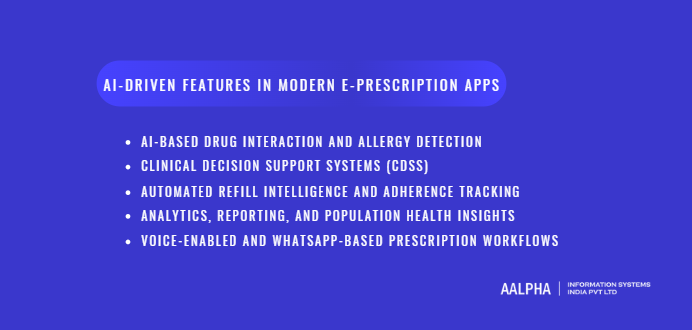
As e-prescription systems mature, basic digitization is no longer sufficient to meet the clinical, operational, and regulatory demands of modern healthcare. Advanced and AI-driven features are increasingly central to how these platforms deliver value. These capabilities move e-prescription apps beyond simple transmission tools and transform them into intelligent clinical systems that actively support safer prescribing, better adherence, and data-informed healthcare delivery. When implemented correctly, AI does not replace clinical judgment but augments it by analyzing large volumes of medical data in real time and presenting actionable insights at the point of care.
-
AI-Based Drug Interaction and Allergy Detection
AI-based drug interaction and allergy detection is one of the most impactful advancements in e-prescription app development. Traditional rule-based systems rely on static interaction lists that often generate excessive alerts or fail to account for patient-specific context. AI-driven models improve on this by analyzing a patient’s complete medication history, known allergies, demographics, and clinical conditions to assess risk more accurately.
These systems continuously evaluate new prescriptions against existing medications and historical reactions. Instead of issuing generic warnings, AI can prioritize alerts based on clinical severity, likelihood of harm, and patient-specific risk factors. For example, the system may differentiate between a theoretical interaction and one that is highly relevant given the patient’s age or renal function. This reduces alert fatigue for doctors while maintaining safety.
Allergy detection also benefits from AI’s ability to interpret structured and semi-structured clinical data. Patient allergy records are often incomplete or inconsistently documented. AI models can identify patterns across medical notes, past prescriptions, and adverse event reports to surface potential allergy risks that might otherwise be overlooked. Over time, as the system learns from real-world prescribing and outcomes, its recommendations become more precise. This feature significantly reduces preventable adverse drug events and strengthens trust in digital prescribing systems.
-
Clinical Decision Support Systems (CDSS)
Clinical Decision Support Systems embedded within e-prescription apps provide context-aware guidance to prescribers during the medication selection process. Unlike static reference tools, modern CDSS solutions analyze patient-specific data in real time to suggest evidence-based prescribing options. These systems draw on clinical guidelines, drug formularies, and historical treatment outcomes to support informed decision-making.
During prescription creation, a CDSS may recommend first-line therapies based on the recorded diagnosis, flag medications that are inconsistent with guidelines, or suggest alternative dosages tailored to patient characteristics. For chronic conditions, the system can highlight past treatments and outcomes, helping providers avoid ineffective or previously discontinued medications. This guidance is presented unobtrusively, allowing doctors to retain full control over clinical decisions.
CDSS features also play a critical role in standardizing care across organizations. By embedding guideline-aligned recommendations directly into prescribing workflows, healthcare systems reduce variability in treatment approaches. This consistency is especially valuable in large clinics and hospital networks, where multiple providers manage similar conditions. From a compliance perspective, CDSS logs provide evidence that prescribing decisions were informed by accepted clinical standards, which is valuable during audits and quality reviews.
-
Automated Refill Intelligence and Adherence Tracking
Automated refill intelligence extends e-prescription apps into the realm of ongoing treatment management. Instead of treating prescriptions as one-time events, AI systems monitor refill patterns, prescription durations, and patient behavior to identify adherence risks. When patients delay refills or miss expected renewal windows, the system can trigger reminders or alerts for both patients and providers.
Adherence tracking combines prescription data with dispensing records to assess whether medications are being obtained and renewed as intended. AI models can identify patterns such as frequent delays, early refill requests, or sudden discontinuation, which may indicate side effects, affordability issues, or lack of treatment effectiveness. These insights allow providers to intervene earlier, adjusting treatment plans before clinical outcomes deteriorate.
For providers managing large patient populations, automated refill intelligence reduces administrative burden while improving care continuity. Refill approvals can be prioritized based on risk, ensuring that high-impact medications receive timely attention. This feature is particularly valuable in chronic disease management, where long-term adherence is directly linked to patient outcomes and healthcare costs.
-
Analytics, Reporting, and Population Health Insights
Advanced analytics transform e-prescription apps into powerful data platforms. By aggregating prescription and dispensing data across patients, providers, and pharmacies, these systems generate insights that extend beyond individual encounters. Analytics dashboards can reveal prescribing trends, medication utilization rates, and adherence patterns across different populations.
From a clinical perspective, these insights support quality improvement initiatives. Healthcare organizations can identify overuse of certain drug classes, monitor antibiotic prescribing patterns, or evaluate adherence to treatment guidelines. Population-level analytics also help detect emerging public health concerns, such as unusual increases in specific medication usage that may signal outbreaks or supply shortages.
For administrators and policymakers, reporting capabilities support compliance and strategic planning. Detailed audit logs and regulatory reports can be generated automatically, reducing manual effort and error risk. When combined with AI-driven pattern recognition, analytics modules can highlight outliers and anomalies that warrant further investigation. This data-driven visibility positions e-prescription systems as essential tools for both clinical governance and public health management.
-
Voice-Enabled and WhatsApp-Based Prescription Workflows
Voice-enabled and messaging-based workflows represent a growing frontier in e-prescription app development, particularly in regions with high mobile usage and limited desktop access. Voice interfaces allow doctors to dictate prescriptions during consultations, with speech recognition systems converting spoken instructions into structured prescription data. This reduces typing time and supports more natural clinical interactions, especially in busy or hands-free environments.
WhatsApp-based prescription workflows are gaining traction in markets where messaging platforms are deeply embedded in daily communication. In these models, patients receive prescription notifications, refill reminders, and fulfillment updates through secure, compliant messaging channels. Doctors and pharmacies can confirm actions or request clarifications without requiring users to log into separate applications.
These interfaces must be carefully designed to meet security and compliance requirements, including encryption, consent management, and identity verification. When implemented correctly, they significantly lower adoption barriers and improve engagement, particularly among less tech-savvy users. Voice and messaging workflows demonstrate how e-prescription apps are evolving to meet users where they already are, while still maintaining the rigor required for clinical and regulatory environments.
Together, these advanced and AI-driven features redefine what e-prescription apps can achieve. They shift digital prescribing from a passive record-keeping function to an active, intelligent system that supports safer care, better adherence, and more informed healthcare decisions at scale.
Benefits of E-Prescription App Development
E-prescription app development delivers measurable benefits across the entire healthcare value chain. Unlike surface-level digital upgrades, e-prescription systems address structural inefficiencies that have existed for decades in medication management. By replacing fragmented, paper-driven workflows with secure, interoperable digital processes, these apps improve safety, reduce administrative burden, and strengthen coordination between providers, patients, and pharmacies. The benefits are not theoretical. They are backed by regulatory adoption trends, patient outcome studies, and operational data from healthcare systems that have transitioned to electronic prescribing at scale.
Benefits for Healthcare Providers and Clinics
For healthcare providers and clinics, the most immediate benefit of e-prescription app development is a significant reduction in prescribing errors. Illegible handwriting, ambiguous dosage instructions, and overlooked drug interactions are among the most common causes of medication-related harm. Digital prescribing systems eliminate handwriting issues entirely and embed automated safety checks directly into the clinical workflow. This lowers clinical risk and reduces the likelihood of adverse drug events that can lead to malpractice claims or regulatory scrutiny.
Operational efficiency is another major advantage. Doctors and clinical staff spend a substantial amount of time handling prescription-related follow-ups, including pharmacy clarification calls, refill requests, and documentation tasks. E-prescription apps streamline these processes through structured data entry, automated refill workflows, and digital communication channels. As a result, providers can allocate more time to direct patient care without increasing staffing costs.
E-prescription apps also improve clinical accountability and documentation quality. Each prescription is logged with prescriber identity, timestamp, diagnosis context, and approval status, creating a defensible audit trail. This is particularly valuable in environments where controlled substances are prescribed or where insurers and regulators require detailed justification for treatment decisions. Over time, prescription data contributes to more informed clinical decision-making by providing visibility into treatment history and outcomes.
From a strategic perspective, clinics that adopt e-prescription systems are better positioned to integrate with telemedicine platforms, electronic health records, and value-based care models. Digital prescribing becomes a foundation for scalable, modern healthcare delivery rather than a standalone compliance requirement.
Benefits for Patients
Patients experience e-prescription apps primarily through improved access, clarity, and continuity of care. One of the most tangible benefits is the elimination of lost or damaged paper prescriptions. Digital prescriptions are stored securely and can be accessed whenever needed, ensuring that treatment is not delayed due to administrative issues. This is particularly important for elderly patients, individuals with chronic conditions, and those managing multiple medications.
Clarity around medication instructions is another key benefit. E-prescription apps present dosage, frequency, and duration in a standardized, readable format, reducing confusion and misuse. Patients can review their prescriptions at any time, which supports better understanding of treatment plans and increases adherence. Integrated reminders further reinforce correct medication use, helping patients maintain consistency over long treatment periods.
E-prescription systems also improve convenience and flexibility. Patients can choose pharmacies digitally, request refills without phone calls, and receive updates on prescription status. In integrated ecosystems, prescriptions issued during virtual consultations are fulfilled without requiring in-person visits, making care more accessible for remote or mobility-limited patients.
Trust and transparency play an important role as well. Patients benefit from knowing that their prescriptions are issued and transmitted through secure, regulated systems. Visibility into prescription history and access logs helps reassure patients that their health data is handled responsibly. Over time, these factors contribute to higher satisfaction and stronger engagement with digital healthcare services.
Benefits for Pharmacies and Healthcare Systems
For pharmacies, e-prescription app development delivers substantial gains in accuracy and operational efficiency. Electronic prescriptions arrive in structured formats that integrate directly with pharmacy management systems, eliminating manual transcription and reducing dispensing errors. Standardized medication data minimizes misinterpretation and allows pharmacists to focus on verification and patient counseling rather than data entry.
Workflow efficiency improves across the dispensing process. Pharmacies can review prescriptions in advance, check inventory automatically, and prepare medications before patients arrive. Digital refill management reduces congestion during peak hours and ensures consistent application of prescribing rules. Secure messaging with prescribers replaces time-consuming phone calls, while maintaining a documented record of all interactions.
At the healthcare system level, e-prescription apps contribute to better coordination and cost control. Aggregated prescribing and dispensing data supports population-level analysis, helping organizations identify trends such as medication overuse, non-adherence, or regional supply constraints. These insights inform policy decisions, formulary management, and public health interventions.
Regulatory compliance and reporting also become more efficient. Automated audit trails and standardized reports reduce the administrative burden of meeting legal and accreditation requirements. During inspections or investigations, healthcare systems can quickly produce accurate prescribing records without relying on fragmented paper files.
Taken together, these benefits demonstrate why e-prescription app development is widely viewed as foundational digital infrastructure. It improves safety, efficiency, and transparency for all stakeholders while enabling healthcare systems to scale responsibly in an increasingly digital environment.
Compliance, Security, and Regulatory Requirements
Compliance and security are not optional considerations in e-prescription app development. They are foundational requirements that shape system architecture, feature design, and operational processes from the earliest planning stages. E-prescription apps handle highly sensitive health data and directly influence clinical decisions, which places them under strict legal and regulatory oversight in most jurisdictions. Failure to meet these requirements can result in severe penalties, loss of licensure, reputational damage, and patient harm. A robust compliance strategy therefore combines data protection laws, prescribing regulations, technical safeguards, and clear legal accountability.
-
HIPAA, GDPR, and Regional Data Protection Laws
E-prescription apps must comply with healthcare data protection laws that govern how personal and medical information is collected, stored, processed, and shared. In the United States, the Health Insurance Portability and Accountability Act establishes mandatory standards for safeguarding protected health information. HIPAA requires administrative, physical, and technical safeguards to prevent unauthorized access, including access controls, breach notification procedures, and workforce training. Any e-prescription app operating in or serving US-based patients must ensure that prescription data, patient identifiers, and communication logs are handled in accordance with these requirements.
In the European Union, the General Data Protection Regulation imposes even broader obligations. GDPR treats health data as a special category of personal data, requiring explicit legal grounds for processing and strict limitations on data usage. E-prescription apps must implement data minimization, purpose limitation, and storage limitation principles. Patients have enforceable rights to access their data, request corrections, and in certain cases request deletion. Systems must be designed to support these rights without compromising medical record integrity or regulatory retention requirements.
Beyond HIPAA and GDPR, many countries enforce their own health data protection frameworks. These laws often define where data may be stored, how cross-border transfers are handled, and which entities are considered data controllers or processors. For e-prescription app developers, this means compliance is not a one-size-fits-all exercise. Applications deployed across regions must support configurable data residency, localized privacy policies, and region-specific compliance workflows to remain legally viable.
-
E-Prescription Regulations in the US, Europe, and Other Markets
In addition to data protection laws, e-prescription apps are governed by prescribing-specific regulations that dictate how electronic prescriptions may be issued and transmitted. In the United States, federal and state regulations require electronic prescribing for certain drug categories, particularly controlled substances. These rules define prescriber authentication standards, digital signature requirements, and audit obligations. Systems must verify prescriber credentials and ensure that only authorized individuals can issue prescriptions, especially for high-risk medications.
European countries follow a mix of centralized and national regulatory models. Many EU member states operate national e-prescription infrastructures that define technical standards, data formats, and pharmacy integration requirements. Compliance often involves aligning with national health authorities and approved prescription exchanges. While the specifics vary by country, common themes include standardized drug coding, secure transmission protocols, and mandatory logging of prescription events.
In other markets, regulatory maturity differs widely. Some regions mandate electronic prescribing as part of broader digital health initiatives, while others allow it as an optional alternative to paper. Regardless of maturity level, e-prescription apps must account for local prescribing laws, scope-of-practice rules, and pharmacy licensing requirements. Developers must also anticipate regulatory evolution, as governments continue to tighten controls around digital health tools. Building flexibility into the system architecture is essential to accommodate regulatory changes without major reengineering.
-
Data Security, Encryption, and Audit Trails
Technical security controls are the practical mechanisms through which compliance obligations are enforced. E-prescription apps must protect data both at rest and in transit using strong encryption standards. Prescription records, patient identifiers, and communication logs should never be stored or transmitted in plain text. Secure key management and regular security testing are critical to maintaining confidentiality and integrity.
Access control is another core requirement. Systems must enforce role-based access so that doctors, patients, pharmacists, and administrators can only view or modify data appropriate to their role. Authentication mechanisms should include strong identity verification for prescribers and safeguards against unauthorized access. Logging and monitoring systems must detect suspicious activity and support timely incident response.
Audit trails are particularly important in e-prescription systems. Every action related to prescription creation, modification, transmission, and dispensing must be logged with sufficient detail to support regulatory review. These logs provide evidence of compliance, support investigations into adverse events, and protect organizations during legal disputes. Well-designed audit mechanisms balance completeness with performance, ensuring that security controls do not disrupt clinical workflows.
-
Consent Management and Legal Safeguards
Consent management underpins lawful data processing in e-prescription apps. Patients must be informed about how their prescription data will be used and shared, and consent must be obtained where required by law. Consent mechanisms should be explicit, traceable, and revocable, while still respecting medical record retention obligations. Clear user interfaces and documentation help ensure that consent is meaningful rather than symbolic.
Legal safeguards also include contractual and policy-level measures. Service agreements, terms of use, and privacy policies must accurately reflect system behavior and regulatory responsibilities. For organizations operating across multiple jurisdictions, these documents must be adapted to local legal requirements. Together, consent management and legal safeguards create a framework of trust and accountability that allows e-prescription apps to operate safely within complex regulatory environments.
E-Prescription App Development Process: Step-by-Step Guide
E-prescription app development is a regulated software engineering process that sits at the intersection of healthcare delivery, legal compliance, and critical system reliability. Unlike general-purpose applications, e-prescription platforms must be clinically accurate, audit-ready, and resilient under real-world medical workloads. A successful development process follows a structured, step-by-step approach that aligns clinical needs with technical design while embedding compliance and security from the outset. Skipping or compressing any of these stages typically leads to regulatory delays, poor adoption, or costly rework after launch.
-
Requirement Discovery and Clinical Validation
The development process begins with requirement discovery grounded in real clinical workflows. This stage involves close collaboration with doctors, pharmacists, compliance officers, and healthcare administrators to understand how prescriptions are created, reviewed, dispensed, and audited in practice. Functional requirements must capture not only what the system should do, but under which clinical, legal, and operational conditions actions are permitted.
Clinical validation is a critical component at this stage. Prescribing rules, dosage limits, refill policies, and controlled substance workflows must be reviewed and validated by qualified healthcare professionals. This ensures that the system logic aligns with accepted medical standards and local regulations. Assumptions made without clinical input often result in unsafe defaults or workflows that conflict with real-world practice.
Non-functional requirements are equally important. These include performance expectations, availability targets, data retention rules, and regulatory obligations across regions. Decisions made during discovery directly influence architecture, integration complexity, and long-term scalability. A well-executed discovery phase produces a clear functional specification and reduces the risk of compliance failures later in the project.
-
UX Design for Doctors, Patients, and Pharmacists
User experience design in e-prescription apps must balance simplicity with precision. Doctors, patients, and pharmacists all interact with the same prescription data, but under very different conditions and time constraints. UX design should be role-specific, workflow-driven, and validated through real user feedback rather than abstract design assumptions.
For doctors, UX design prioritizes speed, clarity, and error prevention. Prescription creation screens should minimize typing, surface relevant patient data contextually, and present safety alerts in a way that supports decision-making without causing alert fatigue. Poor UX at this layer leads directly to slower consultations and workarounds that undermine system safety.
Patient-facing UX focuses on comprehension and accessibility. Prescription details must be easy to understand, with clear instructions and minimal medical jargon. Navigation should support common actions such as viewing prescriptions, requesting refills, and selecting pharmacies without unnecessary complexity. Accessibility considerations are essential, particularly for elderly users and those managing chronic conditions.
Pharmacy UX emphasizes accuracy and operational efficiency. Interfaces must support quick verification, inventory checks, and communication with prescribers. Every UX decision should be tested against real pharmacy workflows to ensure it reduces, rather than adds to, dispensing workload. Usability testing with representatives from each role is essential before moving into development.
-
Backend Architecture and Interoperability Planning
The backend architecture of an e-prescription app is responsible for enforcing rules, maintaining data integrity, and enabling secure communication between stakeholders. Architectural decisions made at this stage determine whether the system can scale, adapt to regulatory changes, and integrate with external healthcare infrastructure.
A robust backend separates core prescription logic from user interfaces. Prescription creation, validation, signing, transmission, and audit logging should be handled by dedicated services that enforce consistent rules regardless of how the system is accessed. This separation reduces risk and simplifies compliance audits.
Interoperability planning is a central concern. E-prescription apps rarely operate in isolation and must exchange data with electronic health records, pharmacy systems, drug databases, and regulatory services. Data models should align with healthcare interoperability standards to ensure consistent interpretation across systems. Planning for interoperability early prevents brittle integrations and reduces long-term maintenance costs.
Security and compliance requirements must be embedded into the architecture rather than added later. This includes encryption strategies, access control models, logging mechanisms, and data residency configurations. Backend design is where regulatory intent becomes enforceable system behavior.
-
Integration with EHR, EMR, Pharmacy Systems
Integration is often the most complex phase of e-prescription app development. Prescriptions gain their full clinical value only when they are connected to electronic health records, pharmacy dispensing systems, and supporting healthcare services. Each integration introduces technical, operational, and regulatory considerations that must be addressed systematically.
EHR and EMR integrations allow prescribers to access patient history, diagnoses, allergies, and prior medications at the point of prescribing. These integrations must be reliable and performant, as delays or incomplete data can disrupt clinical workflows. Clear data ownership and synchronization rules are essential to prevent inconsistencies between systems.
Pharmacy system integration enables electronic receipt, verification, and dispensing of prescriptions. This requires alignment on data formats, validation rules, and error-handling procedures. Integration testing with real pharmacy environments is critical to ensure prescriptions flow smoothly without manual intervention.
In many regions, integration with national prescription exchanges or regulatory reporting systems is mandatory. These integrations often impose strict technical and compliance requirements. Treating integration as a first-class development concern, rather than a post-build task, reduces deployment risk and accelerates regulatory approval.
-
Testing, Compliance Review, and Go-Live
Testing in e-prescription app development extends far beyond functional correctness. The testing phase must validate clinical logic, security controls, performance under load, and compliance with regulatory requirements. Unit and integration tests ensure that prescription workflows behave as intended across all supported scenarios, including edge cases such as failed transmissions or partial data availability.
Compliance review is a formal process that evaluates whether the system meets legal and regulatory obligations. This may involve internal audits, third-party security assessments, and documentation reviews. Evidence such as audit logs, access control configurations, and data handling policies must be available and verifiable. In some jurisdictions, regulatory approval or certification is required before production use.
Go-live planning focuses on controlled deployment and user onboarding. Healthcare systems cannot tolerate extended downtime or unstable releases. Rollout strategies often include phased deployments, training for doctors and pharmacists, and fallback procedures in case of unexpected issues. Post-launch monitoring is essential to identify performance bottlenecks, usability issues, or compliance gaps early.
A disciplined testing and go-live process ensures that the e-prescription app enters production as a trusted clinical system rather than an experimental tool. This final stage determines whether years of development effort translate into real-world adoption and measurable healthcare improvement.
E-Prescription App Development Cost Guide
The cost of developing an e-prescription app is shaped by far more than screen count or basic functionality. In the broader context of healthcare app development cost, e-prescription systems sit at the higher end of complexity because they operate in regulated clinical environments. Development pricing reflects compliance obligations, security architecture, interoperability requirements, and long-term operational readiness rather than just design or feature volume. Organizations that underestimate these factors often face hidden costs later in the form of regulatory rework, security remediation, or system redesign. A realistic cost assessment therefore looks at the full lifecycle of the product, from initial build through ongoing compliance, maintenance, and scale.
-
Cost Factors That Influence Development Pricing
Several structural factors directly influence the cost of e-prescription app development. The first and most significant is regulatory scope. Applications intended for use in heavily regulated markets such as the United States or the European Union must meet stringent legal, security, and audit requirements. Implementing compliant authentication, audit trails, data residency controls, and documentation processes adds substantial engineering and validation effort compared to unregulated markets.
Feature depth is another major cost driver. A basic digital prescription tool is relatively inexpensive compared to a system that includes AI-driven safety checks, clinical decision support, multi-role workflows, and real-time pharmacy integrations. Each additional layer of intelligence or automation increases both development and testing complexity.
Interoperability requirements also have a strong impact on pricing. Integrating with electronic health records, pharmacy systems, drug databases, and national prescription exchanges requires specialized expertise and extensive testing. Custom integrations, particularly with legacy hospital systems, often represent a significant portion of the overall budget.
Security architecture influences cost at every stage. Encryption, role-based access control, secure key management, and monitoring systems must be designed, implemented, and audited. These are not one-time tasks but ongoing commitments that increase both initial and recurring expenses.
Finally, deployment model and scalability expectations affect pricing. Systems designed for a single clinic differ significantly from platforms built to support multi-region deployment, high availability, and thousands of concurrent users. Scalability planning increases upfront costs but reduces long-term operational risk.
-
Cost Breakdown by Feature Complexity
E-prescription app costs can be broadly understood by examining feature complexity tiers. At the lower end, a basic e-prescription solution includes digital prescription creation, a standardized drug database, patient access to prescriptions, and pharmacy receipt. These systems typically support limited integrations and minimal automation. Development costs at this level are lower but still exceed those of general healthcare apps due to compliance and security requirements.
Mid-tier systems introduce advanced safety and workflow features. These include drug interaction checks, allergy validation, structured refill management, secure messaging between doctors and pharmacies, and integration with electronic health records. The inclusion of these features increases development effort significantly, particularly in testing and validation, as clinical logic must be reliable under all scenarios.
High-complexity platforms incorporate AI-driven decision support, automated adherence tracking, analytics dashboards, and population-level reporting. They often support multi-region compliance, configurable workflows, and enterprise-grade role management. Development at this level requires specialized clinical input, advanced data engineering, and extensive compliance documentation. While the upfront cost is higher, these platforms deliver greater long-term value through efficiency gains, reduced error rates, and improved scalability.
Understanding feature-driven cost tiers helps organizations align their investment with actual clinical and business needs rather than overbuilding or underestimating requirements.
-
MVP vs Full-Scale E-Prescription Platform Cost
An MVP approach to e-prescription app development focuses on delivering core prescribing functionality with minimal complexity. An MVP typically includes doctor-side prescription creation, basic safety checks, patient access, and pharmacy transmission. The goal is to validate workflows, user adoption, and regulatory feasibility before committing to a larger build. MVP development costs are lower and timelines shorter, making this approach suitable for startups, pilot programs, or regional rollouts.
However, MVPs still require full compliance with applicable regulations. There is no reduced standard for safety or security simply because a system is smaller. As a result, MVP costs remain higher than those of non-regulated healthcare apps.
A full-scale e-prescription platform expands on the MVP by adding advanced automation, analytics, multi-tenant support, and deep integrations. These systems are designed for long-term operation across multiple clinics, pharmacies, or regions. While the initial investment is substantially higher, full-scale platforms reduce incremental costs as the user base grows. They also minimize the need for disruptive redesigns when regulatory or operational requirements evolve.
Choosing between an MVP and a full-scale build is less about budget alone and more about strategic intent. Organizations planning limited or experimental deployments benefit from MVPs, while those aiming for enterprise or multi-market adoption should plan for a comprehensive platform from the outset.
-
Ongoing Maintenance, Compliance, and Scaling Costs
Development cost is only part of the financial picture. E-prescription apps incur ongoing expenses related to maintenance, compliance, and scaling. Regulatory environments change frequently, requiring updates to workflows, documentation, and reporting mechanisms. Budgeting for continuous compliance is essential to avoid operational disruptions.
Security maintenance is another recurring cost. Regular vulnerability assessments, penetration testing, certificate management, and incident response readiness are mandatory in healthcare systems. These activities require dedicated resources and cannot be deferred without increasing risk.
As usage grows, infrastructure and support costs increase. Scaling to support more users, pharmacies, or regions requires capacity planning, performance optimization, and monitoring. Support teams must handle user onboarding, issue resolution, and regulatory inquiries.
When evaluated holistically, e-prescription app development is a long-term investment rather than a one-time expense. Organizations that plan for ongoing operational costs alongside initial development are better positioned to build sustainable, compliant, and scalable digital prescribing systems.
Monetization Models for E-Prescription Apps
Monetization in e-prescription app development must balance commercial viability with regulatory constraints and clinical ethics. Unlike consumer apps, pricing models in digital healthcare are shaped by prescribing regulations, reimbursement structures, and stakeholder incentives. A successful monetization strategy aligns value delivery for doctors, pharmacies, and healthcare organizations without creating friction in clinical workflows or compromising patient trust. The most effective models are transparent, predictable, and scalable across different care settings.
-
SaaS Subscription Models
SaaS subscription models are among the most common approaches for monetizing e-prescription apps, particularly in outpatient and small-to-medium practice settings. Under this model, clinics or individual providers pay a recurring monthly or annual fee to access the platform. Pricing tiers are often based on the number of users, feature access, or volume limits rather than per-transaction charges.
The primary advantage of subscription pricing is predictability. Healthcare providers value stable costs that can be budgeted easily, especially when prescribing is a daily operational necessity. Subscriptions also encourage long-term adoption, as users become accustomed to the system as part of their routine workflow. From a product perspective, this model supports continuous improvement, as recurring revenue can be reinvested into compliance updates, security enhancements, and feature development.
Subscription models work best when the platform delivers ongoing value beyond basic compliance. Features such as analytics, decision support, and integration management strengthen the case for recurring fees. However, pricing must remain sensitive to provider size and prescribing volume to avoid excluding smaller practices or independent clinicians.
-
Per-Prescription or Per-Doctor Pricing
Per-prescription or per-doctor pricing models tie revenue directly to system usage. In a per-prescription model, the platform charges a small fee each time a prescription is issued or processed. Alternatively, per-doctor pricing charges a fixed fee for each registered prescriber, regardless of volume.
These models appeal to organizations seeking cost alignment with actual usage. For low-volume prescribers, per-prescription pricing may be more economical than a flat subscription. It also provides clear value attribution, as costs scale with activity. For platform providers, usage-based pricing offers a direct link between adoption and revenue growth.
However, per-prescription models must be implemented carefully. Excessive transaction fees can discourage use or incentivize workarounds, undermining system integrity. Regulatory considerations also apply, as pricing structures must not influence prescribing behavior or create conflicts of interest. Transparent fee disclosure and reasonable pricing thresholds are essential to maintain trust and compliance.
-
Pharmacy Partnerships and Revenue Sharing
Pharmacy partnerships introduce a different monetization dynamic by aligning platform revenue with medication fulfillment rather than prescribing activity. In this model, e-prescription app providers collaborate with pharmacies or pharmacy networks and receive revenue through service fees, integration charges, or shared operational efficiencies.
Revenue sharing arrangements may be based on prescription volume, refill automation, or patient engagement features that drive pharmacy loyalty. For pharmacies, the value lies in improved workflow efficiency, reduced errors, and increased retention. For platform providers, pharmacy partnerships diversify revenue streams and reduce reliance on provider-side fees.
This model is particularly effective in pharmacy-first ecosystems or markets with strong retail pharmacy chains. However, partnerships must be structured to avoid regulatory concerns related to steering or inducement. Clear separation between prescribing decisions and commercial arrangements is essential to maintain ethical and legal standards.
-
Enterprise Licensing for Hospitals and Chains
Enterprise licensing is designed for large hospitals, clinic networks, and pharmacy chains that require customized deployments and dedicated support. Under this model, organizations pay a negotiated license fee that covers platform access, integrations, and ongoing maintenance.
Enterprise licenses often include service-level agreements, compliance support, and integration services tailored to complex environments. While sales cycles are longer, enterprise contracts provide stable, high-value revenue and support deep integration into organizational workflows. This model suits e-prescription platforms positioned as core healthcare infrastructure rather than standalone tools.
Choosing the right monetization model depends on target users, regulatory context, and long-term strategy. The most sustainable e-prescription apps combine pricing transparency with value-driven differentiation, ensuring commercial success without compromising clinical integrity.
Challenges, Risks, and Common Mistakes to Avoid
E-prescription app development carries unique risks that extend beyond typical software projects. Because these systems operate in regulated clinical environments and influence patient safety, mistakes can have legal, operational, and reputational consequences. Many failures in digital prescribing initiatives are not caused by lack of technology but by underestimating regulatory complexity, user adoption dynamics, and long-term scalability needs. Understanding these challenges early helps organizations avoid costly missteps and build resilient systems.
-
Regulatory and Legal Pitfalls
One of the most common mistakes in e-prescription app development is treating regulatory compliance as a checklist rather than an ongoing responsibility. Regulations governing electronic prescribing, controlled substances, and health data protection are complex and frequently updated. Systems built without flexibility often require expensive redesigns when rules change or expand to new jurisdictions.
A frequent legal pitfall involves improper handling of prescriber authentication and authorization. If a system fails to correctly verify prescriber credentials or enforce role-based access, it may allow unauthorized prescribing, exposing organizations to serious legal liability. Similarly, inadequate audit trails undermine regulatory compliance, as authorities often require detailed records of who prescribed what, when, and under which conditions.
Data protection violations represent another significant risk. Storing or transmitting prescription data without adequate safeguards can trigger penalties under health data laws and erode patient trust. Organizations sometimes overlook data residency requirements or cross-border transfer restrictions, particularly when deploying cloud-based solutions. Addressing regulatory obligations during initial design rather than post-launch remediation is essential to avoiding these pitfalls.
-
Adoption Barriers Among Doctors and Pharmacies
Even fully compliant e-prescription apps can fail if they are not adopted by key users. Doctors and pharmacists operate under significant time pressure and are resistant to tools that slow them down or disrupt established workflows. A common mistake is designing interfaces that prioritize technical completeness over practical usability.
For doctors, excessive alerts, slow performance, or poorly structured prescribing screens quickly lead to frustration. If the system introduces more friction than paper-based alternatives, clinicians may seek workarounds or avoid the platform altogether. Adoption also suffers when training and onboarding are inadequate. Assuming that medical professionals will intuitively adapt to new systems without structured support is a costly error.
Pharmacies face similar challenges. Systems that do not integrate smoothly with existing pharmacy software or require manual intervention undermine efficiency gains. If pharmacists must frequently call prescribers due to unclear digital prescriptions, confidence in the system declines. Successful adoption depends on deep understanding of real-world workflows and iterative refinement based on user feedback.
-
Scalability, Data Quality, and Integration Risks
Scalability issues often emerge after initial deployment, when usage grows beyond early assumptions. Systems designed for a small number of users may struggle under higher transaction volumes, leading to performance degradation or downtime. In healthcare, even brief outages can disrupt patient care and damage credibility.
Data quality is another critical risk. Inconsistent drug coding, incomplete patient records, or poorly validated inputs can propagate errors across integrated systems. Because e-prescription apps exchange data with multiple external platforms, small inconsistencies can have wide-ranging effects. Establishing strong data validation and governance practices is essential to maintaining reliability.
Integration risk is frequently underestimated. Connecting with electronic health records, pharmacy systems, and regulatory services introduces dependencies outside the organization’s control. Changes in external APIs or data standards can break functionality if not monitored proactively. Treating integration as a one-time effort rather than an ongoing partnership leads to fragility.
Avoiding these challenges requires a long-term mindset. E-prescription apps must be designed as evolving healthcare infrastructure, with continuous compliance monitoring, user-centered refinement, and scalable architecture. Organizations that plan for these realities are far more likely to achieve sustained adoption and regulatory success.
Why Aalpha for E-Prescription App Development
Choosing the right technology partner for e-prescription app development is not a procurement decision. It is a clinical, regulatory, and long-term operational decision. E-prescription platforms sit at the center of patient safety, prescribing authority, pharmacy coordination, and regulatory accountability. Aalpha Information Systems approaches e-prescription development with this reality in mind, treating it as healthcare infrastructure rather than a generic software build.
Aalpha brings deep experience in building regulated healthcare systems where compliance, auditability, and reliability are non-negotiable. E-prescription apps are designed from the ground up to align with healthcare regulations such as HIPAA, GDPR, and region-specific prescribing laws. Security, data protection, role-based access, and audit trails are embedded at the architectural level rather than added as afterthoughts. This reduces regulatory risk and ensures that platforms remain compliant as laws and standards evolve.
Clinical workflow understanding is a core differentiator. Aalpha does not design e-prescription systems in isolation from real medical practice. Doctor, patient, and pharmacy workflows are mapped in detail to ensure the system supports how prescriptions are actually created, reviewed, and dispensed. This results in prescribing interfaces that are fast, intuitive, and resistant to error, while still enforcing necessary safety checks and documentation requirements. The same rigor is applied to pharmacy workflows, reducing clarification calls, manual reconciliation, and operational friction.
Aalpha also specializes in interoperability-first development. E-prescription apps are rarely standalone products. They must integrate seamlessly with EHR and EMR systems, pharmacy management software, drug databases, and regulatory reporting services. Aalpha designs platforms with interoperability as a foundational principle, enabling reliable data exchange and long-term scalability. This approach prevents brittle integrations and reduces future rework as healthcare ecosystems expand.
From a technology perspective, Aalpha builds e-prescription systems that are production-ready from day one. This includes scalable backend architecture, secure API layers, monitoring, and deployment strategies suitable for clinical environments where downtime is unacceptable. Advanced features such as clinical decision support, AI-driven safety checks, analytics, and messaging-based workflows are implemented with a clear understanding of their regulatory and ethical boundaries.
Equally important is Aalpha’s delivery model. The focus is on transparency, structured documentation, and predictable execution. Requirements are clinically validated, designs are usability-tested with real stakeholders, and development follows disciplined testing and compliance review processes. This reduces surprises during regulatory review and accelerates real-world adoption.
For organizations building e-prescription platforms intended for clinics, hospitals, telemedicine providers, or pharmacy networks, Aalpha offers more than development capacity. It provides domain expertise, regulatory awareness, and engineering discipline needed to deliver systems that are trusted, scalable, and sustainable in modern healthcare environments.
Conclusion
E-prescription app development is no longer a forward-looking initiative or a convenience-driven upgrade. It has become a foundational requirement for modern healthcare systems that aim to deliver safe, efficient, and compliant medication management at scale. Across clinics, hospitals, telemedicine platforms, and pharmacy networks, electronic prescribing is reshaping how care is delivered by eliminating avoidable errors, improving coordination, and creating end-to-end traceability in the medication lifecycle.
This guide has shown that building an e-prescription app is not a simple software exercise. It requires a deep understanding of clinical workflows, strict adherence to regulatory and data protection laws, robust security architecture, and seamless interoperability with existing healthcare systems. From core prescribing features to advanced AI-driven safety checks, from compliance obligations to long-term operational costs, every decision made during development has direct implications for patient safety, provider adoption, and legal accountability. Organizations that approach e-prescription development without this holistic perspective often face regulatory delays, low adoption, or costly rework after launch.
At the same time, when implemented correctly, e-prescription apps deliver long-term value that extends well beyond compliance. They enable scalable digital care models, support data-driven clinical decisions, improve patient adherence, and strengthen collaboration between providers and pharmacies. In an environment increasingly shaped by telemedicine, value-based care, and automation, electronic prescribing acts as a critical bridge between clinical intent and real-world treatment outcomes.
If you are planning to build, modernize, or scale an e-prescription platform, the most important decision is choosing a development partner that understands healthcare as a regulated, high-stakes domain. Aalpha works with healthcare organizations, startups, and enterprises to design and build e-prescription systems that are compliant, secure, and ready for real-world adoption. From clinical validation and UX design to interoperability, compliance, and long-term scalability, Aalpha delivers e-prescription solutions built to operate reliably in modern healthcare environments.
If you are evaluating an e-prescription app initiative or need expert guidance on architecture, compliance, or feature strategy, now is the right time to engage with a team that treats e-prescription systems as critical healthcare infrastructure rather than generic software products. Reach out to Aalpha to discuss how your e-prescription platform can be designed for safety, adoption, and sustainable growth.