


Retail businesses today operate in an environment where customer expectations, operational complexity, and competitive pressure are significantly higher than a decade ago. Standard software solutions often fail to meet these evolving demands because they are designed for general use cases rather than specific business workflows. This is where custom retail software development becomes essential. It enables businesses to build systems tailored to their operations, customer journeys, and growth strategies.
Custom retail software development refers to the process of designing, building, and deploying software solutions specifically aligned with a retailer’s unique requirements. Instead of adapting business processes to fit a generic system, companies can develop platforms that reflect how they actually operate, whether that involves multi-store inventory synchronization, personalized shopping experiences, or complex supply chain workflows.
Businesses increasingly ask a practical question before investing: can a custom system genuinely improve efficiency and revenue, or is it simply a technical upgrade? The answer lies in how modern retail works. With customers expecting seamless experiences across physical stores, mobile apps, and online platforms, retailers need systems that integrate every touchpoint. Custom software enables that level of control and flexibility.
From small eCommerce startups to large retail chains, companies are shifting toward tailored solutions not just for operational improvement but also to create differentiated customer experiences. The ability to customize pricing logic, automate inventory decisions, and integrate with third-party services such as payment gateways and logistics providers gives businesses a measurable advantage.
What is Custom Retail Software Development?
Custom retail software development is the process of building software solutions specifically designed to meet the unique operational and strategic needs of a retail business. Unlike off-the-shelf software, which offers standardized features for a broad audience, custom solutions are created from the ground up or heavily tailored to align with specific workflows, business models, and customer engagement strategies.
Off-the-shelf retail software typically includes predefined modules such as billing, inventory tracking, and reporting. While these systems are faster to deploy and cost-effective initially, they often require businesses to adjust their processes to fit the software’s limitations. This mismatch can lead to inefficiencies, workarounds, and limited scalability as the business grows.
In contrast, custom retail software is built with flexibility at its core. It allows businesses to define how their systems should function, whether that involves integrating multiple warehouses, managing dynamic pricing, or supporting unique promotional campaigns. For example, a retailer operating both online and offline stores may require real-time inventory synchronization across channels, which is often difficult to achieve with generic solutions.
Another critical advantage is integration capability. Custom systems can seamlessly connect with payment gateways, logistics providers, CRM platforms, and ERP systems, creating a unified ecosystem. This level of integration reduces manual effort, improves data accuracy, and enables real-time decision-making.
Ultimately, custom retail software development shifts the focus from adapting to software constraints to building technology that supports business growth and innovation.
Why Retail Businesses Are Moving Toward Custom Solutions
Retail businesses are increasingly adopting custom software solutions because traditional systems no longer meet the demands of modern commerce. One of the primary drivers is intense market competition. Retailers are not just competing on price but also on experience, convenience, and speed. Generic software often limits the ability to differentiate, while custom solutions allow businesses to create unique workflows and customer journeys.
Personalization is another major factor. Customers expect tailored product recommendations, targeted promotions, and seamless interactions across multiple channels. Off-the-shelf systems typically offer limited personalization capabilities, whereas custom software can leverage customer data to deliver highly relevant experiences. For instance, a retailer can build a recommendation engine based on purchase history, browsing behavior, and location-specific trends.
The rise of omnichannel retail has further accelerated this shift. Businesses now operate across physical stores, websites, mobile apps, and marketplaces. Managing these channels requires real-time synchronization of inventory, orders, and customer data. Custom software enables a unified system where all channels are interconnected, ensuring consistency and reducing operational friction.
Operational efficiency also plays a significant role. Retailers often deal with complex supply chains, multiple vendors, and fluctuating demand. Custom solutions can automate inventory replenishment, optimize logistics, and provide actionable insights through advanced analytics. This reduces manual work and improves decision-making.
As retail continues to evolve, businesses are recognizing that flexibility, scalability, and control are essential. Custom software provides these capabilities, making it a strategic investment rather than just a technical upgrade.
Who Needs Custom Retail Software?
Custom retail software is not limited to large enterprises; it is increasingly relevant for a wide range of businesses operating in the retail ecosystem. Any organization facing limitations with standard software or aiming to scale efficiently can benefit from a tailored solution.
Traditional retailers with physical stores often require custom systems to manage inventory across multiple locations, streamline billing processes, and integrate with supplier networks. For example, a multi-store retail chain may need centralized inventory visibility combined with location-specific pricing and promotions, which generic systems may not support effectively.
eCommerce businesses are among the biggest adopters of custom software. As online competition grows, these businesses need advanced features such as personalized product recommendations, dynamic pricing, and optimized checkout experiences. Custom platforms allow them to build unique user experiences that improve conversion rates and customer retention.
Franchise-based businesses also benefit significantly. They require systems that maintain centralized control while allowing individual franchise units to operate independently. Custom software can provide role-based access, standardized workflows, and real-time reporting across all locations.
Wholesalers and distributors deal with complex supply chains, bulk pricing models, and large order volumes. Custom solutions help manage these complexities by automating order processing, optimizing inventory levels, and integrating with logistics providers.
Finally, omnichannel retailers, those operating across online and offline platforms, require highly integrated systems. Custom software ensures seamless synchronization between channels, enabling consistent customer experiences and efficient operations.
In essence, any retail business aiming to improve efficiency, enhance customer experience, and scale sustainably can benefit from investing in custom retail software development.
Types of Retail Software Solutions
Retail operations are built on multiple interconnected systems that manage everything from customer transactions to backend logistics. A common question businesses ask is whether a single platform can handle all retail functions effectively. In practice, modern retail requires a combination of specialized systems that work together seamlessly. Custom retail software development allows businesses to either build these systems individually or integrate them into a unified ecosystem tailored to their operational needs.
Each type of retail software addresses a specific part of the value chain, such as sales processing, inventory control, customer engagement, or order fulfillment. When these systems are customized, they can align precisely with business workflows, eliminate inefficiencies, and provide real-time visibility across operations. The following sections explain the most critical types of retail software solutions that businesses can develop.
-
Point of Sale (POS) Systems
A Point of Sale (POS) system is the core transaction engine for any retail business. It handles billing, payment processing, and receipt generation at physical stores or even in mobile retail setups. While standard POS systems provide basic functionality, custom POS solutions are designed to match specific business workflows and operational complexities.
Custom POS systems can include features such as multi-store management, role-based access for staff, offline transaction capabilities, and integration with inventory and accounting systems. For example, a retail chain operating in multiple locations may require centralized control over pricing while allowing store-level customization for promotions.
Integration is a key advantage of custom POS development. Businesses can connect their POS system with payment gateways, CRM platforms, loyalty programs, and analytics tools. This ensures that every transaction feeds into a broader data ecosystem, enabling real-time insights into sales performance and customer behavior.
In addition, modern POS systems often support mobile devices, allowing sales staff to assist customers anywhere in the store, reducing checkout friction and improving the overall shopping experience.
-
Inventory Management Systems
Inventory management is one of the most critical components of retail operations, directly impacting sales, customer satisfaction, and operational efficiency. A custom inventory management system provides real-time visibility into stock levels across warehouses, stores, and distribution centers.
Unlike generic solutions, custom systems can be tailored to handle complex inventory scenarios such as multi-location tracking, batch and expiry management, and automated replenishment. For example, a retailer with multiple warehouses can synchronize stock levels in real time, ensuring that products are available where demand is highest.
Real-time tracking helps prevent stockouts and overstocking, both of which can negatively affect profitability. Advanced features such as demand forecasting and automated alerts enable businesses to make proactive decisions rather than reactive ones.
Integration with other systems is essential for effective inventory management. A custom solution can connect with POS systems, eCommerce platforms, and supply chain software, ensuring that inventory data is updated instantly across all channels.
This level of control and visibility allows retailers to optimize stock levels, reduce carrying costs, and improve order fulfillment accuracy.
-
eCommerce Platforms
An eCommerce platform is the digital storefront of a retail business, and its performance directly influences customer acquisition and conversion rates. While off-the-shelf platforms offer quick deployment, they often limit customization, scalability, and integration capabilities. Custom eCommerce platforms provide full control over the user experience and business logic.
Custom development allows businesses to design unique storefronts, optimize product discovery, and create seamless checkout flows. For example, retailers can implement personalized product recommendations, dynamic pricing strategies, and location-based offers to enhance user engagement.
Checkout optimization is a critical area where custom solutions excel. Businesses can design frictionless payment processes, support multiple payment methods, and integrate with local and global payment gateways. This reduces cart abandonment and improves conversion rates.
Additionally, custom eCommerce platforms can be integrated with inventory systems, CRM tools, and logistics providers, ensuring a unified experience across all touchpoints. This is particularly important for omnichannel retailers who need consistent data across online and offline operations.
By building a custom platform, businesses can create a scalable and flexible foundation that evolves with changing market demands and customer expectations.
-
Customer Relationship Management (CRM) Systems
Customer Relationship Management (CRM) systems are designed to manage customer data, interactions, and engagement strategies. In retail, a custom CRM system goes beyond basic contact management to provide deep insights into customer behavior and preferences.
Custom CRM solutions enable advanced customer segmentation based on factors such as purchase history, browsing behavior, demographics, and location. This allows businesses to create targeted marketing campaigns and personalized experiences that increase customer retention and lifetime value.
Loyalty programs are another critical component. Retailers can design custom reward systems, track customer points, and offer personalized incentives based on individual shopping patterns. For example, frequent buyers can receive exclusive discounts or early access to new products.
Integration with other retail systems enhances the effectiveness of CRM platforms. By connecting CRM with POS, eCommerce, and inventory systems, businesses can gain a 360-degree view of each customer. This enables more accurate recommendations, better customer support, and improved marketing strategies.
Custom CRM systems also support automation, such as sending personalized emails, push notifications, and promotional offers, reducing manual effort while maintaining consistent customer engagement.
-
Order Management Systems (OMS)
An Order Management System (OMS) is responsible for handling the entire lifecycle of an order, from placement to delivery. In a retail environment where orders come from multiple channels, a custom OMS ensures seamless coordination and visibility across all processes.
Custom OMS solutions provide real-time order tracking, allowing businesses and customers to monitor the status of each order. This includes order confirmation, processing, shipping, and delivery updates. Transparency in order tracking improves customer trust and satisfaction.
Fulfillment workflows can be customized based on business requirements. For example, retailers can implement rules for order routing, such as fulfilling orders from the nearest warehouse or splitting orders across multiple locations to optimize delivery time.
Integration with inventory systems ensures that stock levels are updated immediately when an order is placed, reducing the risk of overselling. Similarly, integration with logistics providers enables automated shipping and tracking updates.
A well-designed OMS also supports returns and exchanges, which are critical in retail. Custom workflows can simplify the return process, improve efficiency, and enhance the overall customer experience.
-
Supply Chain & Logistics Software
Supply chain and logistics software plays a crucial role in ensuring that products move efficiently from suppliers to customers. Custom solutions allow retailers to manage complex supply chain operations with greater control and visibility.
Vendor management is a key feature of supply chain software. Businesses can track supplier performance, manage purchase orders, and maintain detailed records of transactions. This helps in building reliable supplier relationships and ensuring consistent product availability.
Shipping automation is another important aspect. Custom systems can integrate with multiple logistics providers, compare shipping rates, and select the most cost-effective and efficient delivery options. Automated shipping labels, tracking updates, and delivery notifications reduce manual effort and improve operational efficiency.
Advanced features such as route optimization and demand forecasting further enhance logistics operations. For example, businesses can plan deliveries based on traffic conditions, delivery locations, and order volumes, reducing costs and improving delivery speed.
Integration with inventory and order management systems ensures that the entire supply chain operates as a unified system. This enables real-time decision-making, reduces delays, and ensures that customers receive their orders on time.
Custom supply chain and logistics software ultimately helps retailers build a resilient and scalable infrastructure capable of supporting growth and handling increasing operational complexity.
Key Features of Custom Retail Software
Custom retail software is defined not just by how it is built, but by what it enables a business to achieve. Retailers often evaluate whether investing in custom development will deliver measurable operational improvements and customer experience gains. The answer depends on the features implemented and how well they align with business goals.
Unlike generic systems that provide a fixed set of capabilities, custom retail software allows businesses to prioritize features that directly impact revenue, efficiency, and scalability. From integrating multiple sales channels to enabling real-time decision-making, the right feature set transforms software from a support tool into a strategic asset.
The following are the most essential features that define high-performing custom retail systems.
-
Omnichannel Integration
Omnichannel integration is one of the most critical features in modern retail software because customers no longer interact with brands through a single channel. They browse products online, compare prices on mobile devices, and complete purchases in physical stores. Without a unified system, these interactions become fragmented, leading to inconsistent experiences and operational inefficiencies.
Custom retail software enables seamless integration across all channels, including eCommerce platforms, physical stores, mobile apps, and third-party marketplaces. This ensures that product information, pricing, promotions, and inventory data remain consistent everywhere. For example, when a product is sold in a physical store, the inventory is immediately updated across online platforms, preventing discrepancies.
Another key advantage is centralized customer data. Businesses can track customer interactions across all touchpoints, enabling a unified view of purchasing behavior. This allows for more accurate personalization and targeted marketing.
Omnichannel integration also supports flexible fulfillment options such as buy online, pick up in store, or ship from store. These capabilities improve convenience for customers while optimizing inventory utilization for businesses.
In a competitive retail environment, the ability to deliver a consistent and connected experience across all channels is no longer optional. It is a fundamental requirement for growth and customer retention.
-
Real-Time Inventory Tracking
Real-time inventory tracking is essential for maintaining operational efficiency and meeting customer expectations. Retailers frequently face challenges such as stockouts, overstocking, and inaccurate inventory data, all of which can lead to lost sales and increased costs.
Custom retail software provides real-time visibility into stock levels across all locations, including warehouses, stores, and distribution centers. This ensures that inventory data is always accurate and up to date, regardless of where a transaction occurs.
By continuously monitoring stock levels, businesses can prevent overselling, especially in omnichannel environments where multiple platforms draw from the same inventory pool. Automated alerts and replenishment systems can be configured to trigger restocking when inventory reaches predefined thresholds.
Real-time tracking also improves demand planning. Retailers can analyze sales patterns and adjust inventory levels based on actual demand rather than assumptions. This reduces excess stock and improves cash flow.
Ultimately, accurate and real-time inventory management enables retailers to operate more efficiently while ensuring that customers can access products when they need them.
-
Advanced Analytics and Reporting
Data-driven decision-making is a defining factor in successful retail operations. Custom retail software provides advanced analytics and reporting capabilities that go beyond basic sales summaries to deliver actionable insights.
Retailers can track key performance indicators such as sales trends, customer acquisition costs, product performance, and inventory turnover. These insights help businesses identify which products are performing well, which channels are generating the most revenue, and where operational improvements are needed.
Customer behavior analysis is another critical component. By analyzing browsing patterns, purchase history, and engagement data, businesses can understand what drives customer decisions. This enables more effective marketing strategies and better product positioning.
Custom dashboards allow decision-makers to access real-time data tailored to their roles. For example, store managers can monitor daily sales and inventory levels, while executives can analyze long-term growth trends and profitability.
Integration with other systems ensures that data flows seamlessly across the organization, providing a single source of truth. This eliminates data silos and improves the accuracy of reporting.
With advanced analytics, retail businesses can move from reactive decision-making to proactive strategy, improving both efficiency and profitability.
-
Personalization and Recommendation Engines
Personalization has become a key driver of customer engagement and conversion in retail. Customers expect relevant product suggestions, tailored promotions, and experiences that align with their preferences. Custom retail software enables businesses to implement advanced personalization and recommendation engines that deliver these experiences.
Using data such as purchase history, browsing behavior, and demographic information, retailers can create individualized shopping experiences for each customer. For example, a returning customer may see product recommendations based on previous purchases or items frequently bought together.
Recommendation engines powered by artificial intelligence can analyze large datasets to identify patterns and predict customer preferences. This allows businesses to suggest products that customers are more likely to purchase, increasing average order value and conversion rates.
Personalization also extends to marketing campaigns. Retailers can send targeted emails, push notifications, and in-app messages based on customer behavior and preferences. This improves engagement and reduces the likelihood of irrelevant communication.
By delivering relevant and timely experiences, personalization not only enhances customer satisfaction but also builds long-term loyalty and increases revenue.
-
Payment Integration and Security
Payment processing is a critical component of any retail system, directly impacting customer trust and conversion rates. Custom retail software enables seamless integration with multiple payment gateways, allowing businesses to offer a wide range of payment options.
Customers expect flexibility when it comes to payments, including credit and debit cards, digital wallets, UPI, and buy-now-pay-later options. A custom solution ensures that all these methods are supported and integrated into a smooth checkout experience.
Security is equally important. Retail systems must comply with industry standards such as PCI DSS to protect sensitive customer data. Custom software can implement advanced security measures, including encryption, tokenization, and fraud detection mechanisms.
Fraud prevention features can analyze transaction patterns and flag suspicious activities in real time. This reduces the risk of financial losses and enhances customer confidence.
Integration with accounting and financial systems further streamlines operations by automating transaction recording and reconciliation. This reduces manual effort and improves accuracy.
A secure and flexible payment system not only improves the customer experience but also strengthens the overall reliability of retail operations.
-
Scalability and Performance
Retail businesses often experience fluctuations in demand, especially during peak seasons, promotions, or product launches. Custom retail software is designed to handle these variations by ensuring scalability and consistent performance.
Scalable systems can accommodate increasing numbers of users, transactions, and data without compromising speed or reliability. This is typically achieved through cloud-based infrastructure and modular architecture, which allows businesses to expand their capabilities as needed.
High performance is critical for maintaining a smooth user experience. Slow-loading pages or system downtime can lead to lost sales and reduced customer trust. Custom solutions can be optimized for speed, ensuring that both customers and staff can interact with the system efficiently.
By building scalability into the software from the beginning, businesses can support long-term growth without the need for frequent system replacements or major upgrades.
-
Mobile Accessibility
Mobile accessibility is an essential feature in modern retail software, as both customers and business operators rely heavily on mobile devices. Custom solutions can provide mobile-friendly interfaces or dedicated applications that enable seamless access to retail systems from anywhere.
For customers, mobile accessibility ensures a smooth shopping experience, including browsing products, placing orders, and tracking deliveries. For business owners and staff, mobile apps can provide access to sales data, inventory levels, and operational dashboards in real time.
Store managers, for example, can monitor performance, approve transactions, or manage inventory directly from their mobile devices. Delivery personnel can use mobile apps to track orders, update delivery status, and communicate with customers.
By enabling mobile access, retailers can improve operational flexibility, enhance customer convenience, and ensure that critical information is always accessible, regardless of location.
Benefits of Custom Retail Software Development
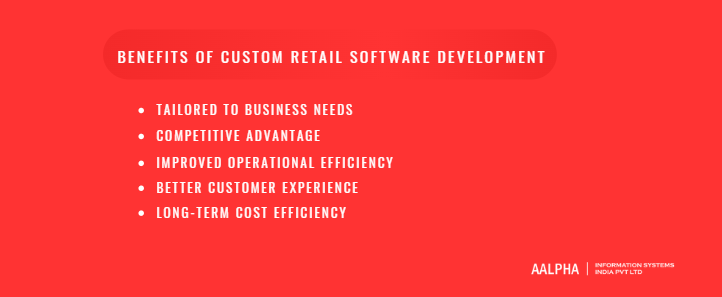
Custom retail software development delivers measurable business value when it aligns technology with how a retailer actually operates. Many businesses initially question whether the investment justifies the return compared to ready-made solutions. The answer becomes clear when evaluating outcomes such as operational efficiency, customer retention, and scalability. Unlike generic platforms, custom systems are built to remove friction, automate workflows, and support long-term growth. The following benefits explain why retailers increasingly treat custom software as a strategic asset rather than a technical expense.
-
Tailored to Business Needs
One of the most significant advantages of custom retail software is that it is designed specifically for the business using it. Off-the-shelf systems often include unnecessary features while lacking critical capabilities required for specific operations. This forces businesses to adapt their processes to the software, which can lead to inefficiencies and increased complexity.
Custom software eliminates this problem by aligning directly with business workflows. Every feature is built with a clear purpose, whether it is handling multi-location inventory, managing franchise operations, or supporting unique pricing models. This precision reduces unnecessary steps and improves overall efficiency.
For example, a retailer with both online and offline sales channels can build a system that synchronizes inventory and pricing in real time without relying on multiple disconnected tools. Similarly, businesses with complex supply chains can create workflows that reflect their actual procurement and distribution processes.
By focusing only on relevant features, custom software reduces clutter, simplifies user interfaces, and improves usability for staff. This leads to faster adoption, fewer errors, and more efficient operations. Ultimately, tailored systems enable businesses to operate exactly as intended, without being constrained by generic software limitations.
-
Competitive Advantage
In a highly competitive retail environment, differentiation is critical. Many businesses using the same off-the-shelf software end up offering similar experiences, making it difficult to stand out. Custom retail software allows companies to build unique workflows and customer experiences that competitors cannot easily replicate.
For instance, a retailer can implement personalized shopping journeys, dynamic pricing strategies, or exclusive loyalty programs that are tightly integrated with their operations. These capabilities enable businesses to respond quickly to market trends and customer preferences.
Custom solutions also allow for rapid innovation. Businesses can introduce new features, experiment with different strategies, and adapt their systems without waiting for third-party software updates. This agility provides a significant advantage in responding to changing market conditions.
By owning their technology stack, retailers gain greater control over their operations and customer interactions, positioning themselves as differentiated brands rather than participants in a standardized ecosystem.
-
Improved Operational Efficiency
Operational efficiency is a key driver of profitability in retail, and custom software plays a central role in achieving it. Retail operations often involve multiple processes, including inventory management, order processing, billing, and logistics coordination. When these processes are handled manually or through disconnected systems, inefficiencies and errors are inevitable.
Custom retail software integrates these processes into a single, cohesive system. Automation can be applied to repetitive tasks such as stock updates, order routing, invoice generation, and reporting. This reduces manual intervention and minimizes the risk of human error.
For example, when an order is placed, the system can automatically update inventory, assign the order to the nearest warehouse, and generate shipping details without requiring manual input. This not only speeds up operations but also ensures accuracy.
Real-time data access further enhances efficiency by enabling quick decision-making. Managers can monitor performance, identify bottlenecks, and take corrective actions immediately.
By streamlining workflows and reducing dependency on manual processes, custom software allows businesses to operate more efficiently while scaling their operations without proportionally increasing costs.
-
Better Customer Experience
Customer experience is a critical factor in retail success, directly influencing conversion rates, repeat purchases, and brand loyalty. Custom retail software enables businesses to design experiences that meet and exceed customer expectations.
One of the most immediate improvements is faster and more seamless transactions. Whether it is a physical store checkout or an online purchase, custom systems can optimize the process to reduce delays and friction. For example, streamlined checkout flows, integrated payment options, and quick order confirmations improve the overall shopping experience.
Personalization is another key aspect. By leveraging customer data, businesses can offer tailored product recommendations, targeted promotions, and personalized communication. This makes customers feel valued and increases engagement.
Custom software also supports features such as real-time order tracking, flexible delivery options, and easy returns, all of which contribute to customer satisfaction. When customers have clear visibility and control over their purchases, their trust in the brand increases.
By focusing on customer-centric design, custom retail software helps businesses build stronger relationships with their customers, leading to higher retention and long-term growth.
-
Long-Term Cost Efficiency
While custom retail software requires a higher initial investment compared to off-the-shelf solutions, it often proves more cost-effective in the long run. Businesses using generic software typically incur ongoing licensing fees, subscription costs, and additional expenses for third-party integrations.
Custom software eliminates many of these recurring costs by providing a solution that is fully owned and controlled by the business. Instead of paying for features that may not be used, companies invest in a system that delivers direct value.
Maintenance and updates can also be managed more efficiently. Businesses can prioritize enhancements based on their needs rather than relying on external vendors. This reduces dependency and allows for better cost control over time.
Additionally, improved efficiency and automation contribute to cost savings. By reducing manual work, minimizing errors, and optimizing operations, businesses can lower operational expenses and improve profitability.
In the long term, the ability to scale without incurring significant additional costs makes custom retail software a financially sustainable investment. It not only supports growth but also ensures that technology remains aligned with business objectives.
Step-by-Step Process to Build Custom Retail Software
Building custom retail software is not a linear coding exercise; it is a structured process that begins with understanding the business and ends with continuous improvement after launch. In many cases, an eCommerce development company follows a similar lifecycle, where early-stage decisions around requirements and system design have a greater impact than the choice of technologies later on. Many retailers assume development starts with selecting technologies, but in reality, the most critical decisions are made much earlier, during requirement analysis and system design.
This section provides a practical, step-by-step breakdown of how successful retail software systems are built, ensuring that each phase contributes to measurable business outcomes such as efficiency, scalability, and improved customer experience.
-
Requirement Analysis and Business Understanding
The foundation of any successful custom retail software lies in a deep understanding of the business it is built for. This phase focuses on gathering detailed requirements and identifying operational challenges that the software must address.
The process typically begins with stakeholder interviews. These include business owners, store managers, operations teams, and even frontline staff. Each stakeholder provides a different perspective on existing workflows and pain points. For example, store managers may highlight issues with inventory discrepancies, while customer support teams may point out inefficiencies in order tracking.
A critical step is mapping current workflows. This involves documenting how processes such as order management, inventory updates, and customer interactions are currently handled. Identifying bottlenecks, redundancies, and manual dependencies helps define areas where automation and optimization are needed.
Another important aspect is understanding business goals. Whether the objective is to improve customer retention, reduce operational costs, or scale to new markets, the software must align with these goals.
Retailers often ask how detailed this phase should be. In practice, the more precise the requirements, the smoother the development process. Skipping or rushing this stage can lead to misaligned features and costly revisions later.
The outcome of this phase is a clear requirement document that outlines functional needs, user roles, workflows, and key performance expectations. This document serves as the blueprint for the entire development process.
-
Defining Features and Functional Scope
Once requirements are gathered, the next step is to define the features and overall scope of the software. This stage determines what will be built and how it will be prioritized.
A common approach is to divide features into two categories: core features and advanced features. Core features form the Minimum Viable Product (MVP), which includes essential functionalities such as inventory management, order processing, and payment integration. The MVP development allows businesses to launch quickly and validate the system in real-world conditions.
Advanced features, such as AI-driven recommendations, advanced analytics, or multi-channel automation, can be added in later phases. This phased approach reduces initial development time and cost while allowing for iterative improvements.
Defining functional scope also involves setting clear boundaries. Without proper scope definition, projects can suffer from feature creep, where additional requirements continuously expand the project, leading to delays and increased costs.
User roles and permissions must also be defined at this stage. For example, administrators may have full access to the system, while store staff may only access sales and inventory modules. Clearly defining these roles ensures security and usability.
Another key consideration is scalability. Even at the MVP stage, the system should be designed to support future expansion without requiring major architectural changes.
The result of this phase is a detailed feature list and functional specification that guides design and development.
-
Choosing the Right Technology Stack
Selecting the appropriate technology stack is a critical decision that impacts performance, scalability, and long-term maintainability. The technology stack typically consists of frontend technologies, backend frameworks, databases, and cloud infrastructure.
The frontend is responsible for the user interface and experience. Retail applications often require responsive and fast-loading interfaces, whether for web platforms or mobile apps. Technologies such as modern JavaScript frameworks enable dynamic and interactive user experiences.
The backend handles business logic, data processing, and system integrations. It must be robust enough to manage high transaction volumes, especially during peak retail periods. The choice of backend framework should support scalability and efficient API management.
Databases play a crucial role in storing and retrieving data. Retail systems often require a combination of structured and unstructured data storage, depending on the complexity of operations. Choosing the right database ensures fast query performance and data reliability.
Cloud infrastructure is essential for scalability and availability. Cloud platforms allow businesses to handle traffic spikes, scale resources dynamically, and ensure high uptime. Features such as load balancing, auto-scaling, and content delivery networks improve system performance.
Security considerations must also be integrated into the technology stack. This includes data encryption, secure authentication mechanisms, and compliance with industry standards.
A well-chosen eCommerce technology stack ensures that the system can handle current requirements while remaining flexible for future growth.
-
UI/UX Design for Retail Applications
User interface and user experience design are critical to the success of retail software because they directly impact usability, efficiency, and customer satisfaction. Even the most technically advanced system can fail if it is difficult to use.
The design process begins with mapping user journeys. This involves understanding how different users, such as customers, store staff, and administrators, interact with the system. For example, a customer journey may include browsing products, adding items to a cart, and completing a purchase, while a staff journey may involve processing orders and managing inventory.
Designers focus on creating intuitive interfaces that minimize friction. In retail, checkout flow optimization is particularly important. A streamlined checkout process reduces cart abandonment and improves conversion rates. This may involve reducing the number of steps, offering multiple payment options, and providing clear instructions.
Consistency in design is also essential. Uniform layouts, clear navigation, and standardized components help users understand the system quickly. This reduces training time for staff and improves overall efficiency.
Mobile responsiveness is another key consideration. Retail systems must function seamlessly across devices, ensuring that users can access features on smartphones, tablets, and desktops.
Prototyping and usability testing are integral parts of this phase. By testing designs with real users, businesses can identify issues early and make improvements before development begins.
Effective UI/UX design ensures that the software is not only functional but also easy and efficient to use.
-
Development Phase
The development phase is where the software is built based on the defined requirements and design specifications. This stage involves implementing both frontend and backend components, as well as integrating various system modules.
Backend development focuses on building the core logic of the application. This includes handling transactions, managing inventory, processing orders, and implementing business rules. APIs are developed to enable communication between different components of the system.
Frontend development involves creating the user interface based on design prototypes. Developers ensure that the interface is responsive, fast, and consistent across devices.
Integration is a key aspect of development. Retail systems often need to connect with payment gateways, logistics providers, CRM platforms, and other third-party services. APIs are used to facilitate these integrations, ensuring seamless data exchange.
Development is typically carried out using an agile methodology, where work is divided into smaller iterations or sprints. This allows for continuous feedback and incremental improvements.
Code quality and documentation are critical during this phase. Well-structured code and clear documentation make it easier to maintain and update the system in the future.
By the end of this phase, the software should be fully functional and ready for testing.
-
Integration with Third-Party Systems
Modern retail operations rely heavily on external systems, making integration a crucial part of custom software development. Without proper integration, businesses may face data silos, manual work, and operational inefficiencies.
Payment gateway integration is one of the most important aspects. The system must support secure and reliable transactions across multiple payment methods. Integration ensures that payment processing is seamless and that transaction data is accurately recorded.
Logistics and shipping integrations enable automated order fulfillment. By connecting with logistics providers, the system can generate shipping labels, track deliveries, and provide real-time updates to customers.
ERP and accounting system integration ensures that financial data is synchronized across the organization. This reduces manual data entry and improves accuracy in financial reporting.
Marketplace integrations are also important for retailers selling on multiple platforms. Custom software can synchronize product listings, inventory, and orders across marketplaces, ensuring consistency.
The key to successful integration is using well-defined APIs and ensuring data consistency across systems. Proper error handling and monitoring are also essential to maintain reliability.
-
Testing and Quality Assurance
Testing and quality assurance ensure that the software performs as expected under various conditions. This phase is critical for identifying and resolving issues before the system is deployed.
Functional testing verifies that all features work correctly. This includes testing workflows such as order placement, payment processing, and inventory updates.
Performance testing evaluates how the system handles high traffic and large transaction volumes. This is particularly important for retail systems that experience spikes during sales events.
Security testing focuses on protecting sensitive data and ensuring compliance with industry standards. This includes testing for vulnerabilities and implementing safeguards against potential threats.
Comprehensive testing ensures that the system is reliable, secure, and ready for real-world use.
-
Deployment and Launch
Deployment involves making the software available to users in a live environment. This typically includes setting up cloud infrastructure, configuring servers, and deploying application code.
Continuous Integration and Continuous Deployment (CI/CD) pipelines are often used to automate the deployment process. This ensures that updates can be released quickly and reliably.
Before full-scale launch, businesses may conduct a soft launch or beta testing phase. This allows them to gather feedback and address any issues in a controlled environment.
Proper monitoring tools are implemented to track system performance, detect errors, and ensure stability after launch.
A well-executed deployment ensures a smooth transition from development to production.
-
Post-Launch Maintenance and Scaling
The development process does not end with deployment. Post-launch maintenance and scaling are essential for ensuring long-term success.
Maintenance involves fixing bugs, updating features, and ensuring system stability. Regular updates are necessary to keep the software aligned with changing business needs and market trends.
Scaling becomes important as the business grows. This may involve adding new features, expanding to new markets, or handling increased traffic and data volume. A well-designed system can scale without major disruptions.
Continuous monitoring and analytics help identify areas for improvement. Businesses can use this data to enhance performance, optimize workflows, and introduce new capabilities.
By treating software as an evolving system rather than a one-time project, retailers can ensure that their custom solution continues to deliver value over time.
Cost of Custom Retail Software Development
Understanding the cost of custom retail software development is one of the most critical concerns for decision-makers. Businesses often ask whether the investment is justified compared to using ready-made platforms. The answer depends on multiple variables, including system complexity, feature requirements, development approach, and long-term operational needs. This is where factors influencing the custom software development cost become essential to evaluate early in the process.
Unlike off-the-shelf software with fixed pricing, custom solutions are priced based on scope and requirements. This means costs can vary significantly, but it also ensures that businesses pay only for what they need. More importantly, the return on investment is often higher because the software is built to improve efficiency, increase revenue, and support scalability.
The following sections break down the key cost factors to help businesses plan and make informed decisions.
-
Cost Based on Software Complexity
The overall cost of custom retail software is largely determined by the complexity of the system being developed. Retail solutions can generally be categorized into three levels: basic, mid-level, and enterprise-grade systems.
Basic systems are designed for small businesses or startups with straightforward requirements. These typically include essential features such as inventory management, billing, and simple reporting. Development costs for such systems are relatively lower because they involve fewer integrations and limited customization. However, they may not support advanced functionalities or large-scale operations.
Mid-level systems are more comprehensive and are suitable for growing businesses. These systems often include multi-channel integration, customer management, advanced reporting, and moderate automation. For example, a retailer operating both online and offline may require synchronization between eCommerce platforms and physical stores. The increased complexity of these features leads to higher development costs compared to basic systems.
Enterprise-grade systems are built for large retailers with complex operations, multiple locations, and high transaction volumes. These systems include advanced features such as AI-driven recommendations, real-time analytics, supply chain optimization, and integration with multiple third-party services. They are designed for scalability, performance, and high availability, often requiring robust cloud infrastructure and sophisticated architecture.
Businesses frequently ask whether starting with a smaller system and scaling later is a better approach. In most cases, building a scalable foundation from the beginning is more cost-effective than rebuilding the system as the business grows.
Ultimately, the complexity of the software directly influences development time, required expertise, and infrastructure, all of which contribute to the overall cost.
-
Feature-Based Cost Breakdown
Another major factor influencing cost is the set of features included in the software. Each feature adds to development time, testing requirements, and system complexity, which impacts the overall budget.
Core features such as product catalog management, order processing, and payment integration form the foundation of any retail system. These are typically included in the initial development phase and account for a significant portion of the cost.
Advanced features increase both functionality and cost. For example, AI-driven recommendation engines require data processing capabilities, machine learning models, and continuous optimization. These features can significantly enhance customer engagement but also require specialized expertise and additional infrastructure.
Integrations are another cost driver. Connecting the system with payment gateways, logistics providers, ERP systems, and third-party marketplaces involves API development, testing, and ongoing maintenance. The more integrations required, the higher the development effort.
Analytics and reporting features also contribute to cost. Building custom dashboards, real-time reporting systems, and data visualization tools requires additional backend processing and frontend design.
Security features such as data encryption, fraud detection, and compliance with standards like PCI DSS are essential but add to development complexity.
Businesses often ask whether all features should be built at once. A phased approach, starting with essential features and adding advanced capabilities over time, is generally more cost-effective and reduces initial investment.
-
Development Team and Location Impact
The choice of development team significantly affects the cost of custom retail software. Businesses can choose between in-house development, outsourcing, or a hybrid approach.
In-house development involves building a dedicated team within the organization. While this provides full control over the development process, it is often the most expensive option due to costs associated with hiring, training, infrastructure, and ongoing salaries.
Outsourcing development to specialized companies or agencies is a common approach. It allows businesses to access experienced developers and established processes without the overhead of maintaining an internal team. Costs vary depending on the location of the development team. For example, development rates in regions such as North America and Western Europe are typically higher than in countries like India or Eastern Europe.
A hybrid approach combines in-house management with outsourced development, providing a balance between control and cost efficiency.
Beyond cost, expertise and experience are critical factors. A skilled development partner can deliver a high-quality system more efficiently, reducing long-term costs associated with errors and rework.
-
Ongoing Maintenance Costs
Custom retail software requires ongoing maintenance to ensure stability, security, and performance. These costs are often overlooked during initial planning but are essential for long-term success.
Maintenance includes regular updates, bug fixes, and performance optimization. As business requirements evolve, new features may need to be added, which involves additional development work.
Hosting and infrastructure costs are another component. Cloud services, data storage, and content delivery networks contribute to ongoing expenses, especially as the system scales.
Support services, including monitoring, troubleshooting, and user assistance, also add to software maintenance costs.
While these expenses are continuous, they are typically lower and more predictable compared to recurring licensing fees of off-the-shelf software. More importantly, businesses retain full control over their system, ensuring that it evolves in line with their needs.
Challenges in Custom Retail Software Development
Custom retail software offers significant advantages, but it also comes with practical challenges that businesses must address during planning and execution. Understanding these challenges in advance helps organizations make informed decisions, allocate resources effectively, and avoid costly mistakes.
Retailers often assume that custom software automatically solves operational problems. In reality, the success of such systems depends on how well they are designed, integrated, and maintained. The following challenges highlight the key areas that require careful attention.
-
Integration Complexity
One of the most significant challenges in custom retail software development is integrating multiple systems into a unified platform. Retail businesses typically rely on a variety of tools, including payment gateways, inventory systems, logistics providers, CRM platforms, and third-party marketplaces. Each of these systems operates independently and often uses different data formats and protocols.
Custom software must act as a central hub that connects all these systems through APIs. While APIs enable communication, they also introduce complexity. Differences in data structures, rate limits, and reliability can lead to synchronization issues. For example, if inventory updates are delayed between systems, it can result in overselling or inaccurate stock levels.
Legacy systems add another layer of difficulty. Many retailers still use outdated software that was not designed for modern integrations. Connecting these systems to new applications often requires custom middleware or additional development effort.
Error handling and monitoring are critical in such environments. A failure in one integration, such as a payment gateway or shipping API, can disrupt the entire workflow. Businesses must implement robust fallback mechanisms and real-time monitoring to ensure continuity.
Successfully managing integration complexity requires careful planning, well-documented APIs, and ongoing maintenance to keep all systems aligned.
-
Data Security and Compliance
Retail systems handle sensitive data, including customer information, payment details, and transaction records. Ensuring data security and regulatory compliance is therefore a major challenge in custom software development.
One of the primary requirements is compliance with payment security standards such as PCI DSS (Payment Card Industry Data Security Standard). These standards mandate strict controls for handling cardholder data, including encryption, secure storage, and restricted access. Failure to comply can result in financial penalties and loss of customer trust.
In addition to payment security, retailers operating in global markets must comply with data protection regulations such as GDPR (General Data Protection Regulation). These regulations require businesses to manage personal data responsibly, provide transparency, and allow users to control their data.
Implementing these requirements in custom software involves multiple layers of security. This includes secure authentication mechanisms, data encryption in transit and at rest, and protection against common threats such as SQL injection and cross-site scripting.
Another challenge is maintaining security over time. As new vulnerabilities emerge, systems must be updated regularly to remain secure. This requires continuous monitoring and proactive risk management.
Retailers often underestimate the effort required to maintain compliance, but it is essential for protecting both the business and its customers.
-
Scalability Issues
Scalability is a critical consideration in retail, where demand can fluctuate significantly due to seasonal trends, promotions, or sudden increases in customer activity. A system that performs well under normal conditions may struggle during peak periods if it is not designed for scalability.
Custom retail software must be built to handle high traffic volumes, large numbers of transactions, and increased data processing requirements. For example, during a major sale event, the system may need to process thousands of orders simultaneously while maintaining fast response times.
One common challenge is designing an architecture that can scale efficiently. Without proper planning, adding more users or features can lead to performance bottlenecks, system slowdowns, or even downtime.
Cloud-based infrastructure helps address scalability, but it requires proper configuration, including load balancing, auto-scaling, and database optimization. These elements must be implemented during the development phase rather than added later.
Retailers also need to test their systems under simulated peak conditions to identify potential issues before they occur in real scenarios.
Ensuring scalability is not just about handling growth but also about maintaining consistent performance and reliability as the business expands.
-
High Initial Investment
One of the most common concerns for businesses considering custom retail software is the high initial investment. Compared to off-the-shelf solutions, custom development requires a significant upfront cost for design, development, and deployment.
This investment includes expenses related to requirement analysis, system architecture, development resources, testing, and infrastructure setup. For small and medium-sized businesses, these costs can appear prohibitive.
However, it is important to evaluate this investment in the context of long-term value. Off-the-shelf solutions often involve recurring licensing fees, limited customization, and additional costs for integrations and upgrades. Over time, these expenses can exceed the cost of a custom solution.
Custom software also delivers operational efficiencies that translate into cost savings. Automation reduces manual work, improved accuracy minimizes errors, and better customer experiences increase revenue.
Businesses often ask whether the investment is justified at an early stage. A practical approach is to start with a Minimum Viable Product and expand the system gradually. This reduces initial costs while allowing the business to validate its investment.
While the upfront cost is higher, the long-term return on investment, combined with greater control and scalability, makes custom retail software a financially viable option for many businesses.
How to Choose the Right Retail Software Development Partner
Selecting the right software development partner is one of the most important decisions in a custom retail software project. The success of the system depends not only on the idea or budget but also on the expertise, process, and reliability of the team building it. Many projects fail or underperform because businesses choose vendors based solely on cost rather than capability.
Decision-makers often ask how to evaluate a development partner effectively. The answer lies in assessing a combination of domain experience, technical strength, communication practices, and long-term support capabilities. The following factors provide a structured approach to making the right choice.
-
Experience in Retail Industry
Domain-specific experience is a critical factor when selecting a development partner. Retail is a complex industry with unique challenges such as inventory synchronization, multi-channel sales, supply chain coordination, and customer personalization. A partner with prior experience in retail software development understands these challenges and can provide practical solutions.
For example, a team familiar with retail operations will already know how to design systems for real-time inventory tracking, handle peak-season traffic, and integrate with payment gateways and logistics providers. This reduces the learning curve and accelerates the development process.
Industry experience also helps in anticipating potential issues. A knowledgeable partner can identify risks early, such as integration challenges or scalability limitations, and address them proactively. This prevents costly revisions later in the project.
Additionally, experienced teams can provide valuable insights and recommendations based on past projects. They can suggest features, workflows, and optimizations that may not be immediately obvious but can significantly improve system performance and user experience.
Businesses should evaluate a partner’s portfolio, focusing on projects similar in scale and complexity. A development company with proven expertise in retail systems is more likely to deliver a solution that aligns with business needs.
-
Technical Expertise and Scalability
Technical expertise is essential for building a reliable and future-ready retail system. The development partner should have a strong understanding of modern architectures, frameworks, and cloud technologies that support scalability and performance.
Retail software must handle high transaction volumes, integrate with multiple systems, and provide real-time data processing. This requires expertise in backend development, API design, database management, and frontend technologies.
Scalability is a key consideration. The partner should be capable of designing systems that can grow with the business, handling increased traffic, additional features, and expanding operations without performance issues.
A technically strong partner will also prioritize code quality, security, and maintainability. This ensures that the system remains stable and easy to update over time.
When evaluating technical expertise, businesses should look for evidence of complex project execution, use of modern development practices, and familiarity with scalable cloud infrastructure.
-
Transparent Development Process
A transparent and structured development process is crucial for ensuring that the project stays on track and meets expectations. Lack of communication and unclear processes are common reasons for project delays and failures.
Most successful development partners follow an agile methodology, where the project is divided into smaller iterations or sprints. This allows for continuous feedback, regular updates, and incremental improvements. Businesses can review progress at each stage and make adjustments as needed.
Clear communication is equally important. The partner should provide regular reports, conduct review meetings, and maintain open channels for discussion. This ensures that stakeholders are always informed about the project’s status.
Documentation is another key aspect of transparency. Detailed documentation of requirements, design decisions, and code structure helps maintain clarity and supports future updates.
A transparent process builds trust and reduces uncertainty, enabling businesses to collaborate effectively with the development team.
-
Post-Launch Support and Maintenance
Custom retail software requires ongoing support after deployment. A reliable development partner should offer maintenance services, including bug fixes, updates, and performance optimization.
Retail systems must evolve with changing business needs, market trends, and customer expectations. Continuous support ensures that the software remains relevant and efficient.
Long-term partnership is important because the team that built the system is best equipped to maintain and enhance it. Businesses should ensure that the partner provides clear support plans and service-level agreements.
-
Client Reviews and Case Studies
Client reviews and case studies provide valuable insights into a development partner’s reliability and performance. They demonstrate the partner’s ability to deliver successful projects and maintain client satisfaction.
Case studies should highlight the problem, solution, and measurable outcomes. For example, improvements in operational efficiency, increased sales, or enhanced customer experience indicate the effectiveness of the solution.
Reviews from previous clients offer additional credibility. They reflect real-world experiences and can reveal strengths and potential concerns.
Businesses should look for partners with a strong track record of delivering results. Established development companies with proven expertise, such as Aalpha, often showcase detailed case studies and client testimonials that demonstrate their capabilities.
Evaluating these factors helps businesses choose a partner that can deliver not just a functional system but a solution that drives long-term success.
Future Trends in Retail Software Development
Retail software is evolving rapidly as businesses adapt to changing consumer behavior, technological advancements, and global competition. Companies are no longer asking whether they should adopt new technologies, but how quickly they can implement them to stay competitive. The future of retail software lies in systems that are intelligent, flexible, and capable of delivering highly personalized and seamless experiences.
Understanding these trends helps businesses make forward-looking decisions when investing in custom retail software. The following developments are shaping the next generation of retail technology.
-
AI and Predictive Analytics
Artificial intelligence and predictive analytics are transforming how retailers make decisions. Instead of relying on historical data alone, businesses can now use machine learning models to forecast demand, optimize pricing, and personalize customer experiences in real time.
Demand forecasting is one of the most impactful applications. By analyzing patterns such as seasonal trends, customer behavior, and external factors, retailers can predict future demand with greater accuracy. This helps in maintaining optimal inventory levels and reducing both stockouts and excess inventory.
Dynamic pricing is another key capability. Retailers can adjust prices automatically based on demand, competition, and customer segments. This allows businesses to maximize revenue while remaining competitive.
Predictive analytics also enhances customer engagement by identifying buying patterns and recommending products more effectively. As data becomes more central to retail operations, AI-driven systems will play a critical role in improving efficiency and profitability.
-
Headless Commerce and Composable Architecture
Headless commerce and composable architecture are redefining how retail systems are built. Traditional platforms often combine frontend and backend systems into a single structure, which limits flexibility. Headless commerce separates these components, allowing businesses to manage them independently.
This approach enables retailers to deliver consistent experiences across multiple channels, including websites, mobile apps, and in-store devices. Changes to the frontend can be made without affecting backend operations, allowing for faster updates and experimentation.
Composable architecture takes this concept further by allowing businesses to build systems using modular components. Each component, such as payment processing, inventory management, or search functionality, can be developed and updated independently.
This flexibility makes it easier to scale and adapt to changing business needs. Retailers can integrate new technologies or replace components without rebuilding the entire system.
As retail becomes more complex and multi-channel, headless and composable approaches provide the agility required to stay competitive.
-
Automation in Retail Operations
Automation is becoming a central component of retail operations, helping businesses reduce manual work, improve accuracy, and increase efficiency. Custom retail software is increasingly incorporating automation to streamline processes across the entire value chain.
In warehouses, automation technologies such as robotics and automated sorting systems are improving order fulfillment speed and accuracy. These systems can handle large volumes of orders with minimal human intervention, reducing operational costs and errors.
Within software systems, automation can manage tasks such as inventory updates, order routing, and reporting. For example, when stock levels fall below a certain threshold, the system can automatically trigger replenishment orders.
Smart workflows also enhance decision-making by using predefined rules and real-time data. Retailers can automate processes such as discount application, fraud detection, and customer communication.
As businesses scale, automation becomes essential for maintaining efficiency without significantly increasing operational costs. It allows retailers to focus on strategic activities while routine tasks are handled by the system.
-
AR/VR Shopping Experiences
Augmented reality (AR) and virtual reality (VR) are redefining how customers interact with retail products. These technologies provide immersive experiences that bridge the gap between online and physical shopping.
AR enables customers to visualize products in real-world environments before making a purchase. For example, shoppers can see how furniture fits in their home or how clothing looks on them through virtual try-on features. This reduces uncertainty and increases confidence in purchasing decisions.
VR takes this experience further by creating fully immersive virtual stores. Customers can explore products, interact with displays, and make purchases in a simulated environment.
These technologies not only enhance customer engagement but also reduce return rates by providing more accurate product visualization.
As AR and VR technologies become more accessible, they are expected to play a significant role in shaping the future of retail. Businesses that adopt these innovations early can differentiate themselves and offer unique, engaging shopping experiences.
Final Thoughts
Custom retail software is no longer a luxury reserved for large enterprises. It has become a practical and strategic investment for any business looking to improve efficiency, deliver better customer experiences, and scale without limitations. From integrating multiple sales channels to enabling real-time decision-making, custom solutions give retailers full control over how their operations evolve.
Businesses that rely solely on generic platforms often face limitations in flexibility, scalability, and differentiation. In contrast, custom-built systems align technology with business goals, allowing companies to adapt quickly to market changes and customer expectations.
If you are planning to build a retail platform or upgrade your existing systems, the right approach is to start with a clear strategy and work with an experienced development partner who understands both technology and retail workflows.
Looking to build a custom retail software solution tailored to your business? Contact Aalpha today to discuss your requirements and get expert guidance on turning your idea into a scalable, high-performance system.