


The average website development cost in Dubai typically ranges between AED 3,000 to AED 120,000+ (approximately USD 800 to USD 32,700+), depending on the type, complexity, and business requirements. A basic informational website for a small business may cost around AED 3,000–10,000 (USD 800–2,700), while a professionally designed corporate website usually falls between AED 10,000–40,000 (USD 2,700–10,900). More advanced solutions such as eCommerce platforms or custom web applications can exceed AED 50,000–120,000+ (USD 13,600–32,700+), especially when integrations, automation, and scalability are involved.
Dubai’s digital economy is one of the most competitive in the Middle East, which directly impacts website development pricing. Businesses across industries, including real estate, hospitality, fintech, healthcare, and retail, rely heavily on high-performance websites to attract international customers, build credibility, and drive revenue. In a market where users expect fast-loading, visually refined, and mobile-first experiences, a website is not just a digital presence but a core business asset. Companies operating in Dubai often invest more in design quality, multilingual functionality, and advanced features because their target audience is global and highly diverse.
Several key factors influence website development costs in the UAE. The first is website complexity, which includes the number of pages, custom features, and backend systems. A simple brochure website costs significantly less than a platform with booking engines, dashboards, or AI-driven personalization. The second factor is design expectations, as Dubai-based businesses often require premium UI/UX design aligned with international standards. The third is technology and integrations, including content management systems, payment gateways, CRM integrations, and third-party APIs. Additionally, the experience level of the development team plays a major role, as established agencies with proven track records typically charge higher fees than freelancers but offer better reliability, scalability, and long-term support.
Another important consideration is the difference between one-time development costs and ongoing expenses. While initial development may seem like the primary investment, businesses must also account for hosting, maintenance, updates, and security, which contribute to the total cost of ownership over time.
This guide provides a comprehensive breakdown of website development costs in Dubai, covering pricing by website type, detailed cost factors, and hiring models. Whether you are a startup building your first website or an enterprise planning a complex digital platform, understanding these cost structures will help you make informed decisions and avoid unnecessary expenses.
Average Website Development Cost in Dubai
Website development pricing in Dubai varies widely based on business goals, technical requirements, and expected user experience. In most cases, companies fall within a predictable range depending on the type of website they need, the scale of their operations, and whether they are investing in a one-time build or an ongoing digital platform. Understanding these cost brackets helps businesses align their budgets with realistic outcomes and avoid underestimating the total investment required.
-
Cost Range by Website Type
The most accurate way to estimate website development cost in Dubai is by categorizing it based on website type, as each type comes with different levels of complexity, design expectations, and technical requirements.
A basic website, typically used by small businesses or individuals, costs between AED 3,000 and AED 10,000 (USD 800–2,700). These websites usually include 5–10 pages, a pre-designed template, basic contact forms, and minimal customization. They are suitable for businesses that need an online presence quickly without advanced functionality.
A standard SME or business website generally ranges from AED 10,000 to AED 40,000 (USD 2,700–10,900). This category includes custom-designed layouts, better user experience, mobile responsiveness, and integrations such as CRM tools or lead capture systems. Businesses in sectors like consulting, healthcare, or local services often fall into this category because they require credibility, branding, and conversion-focused design.
An eCommerce website in Dubai typically costs between AED 25,000 and AED 120,000+ (USD 6,800–32,700+), depending on the scale and features. A basic online store with limited products may stay on the lower end, while larger stores with inventory management, payment gateways, logistics integrations, and advanced features like recommendations or multi-language support can push costs significantly higher. Given Dubai’s strong retail and cross-border trade environment, many businesses invest heavily in eCommerce platforms to capture online demand.
For enterprise-level or custom web platforms, costs start from AED 100,000+ (USD 27,000+) and can go well beyond that. These platforms often include complex architectures, custom dashboards, automation workflows, API integrations, and scalability for high traffic. Industries such as fintech, real estate portals, and SaaS platforms typically require this level of investment because their websites function as full-scale operational systems rather than just marketing tools.
-
Cost Based on Business Size
Website development costs in Dubai also vary significantly based on the size and maturity of the business, as each category has different expectations and priorities.
Startups usually operate with limited budgets and focus on launching quickly. Their website investment typically ranges between AED 3,000 and AED 15,000 (USD 800–4,000). At this stage, the goal is validation rather than perfection, so startups often choose simple designs or MVP-level websites that communicate their value proposition clearly without heavy features.
Small and medium-sized enterprises (SMEs) invest more in their digital presence because their website plays a direct role in lead generation and customer acquisition. Their typical budget falls between AED 10,000 and AED 50,000 (USD 2,700–13,600). These businesses prioritize branding, performance, SEO readiness, and integrations that support their sales processes.
Enterprises allocate significantly higher budgets, often starting from AED 50,000 and exceeding AED 150,000+ (USD 13,600–40,800+), depending on complexity. Their websites are expected to handle large traffic volumes, integrate with multiple internal systems, and deliver a seamless experience across regions and devices. For these organizations, the website is not just a marketing channel but a critical part of their digital infrastructure.
-
Monthly vs One-Time Cost Perspective
One of the most common misconceptions is that website development is a one-time expense. In reality, businesses in Dubai must consider both initial development costs and ongoing monthly expenses to understand the full financial commitment.
The one-time development cost includes design, development, testing, and deployment. This is the upfront investment required to build the website. Depending on the project scope, this can range from a few thousand dirhams for basic websites to six-figure investments for complex platforms.
However, websites require continuous upkeep. Ongoing costs include hosting, domain renewal, security updates, bug fixes, performance optimization, and content updates. On average, businesses spend 15–25% of the initial development cost annually on maintenance. For example, a website built for AED 40,000 may require AED 6,000–10,000 per year in maintenance.
In addition to traditional development models, many companies in Dubai are shifting toward subscription-based website models, where they pay a fixed monthly fee instead of a large upfront cost. These plans, which typically range from AED 500 to AED 3,000 per month (USD 135–820), include hosting, maintenance, updates, and sometimes ongoing design or development support. This approach is particularly attractive for startups and SMEs that prefer predictable expenses and continuous improvements rather than a single large investment.
Understanding the balance between one-time and recurring costs is essential for making informed decisions, as it directly impacts long-term budgeting and scalability.
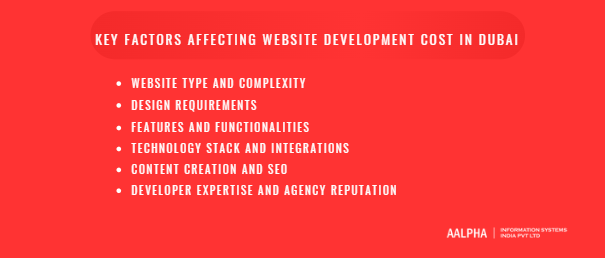
Key Factors Affecting Website Development Cost in Dubai
Website development costs in Dubai are not fixed because every project is shaped by multiple variables, including business objectives, technical requirements, and user expectations. Two businesses operating in the same industry can have completely different website budgets simply because of differences in functionality, scalability, and design quality. Understanding these cost drivers is essential for accurate budgeting and for making informed decisions about where to invest and where to optimize.
-
Website Type and Complexity
The type and complexity of the website is the most fundamental factor influencing cost. At the lowest end are static websites, which consist of fixed pages with minimal interactivity. These are typically used for informational purposes and require relatively little development effort, making them the most affordable option.
Moving up in complexity are dynamic websites, which include interactive elements such as contact forms, content management systems, and database-driven content. These websites allow businesses to update content without developer intervention and often include features like blogs, service pages, and user engagement tools. The added backend functionality increases both development time and cost.
At the highest level are custom platforms and web applications, which are built from scratch to meet specific business requirements. These may include dashboards, user portals, booking systems, or SaaS-based functionality. Such platforms require detailed architecture planning, advanced backend development, and scalability considerations. In Dubai, where many businesses operate in competitive and tech-driven industries, custom platforms are increasingly common, and they significantly raise the overall cost due to the level of customization and testing required.
-
Design Requirements
Design plays a critical role in determining website development costs, especially in a market like Dubai where visual quality and user experience are closely tied to brand perception. Businesses targeting high-value customers or international audiences often require premium design standards, which directly impacts pricing.
A template-based design is the most cost-effective option. It involves using pre-built layouts with limited customization. While this approach reduces both design time and cost, it also limits uniqueness and may not fully align with brand identity. It is typically suitable for startups or small businesses that need a quick launch.
In contrast, custom UI/UX design involves creating a website from the ground up based on user behavior, brand positioning, and business goals. This process includes wireframing, prototyping, user journey mapping, and multiple design iterations. Custom design ensures a unique and optimized experience, which can improve conversion rates and engagement. However, it requires skilled designers and more time, making it significantly more expensive.
In Dubai’s competitive environment, many businesses prioritize high-end design to stand out, especially in industries like real estate, hospitality, and luxury services, where visual presentation directly influences customer trust and decision-making.
-
Features and Functionalities
The number and complexity of features integrated into a website have a direct impact on development costs. A simple website with basic pages requires minimal coding, whereas feature-rich platforms demand extensive development, testing, and integration.
Common features that increase costs include payment gateways, which require secure integration with providers such as Stripe, PayTabs, or local UAE payment systems. These integrations must comply with security standards and often involve additional configuration and testing.
Booking systems are another major cost driver, especially for industries like healthcare, travel, and hospitality. These systems must handle real-time availability, scheduling, notifications, and sometimes cancellations or rescheduling, which adds significant backend complexity.
User dashboards and admin panels also contribute to higher costs. These interfaces allow businesses and users to manage data, track activities, and perform actions within the platform. Building these systems requires robust backend logic, database management, and user authentication mechanisms.
Other advanced features such as multilingual support, AI-driven recommendations, live chat systems, and third-party integrations further increase development effort. In Dubai, where businesses often cater to a diverse, international audience, these features are not optional but expected, which pushes overall costs higher.
-
Technology Stack and Integrations
The choice of technology stack significantly affects both the cost and scalability of a website. A content management system (CMS) such as WordPress or Shopify can reduce development time and cost because it provides pre-built structures and plugins. These platforms are ideal for standard websites and small to medium-sized eCommerce stores.
However, businesses with unique requirements often opt for custom-built solutions using modern frameworks and backend technologies. While this approach offers greater flexibility and performance, it requires more development time and specialized expertise, which increases costs.
Integrations are another major factor. Most modern websites need to connect with third-party tools and APIs, such as CRM systems, payment gateways, marketing automation platforms, analytics tools, and logistics providers. Each integration requires development effort, testing, and ongoing maintenance to ensure compatibility and performance.
In Dubai, where businesses often operate across multiple systems and markets, integration complexity can be high. For example, an eCommerce website may need to integrate with inventory systems, shipping providers, and regional payment gateways, all of which add to the overall development cost.
-
Content Creation and SEO
Content is often underestimated in website development budgets, but it plays a crucial role in both cost and performance. High-quality content requires professional copywriting, keyword research, and alignment with brand messaging, all of which involve additional investment.
Copywriting costs vary depending on the number of pages, industry complexity, and level of research required. Websites targeting competitive markets in Dubai often require well-crafted, persuasive content that appeals to both local and international audiences.
Search engine optimization (SEO) is another important cost component. On-page SEO includes keyword optimization, meta tags, structured content, and internal linking, all of which must be implemented during the development phase. Without proper SEO, even a well-designed website may struggle to generate traffic.
Businesses that invest in content and SEO from the beginning often see better long-term returns, as their website becomes a consistent source of organic leads rather than just a static digital presence.
-
Developer Expertise and Agency Reputation
The experience and reputation of the development team have a direct impact on pricing. In Dubai, businesses can choose between freelancers, small agencies, and established development companies, each with different cost structures and levels of reliability.
Freelancers are generally the most affordable option. They are suitable for small projects or basic websites but may lack the resources and scalability required for complex builds. While they can reduce upfront costs, they may also introduce risks related to timelines, quality, and long-term support.
Agencies, on the other hand, offer a more structured and reliable approach. They provide dedicated teams, including designers, developers, project managers, and QA specialists. This ensures better quality control, faster delivery, and ongoing support, but at a higher cost.
Established agencies with strong portfolios and proven expertise often charge premium rates because they bring experience, strategic guidance, and the ability to handle complex projects. For businesses aiming to build scalable and high-performance websites, working with experienced providers can reduce long-term risks and costs, even if the initial investment is higher.
Ultimately, the choice between freelancers and agencies depends on the project scope, budget, and business goals. In a competitive market like Dubai, many companies prefer experienced partners who can deliver reliable, scalable, and future-ready solutions.
Website Development Cost Breakdown by Type
Understanding website development costs becomes far more practical when broken down by specific website types. Each category serves a different business purpose, requires a different level of technical complexity, and demands varying levels of design and scalability. In Dubai, where digital competition is high and user expectations are sophisticated, selecting the right type of website is directly tied to both budget and business outcomes.
-
Basic Business Website Cost
A basic business website is the most affordable entry point for companies looking to establish an online presence. In Dubai, the cost for a basic website typically ranges between AED 3,000 and AED 10,000 (USD 800–2,700).
These websites are generally built using pre-designed templates and include essential pages such as Home, About, Services, and Contact. They are suitable for small local businesses, freelancers, or startups that need a simple digital identity without complex functionality. The development process is relatively fast because it relies on existing frameworks and minimal customization.
However, while the initial cost is low, these websites often come with limitations. Customization is restricted, scalability is limited, and the design may not fully reflect a unique brand identity. In a competitive market like Dubai, this can impact how customers perceive the business. For companies targeting premium clients or aiming to grow rapidly, a basic website may serve as a temporary solution rather than a long-term investment.
-
Corporate Website Cost
Corporate websites are designed for established businesses that require a strong digital presence, professional branding, and lead generation capabilities. In Dubai, the cost for a corporate website typically falls between AED 10,000 and AED 40,000 (USD 2,700–10,900).
These websites go beyond basic functionality and include custom UI/UX design, responsive layouts, and structured content tailored to the company’s services and target audience. They often integrate features such as inquiry forms, CRM systems, blog sections, and SEO optimization to support marketing efforts.
Corporate websites also focus heavily on branding and user experience. This includes carefully designed navigation, consistent visual identity, and content that communicates trust and credibility. In industries like consulting, healthcare, and real estate, a well-designed corporate website plays a crucial role in converting visitors into clients.
The higher cost compared to basic websites reflects the additional time required for design, content planning, and development. However, for businesses operating in Dubai’s competitive environment, this investment often delivers measurable returns through improved visibility, credibility, and lead generation.
-
eCommerce Website Cost
eCommerce websites are significantly more complex than standard business websites because they involve transactional functionality, inventory management, and multiple system integrations. In Dubai, eCommerce website development costs typically range from AED 25,000 to AED 120,000+ (USD 6,800–32,700+), depending on scale and features.
A basic eCommerce store with limited products and standard functionality can be built at the lower end of the range using platforms like Shopify or WooCommerce. However, as the business grows, additional features such as advanced product filtering, multi-currency support, personalized recommendations, and automated marketing tools increase the cost.
One of the major cost drivers in eCommerce is payment gateway integration, which must comply with regional regulations and security standards. Integration with logistics providers for shipping and order tracking also adds complexity, particularly in a region like Dubai where businesses often serve both local and international customers.
Another factor is scalability. High-traffic eCommerce platforms require optimized performance, robust hosting infrastructure, and efficient database management. Businesses investing in long-term growth often choose custom-built solutions or heavily customized platforms, which increases development costs but provides greater flexibility and control.
-
Marketplace or Portal Cost
Marketplace platforms and web portals represent a higher level of complexity because they connect multiple users, such as buyers and sellers, service providers and customers, or internal stakeholders within an organization. In Dubai, the cost of developing a marketplace or portal typically ranges from AED 60,000 to AED 200,000+ (USD 16,300–54,500+).
These platforms require features such as user registration, role-based access, listing management, search and filtering systems, payment processing, and dispute resolution mechanisms. For example, a real estate portal may include property listings, agent dashboards, and advanced search filters, while a service marketplace may involve booking systems and rating mechanisms.
The backend architecture for marketplaces is significantly more complex than standard websites. It must handle multiple user interactions, large datasets, and real-time updates. Security is also a critical consideration, as these platforms often manage sensitive user data and financial transactions.
In Dubai’s business ecosystem, marketplaces are increasingly popular in sectors like real estate, logistics, and services. However, due to their complexity and scalability requirements, they demand a substantial investment in both development and ongoing maintenance.
-
Custom Web Applications Cost
Custom web applications are the most advanced and expensive category of website development. These are not just websites but fully functional software platforms built to solve specific business problems or automate operations. In Dubai, the cost of custom web applications typically starts from AED 100,000 (USD 27,000+) and can exceed AED 300,000+ (USD 81,600+), depending on complexity.
Examples include SaaS platforms, enterprise dashboards, fintech applications, and large-scale booking or management systems. These applications require detailed planning, custom architecture, and extensive development across both frontend and backend systems.
Key cost drivers include advanced functionality, scalability requirements, data processing capabilities, and integration with multiple external systems. For instance, a logistics platform may need real-time tracking, route optimization, and integration with third-party APIs, all of which require significant development effort.
Custom web applications also require rigorous testing, security implementation, and ongoing updates to ensure performance and reliability. While the upfront cost is high, these platforms provide significant long-term value by enabling automation, improving efficiency, and creating new revenue streams.
For businesses in Dubai aiming to build competitive digital products or streamline operations, investing in a custom web application is often a strategic decision rather than just a technical one.
Cost of Hiring Website Developers in Dubai
Hiring the right development team is one of the most important cost decisions when building a website in Dubai. While the total project cost often gets the most attention, the structure of your development team directly impacts not only pricing but also quality, timelines, and long-term scalability. Dubai offers a wide spectrum of hiring options, from independent freelancers to premium agencies and offshore teams, each with distinct cost implications and trade-offs.
-
Hourly Rates in Dubai
Website development rates in Dubai are generally higher than in many other regions due to the city’s premium business environment, skilled workforce, and high operational costs. Hourly rates vary depending on expertise, specialization, and the type of professional involved in the project.
A web developer in Dubai typically charges between AED 100 and AED 300 per hour (USD 27–82) for mid-level expertise. Senior developers or specialists working on complex architectures or custom platforms can charge AED 300–600 per hour (USD 82–163) or more. These developers handle frontend and backend implementation, integrations, and performance optimization.
A UI/UX designer generally charges between AED 100 and AED 250 per hour (USD 27–68). Their role includes creating wireframes, visual designs, and user experience flows that ensure the website is intuitive and conversion-focused. High-end designers with experience in luxury or enterprise projects often command higher rates due to the demand for premium design in Dubai.
A project manager, who oversees timelines, communication, and coordination between teams, typically costs AED 150–350 per hour (USD 40–95). While this may seem like an additional expense, effective project management often reduces delays, improves efficiency, and prevents costly rework.
These rates reflect the cost of working with professionals in a competitive market. While higher rates may increase upfront expenses, they often result in better quality, faster delivery, and fewer long-term issues.
-
Freelancers vs Agencies
Choosing between freelancers and agencies is one of the most significant decisions that affects both cost and project outcome. Each option comes with its own advantages and limitations, and the right choice depends on the complexity of the project and the level of reliability required.
Freelancers are generally the most cost-effective option. They typically charge lower hourly or project-based rates because they operate independently and have minimal overhead costs. For small projects such as basic websites or minor updates, freelancers can deliver good results at a lower price point. However, freelancers often work alone, which means they may lack expertise in certain areas such as design, backend development, or testing. This can lead to longer timelines and potential quality issues, especially for complex projects.
In contrast, agencies provide a full-service approach with dedicated teams that include designers, developers, project managers, and quality assurance specialists. This structured approach ensures better coordination, higher quality standards, and more reliable delivery. Agencies also offer long-term support, which is critical for maintaining and scaling the website.
The trade-off is cost. Agencies in Dubai typically charge higher fees due to their team structure, experience, and operational overhead. However, for businesses building revenue-generating platforms or complex systems, the higher investment often reduces risks and ensures a more professional outcome.
For simple projects, freelancers may be sufficient. For anything involving scalability, integrations, or long-term growth, agencies are generally the more reliable choice.
-
Offshore vs Local Development
Another major cost consideration is whether to hire locally in Dubai or outsource development to offshore teams. This decision can significantly impact overall project costs.
Local development teams in Dubai offer advantages such as easier communication, better understanding of the regional market, and the ability to meet in person. This is particularly valuable for businesses that require close collaboration, frequent updates, or compliance with local regulations. However, these benefits come at a higher cost due to higher labor rates and operational expenses in the UAE.
Offshore development, on the other hand, provides substantial cost savings. Countries like India, Eastern Europe, and Southeast Asia offer highly skilled developers at significantly lower rates, often 40–70% less than Dubai-based teams. This allows businesses to build high-quality websites at a fraction of the cost.
The main challenges with offshore development include time zone differences, communication barriers, and the need for strong project management. Without proper coordination, these factors can lead to delays or misunderstandings.
Many businesses adopt a hybrid approach, combining local project management with offshore development teams. This model balances cost efficiency with effective communication and is increasingly popular among companies looking to optimize budgets without compromising quality.
-
Dedicated Development Teams
For businesses with ongoing development needs, hiring a dedicated development team is often the most efficient and scalable option. Instead of paying per project or per hour, companies pay a fixed monthly fee for a team that works exclusively on their projects.
In Dubai, a dedicated developer typically costs between AED 15,000 and AED 30,000 per month (USD 4,000–8,200), depending on experience and specialization. Offshore dedicated developers may cost significantly less, often ranging from AED 6,000 to AED 15,000 per month (USD 1,600–4,000).
This model is particularly beneficial for businesses building complex platforms, SaaS products, or websites that require continuous updates and improvements. It provides consistency, faster turnaround times, and better alignment with business goals.
Dedicated teams also reduce the need for repeated onboarding and knowledge transfer, which can be a hidden cost in project-based hiring. Over time, this approach often proves more cost-effective for companies with long-term digital development strategies.
Choosing the right hiring model in Dubai is not just about minimizing cost but about balancing cost with quality, reliability, and scalability. Businesses that evaluate these factors carefully are better positioned to build websites that deliver long-term value rather than short-term savings.
Cost of Website Design in Dubai
Website design is a distinct and often substantial component of the overall development cost in Dubai. While many businesses focus on coding and functionality, design is what directly influences user perception, engagement, and conversion rates. In a market where users expect premium digital experiences, investing in high-quality design is not optional but a competitive necessity. The cost of website design in Dubai varies depending on the depth of user experience work, branding requirements, and the level of optimization across devices.
-
UI/UX Design Cost
UI/UX design forms the foundation of any effective website and typically costs between AED 5,000 and AED 25,000 (USD 1,350–6,800) in Dubai, depending on the complexity of the project. This phase focuses on how users interact with the website and ensures that navigation, layout, and content flow are intuitive and aligned with business goals.
The process usually begins with wireframing, where designers create structural blueprints of the website. These wireframes define page layouts, content placement, and user flows without focusing on visual styling. Wireframing helps stakeholders visualize how users will move through the website and allows early identification of usability issues.
Following this, designers develop interactive prototypes, which simulate the actual user experience. Prototypes include clickable elements, transitions, and navigation paths, enabling businesses to test usability before development begins. This stage is particularly valuable for complex websites, as it reduces the risk of costly design changes later.
In Dubai’s competitive business environment, companies often require multiple iterations and user testing to refine the experience. This increases design costs but results in a more polished and effective product. Well-executed UI/UX design not only improves user satisfaction but also directly impacts conversion rates, making it a critical investment rather than an optional expense.
-
Custom Branding and Visual Design
Custom branding and visual design typically cost between AED 3,000 and AED 15,000 (USD 800–4,000), depending on the level of customization and brand development required. This aspect focuses on how the website looks and feels, ensuring that it aligns with the company’s identity and resonates with its target audience.
Branding elements include color schemes, typography, iconography, imagery, and overall visual style. For businesses in industries such as real estate, hospitality, and luxury services, visual presentation plays a crucial role in establishing credibility and attracting high-value clients. As a result, these companies often invest in premium design to differentiate themselves in a crowded market.
Custom design involves creating unique layouts and visual assets tailored specifically to the brand, rather than relying on generic templates. This requires skilled designers who can translate business values into a cohesive visual experience. The process may also include designing marketing elements such as banners, landing pages, and visual content that supports conversion goals.
While template-based designs are more affordable, they often lack the distinctiveness required to stand out in Dubai’s competitive landscape. Custom branding, although more expensive, provides long-term value by strengthening brand recognition and improving user trust.
-
Responsive and Mobile Optimization
Responsive design and mobile optimization typically add AED 2,000 to AED 10,000 (USD 540–2,700) to the overall design cost, depending on the complexity of the website. This ensures that the website performs seamlessly across all devices, including smartphones, tablets, and desktops.
In Dubai, where mobile usage is exceptionally high, optimizing for mobile is critical. A responsive website automatically adjusts layout, images, and content to fit different screen sizes, providing a consistent user experience. This requires additional design effort to ensure that navigation remains intuitive and that content is easily accessible on smaller screens.
Mobile optimization also includes performance considerations such as fast loading times, touch-friendly interfaces, and simplified user flows. These factors are essential for retaining users and reducing bounce rates, particularly for businesses targeting on-the-go consumers.
Search engines also prioritize mobile-friendly websites, which means responsive design directly impacts SEO performance. Businesses that invest in proper mobile optimization not only improve user experience but also increase their visibility in search results.
Website design in Dubai is a strategic investment that goes beyond aesthetics. It directly influences how users perceive a brand, interact with a website, and ultimately convert into customers. Companies that allocate sufficient budget to design are better positioned to compete in a market where digital experience often defines business success.
Website Maintenance and Hidden Costs
Many businesses in Dubai focus primarily on the initial website development cost, but the long-term financial commitment extends well beyond launch. A website is not a one-time asset. It requires continuous updates, monitoring, and optimization to remain secure, functional, and competitive. Ignoring these ongoing costs can lead to performance issues, security risks, and lost business opportunities. Understanding maintenance and hidden costs is essential for accurate budgeting and sustainable digital growth.
-
Annual Maintenance Cost
Website maintenance typically costs 15–25% of the initial development cost per year. For example, a website built for AED 40,000 (USD 10,900) may require AED 6,000–10,000 annually (USD 1,600–2,700) for proper upkeep.
Maintenance includes regular updates to the website’s core system, plugins, and frameworks to ensure compatibility and performance. It also covers bug fixes, performance optimization, backups, and minor feature updates. Without these updates, websites can become slow, unstable, or vulnerable to security threats.
Another key aspect of maintenance is content updates. Businesses frequently need to update service pages, add blog content, or modify offers. These changes require ongoing support from developers or content teams.
In Dubai’s fast-paced business environment, where customer expectations are high, outdated or poorly maintained websites can negatively impact brand perception. Companies that invest in consistent maintenance ensure their website remains reliable, secure, and aligned with evolving business needs.
-
Hosting and Domain Costs
Hosting and domain expenses are recurring costs that every website must account for. In Dubai, website hosting typically ranges from AED 300 to AED 3,000 per year (USD 80–820), depending on the type of hosting and performance requirements.
Basic websites can use shared hosting, which is more affordable but offers limited performance and scalability. As traffic increases or functionality becomes more complex, businesses often upgrade to cloud hosting or dedicated servers, which provide better speed, reliability, and security but come at a higher cost.
Domain registration is relatively inexpensive, usually costing AED 50 to AED 150 per year (USD 15–40) for standard domains. However, premium domain names or region-specific domains such as “.ae” may cost more, especially if they are in high demand.
For businesses targeting international audiences, investing in reliable hosting infrastructure is critical. Poor hosting can lead to slow loading times, downtime, and lost revenue, making it an essential part of the overall website cost.
-
Security and Compliance Costs
Security is a major consideration for websites operating in Dubai, especially those handling sensitive user data or financial transactions. Security-related costs typically range from AED 1,000 to AED 10,000+ annually (USD 270–2,700+), depending on the level of protection required.
Basic security measures include SSL certificates, which encrypt data and are essential for building user trust. More advanced security solutions involve firewalls, malware scanning, intrusion detection systems, and regular security audits.
For eCommerce platforms and websites processing payments, compliance with international standards such as PCI DSS (Payment Card Industry Data Security Standard) is often required. Implementing and maintaining compliance adds to the overall cost but is necessary to avoid legal and financial risks.
Additionally, businesses operating in regulated industries may need to comply with data protection laws, which require secure data storage and handling practices. Failure to meet these requirements can result in penalties and reputational damage.
Investing in security is not optional. It protects both the business and its customers, ensuring that the website remains trustworthy and operational.
-
Third-Party Tools and Integrations
Modern websites rely heavily on third-party tools and integrations, which introduce additional recurring costs. These tools enhance functionality, improve efficiency, and support business operations, but they must be factored into the overall budget.
Common tools include CRM systems, email marketing platforms, analytics tools, chatbots, and automation software. Many of these services operate on subscription models, with costs ranging from AED 100 to AED 2,000+ per month (USD 30–550+), depending on usage and features.
For eCommerce websites, additional costs may include payment gateway fees, shipping integrations, and inventory management systems. Each integration requires not only subscription fees but also ongoing maintenance to ensure compatibility with the website.
Another hidden cost is API usage, where businesses pay based on the number of requests or transactions processed. As website traffic grows, these costs can increase significantly.
While these tools add to the overall expense, they also provide significant value by automating processes, improving customer experience, and enabling data-driven decision-making. Businesses that plan for these costs from the beginning are better equipped to scale without unexpected financial strain.
Website maintenance and hidden costs are an essential part of the total cost of ownership. Companies that account for these ongoing expenses from the outset are better positioned to maintain performance, ensure security, and support long-term growth without disruption.
Cost of eCommerce Website Development in Dubai
eCommerce website development in Dubai involves significantly higher investment compared to standard business websites because it combines design, functionality, security, and operational systems into a single platform. Costs vary widely depending on the scale of the store, the number of products, and the level of automation required. In most cases, businesses can expect to invest anywhere between AED 25,000 and AED 120,000+ (USD 6,800–32,700+), with larger or more advanced platforms exceeding this range.
Dubai’s eCommerce market is highly competitive and internationally connected, which means businesses must build platforms that support multilingual users, multiple currencies, seamless checkout experiences, and fast delivery integrations. These requirements directly impact the total development cost.
-
Basic eCommerce Setup Cost
A basic eCommerce website in Dubai typically costs between AED 25,000 and AED 50,000 (USD 6,800–13,600). This level of investment is suitable for startups or small businesses that want to launch an online store with essential functionality.
A basic setup usually includes a product catalog, category pages, shopping cart, checkout system, and integration with a standard payment gateway. Platforms such as Shopify or WooCommerce are commonly used because they offer pre-built features that reduce development time and cost. These platforms also provide templates, which help businesses launch quickly without investing heavily in custom design.
However, even at the basic level, there are important considerations. Product management features must be structured properly to allow easy updates, pricing changes, and inventory tracking. The checkout experience must be optimized to minimize cart abandonment, which is a common challenge in eCommerce.
In Dubai, businesses often require additional elements such as multi-language support (English and Arabic) and mobile optimization, even for basic stores. These requirements can slightly increase costs but are essential for reaching a broader audience.
While a basic eCommerce website provides a solid starting point, it is generally designed for limited scale. As the business grows, additional features and customizations become necessary, leading to higher investment.
-
Advanced eCommerce Features Cost
As eCommerce businesses scale, they require more advanced features that significantly increase development costs. Websites with advanced functionality typically fall in the range of AED 50,000 to AED 120,000+ (USD 13,600–32,700+).
One of the primary cost drivers is inventory management systems. Large stores need real-time tracking of stock levels, automated updates, and synchronization with warehouses or suppliers. This requires backend development and integration with inventory tools, which adds complexity.
Another major factor is AI-driven features, such as personalized product recommendations, search optimization, and dynamic pricing. These features enhance user experience and increase conversion rates but require advanced algorithms, data processing, and sometimes third-party AI tools.
Other advanced features include customer accounts with order history, wishlist functionality, loyalty programs, subscription-based purchases, and advanced filtering options. Each feature requires additional development, testing, and ongoing maintenance.
Businesses in Dubai often invest in these features to remain competitive, especially in sectors like fashion, electronics, and luxury goods, where customer expectations are high. While these enhancements increase upfront costs, they also improve user engagement and revenue potential, making them a strategic investment rather than just an added expense.
-
Payment Gateway and Logistics Integration
Payment and logistics integrations are critical components of any eCommerce website and contribute significantly to development costs. Integrating payment gateways typically costs between AED 2,000 and AED 10,000 (USD 540–2,700), depending on the number of gateways and complexity.
Businesses in Dubai often need to support multiple payment options, including credit cards, digital wallets, and local payment providers. Each integration requires configuration, testing, and compliance with security standards to ensure safe transactions.
Logistics integration is equally important. This includes connecting the website with shipping providers, enabling real-time tracking, calculating shipping costs, and managing order fulfillment. For businesses offering same-day or next-day delivery, these integrations must be highly efficient and reliable.
Given Dubai’s role as a regional and international trade hub, many eCommerce businesses also require cross-border shipping capabilities, which further increases complexity and cost.
-
Scaling Costs for Large Stores
As eCommerce businesses grow, scaling costs become a major consideration. Large online stores handling high traffic and large product catalogs require more advanced infrastructure, which increases both development and operational expenses.
Scaling often involves upgrading hosting to cloud-based or dedicated servers, optimizing database performance, and implementing caching systems to ensure fast loading times. These technical improvements are essential for maintaining user experience during peak traffic periods.
Additionally, large stores require ongoing development to add new features, improve performance, and integrate with additional systems. This may involve hiring dedicated developers or maintaining long-term contracts with development teams.
Marketing and analytics tools also become more sophisticated as the business grows, adding to recurring costs. These tools help businesses track customer behavior, optimize campaigns, and improve conversion rates.
In Dubai’s competitive eCommerce landscape, scaling is not optional. Businesses that invest in scalable infrastructure and continuous improvement are better positioned to handle growth and maintain a strong market presence.
The cost of eCommerce website development in Dubai reflects the complexity of building a platform that not only sells products but also supports operations, customer experience, and long-term growth. Businesses that understand these cost components can make strategic investments that deliver sustainable returns.
How to Choose the Right Website Development Company
Selecting the right website development company is a critical decision that directly impacts project success, cost efficiency, and long-term scalability. With a wide range of agencies and service providers available, businesses must evaluate partners based on more than just pricing. The ideal development company should combine technical expertise, industry understanding, and a structured approach to delivery. A well-chosen partner not only builds the website but also contributes to strategy, performance, and future growth.
-
Industry Experience
Industry experience is one of the most important factors when choosing a website development company. A team that has previously worked within your sector understands the specific challenges, user expectations, and compliance requirements associated with your business.
For example, a company experienced in real estate platforms will already be familiar with property listing systems, search filters, and lead management workflows. Similarly, a team with experience in healthcare or fintech will understand data security, regulatory considerations, and user trust requirements.
This familiarity reduces the learning curve and allows the development team to make better decisions from the outset. It also minimizes costly revisions because the team is less likely to overlook critical features or user flows.
In Dubai’s diverse business ecosystem, where industries range from luxury retail to logistics and finance, choosing a partner with relevant domain expertise ensures that the final product aligns with both business goals and market expectations.
-
Technical Expertise
Technical capability is the foundation of any successful website development project. A reliable company should demonstrate strong expertise in modern development practices, scalable architectures, and integration capabilities.
This includes proficiency in frontend and backend technologies, content management systems, and custom development frameworks. More importantly, the team should be able to handle complex integrations, such as payment gateways, CRM systems, and third-party APIs, which are common in Dubai-based businesses.
Beyond development, technical expertise also involves understanding performance optimization, security best practices, and scalability planning. A website that performs well under high traffic and remains secure against potential threats is essential for long-term success.
Businesses should evaluate technical expertise through portfolio reviews, technical discussions, and, if possible, sample work or prototypes. A technically strong partner will not only execute requirements but also provide recommendations that improve performance, usability, and future scalability.
-
Transparent Development Process
A transparent and structured development process is essential for ensuring that the project stays on track in terms of timeline, budget, and quality. Companies that follow established methodologies, such as agile development, provide better visibility into progress and allow for continuous feedback.
A well-defined process typically includes requirement gathering, wireframing, design, development, testing, and deployment. Each stage should have clear deliverables and timelines. Regular updates, milestone reviews, and open communication channels are critical for maintaining alignment between the business and the development team.
Transparency also extends to pricing. A reliable company provides a clear breakdown of costs, including design, development, integrations, and maintenance. This helps businesses avoid hidden charges and unexpected expenses.
In Dubai’s fast-paced environment, where projects often involve multiple stakeholders, a transparent process ensures smooth collaboration and reduces the risk of delays or miscommunication.
-
Post-Launch Support
Website development does not end at launch. Ongoing support is essential to maintain performance, fix issues, and implement updates as business needs evolve. A good development company offers structured post-launch support, including maintenance, monitoring, and performance optimization.
This may include regular updates to the website’s core systems, security patches, and troubleshooting for any issues that arise. Businesses should also consider whether the company provides support for future enhancements, such as adding new features or integrating additional tools.
In Dubai, where competition is high and customer expectations are constantly evolving, continuous improvement is necessary to stay relevant. Choosing a partner that offers reliable post-launch support ensures that the website remains functional, secure, and aligned with business growth.
-
Client Reviews and Case Studies
Client reviews and case studies provide valuable insights into a company’s reliability, quality of work, and ability to deliver results. Reviewing past projects helps businesses understand the types of solutions the company has built and the industries it has served.
Case studies that include measurable outcomes, such as improved conversion rates, increased traffic, or enhanced user engagement, are particularly useful. They demonstrate the company’s ability to deliver tangible business value, not just technical solutions.
Online reviews and testimonials also offer perspective on communication, project management, and overall client satisfaction. Consistently positive feedback indicates a reliable partner, while recurring issues in reviews may signal potential risks.
Businesses looking for long-term partnerships often prefer experienced providers with a strong track record of delivering scalable and high-quality solutions. Established companies, including global development firms such as Aalpha, are often considered because they combine technical expertise with proven delivery across multiple industries.
Choosing the right website development company in Dubai requires a careful balance of expertise, process, and reliability. Businesses that evaluate these factors thoroughly are more likely to build websites that not only meet current requirements but also support future growth and innovation.
Final Words
Website development cost in Dubai varies based on complexity, features, and long-term goals. Businesses that plan beyond just the initial build and account for scalability, maintenance, and performance are better positioned to achieve strong returns from their investment.
If you are planning to build a website in Dubai, working with an experienced development partner can help you avoid costly mistakes and deliver a high-quality, scalable solution aligned with your business goals. Contact us today to discuss your requirements and get a detailed cost estimate tailored to your business.
FAQs on Website Development Cost in Dubai
1. How much does a website cost in Dubai?
Website development in Dubai typically costs between AED 3,000 and AED 120,000+ (USD 800–32,700+), depending on complexity, features, and design quality. Basic sites are affordable, while eCommerce and custom platforms require higher investment.
2. What is the cheapest way to build a website in the UAE?
The most cost-effective option is using templates or CMS platforms like WordPress, costing around AED 3,000–5,000 (USD 800–1,350). It is suitable for simple websites but limited in customization and scalability.
3. How long does it take to develop a website?
A basic website takes 2–4 weeks, a business website 4–8 weeks, and complex platforms like eCommerce or custom systems 8–16+ weeks, depending on requirements.
4. What is the cost of maintaining a website annually?
Maintenance usually costs 15–25% of the development cost per year, covering updates, security, and performance improvements.
5. Do I need SEO when building a website?
Yes. SEO ensures visibility on search engines and helps generate traffic. Without it, even a well-designed website may not attract users.
6. What factors increase website development costs the most?
The biggest cost drivers include custom design, advanced features, integrations, scalability requirements, and developer expertise.