





TL;DR
Custom PHP programming means building web applications, backends, and business systems in PHP around one organization’s own workflows, instead of bending a ready-made product to fit. PHP runs about 70% of websites whose server-side language is known, so developers, hosting, and libraries are easy to find. Most new business projects use Laravel or Symfony on a supported PHP 8.x release. Illustrative budgets run from about USD 8,000 for a focused portal to USD 150,000 or more for a multi-tenant SaaS or enterprise platform, and India-based teams usually cost 40 to 60% less than US agencies for the same scope. The biggest risks are vague requirements, outdated PHP versions, and vendors who keep control of the source code. Aalpha Information Systems has delivered custom PHP applications since 2008, including Laravel portals, eCommerce platforms, SaaS products, and legacy PHP upgrades, for clients in more than 55 countries.
Why do businesses still choose custom PHP programming?
Businesses still choose custom PHP programming because it gives them software shaped to their own processes, on a language that is cheap to host, easy to hire for, and actively maintained. PHP 8.5 shipped in November 2025, and the major frameworks release on a predictable yearly cycle. The result is a mature stack with low risk for long-lived business systems.
The demand for tailored software keeps growing. Most companies now run a mix of SaaS tools that were never designed to work together. A sales team lives in one CRM, operations in a spreadsheet, finance in an accounting package, and customers in a portal that knows about none of them. Custom PHP applications often sit in the middle of that mix as the system that ties data and workflows together.
Ready-made software stops fitting at a predictable point. Off-the-shelf tools work well while a company’s process matches the vendor’s idea of that process. Once pricing rules, approval chains, or data models become specific to the business, teams start paying for workarounds: manual exports, duplicate entry, and per-seat fees for features nobody uses. Custom PHP development removes the workaround by building the rule into the software itself.
What this guide covers. The sections below explain what custom PHP programming is, where it fits and where it does not, which frameworks to use, how the build process runs, what it costs with stated assumptions, how to secure and scale a PHP application, and how to choose a development partner. A comparison with Python, Node.js, Java, .NET, and Ruby is included so the decision is made on evidence rather than habit.
What is custom PHP programming?
Custom PHP programming is the design and development of software written in PHP for one organization’s specific requirements. The business defines the workflows, data, users, and integrations, and developers build an application that matches them. The client normally owns the source code and decides how the system evolves after launch.
-
How PHP works in web application development
PHP is a server-side language. When a user opens a page or an app calls an API, the web server passes the request to PHP, usually through PHP-FPM behind Nginx or Apache. The PHP code reads the request, applies business rules, queries a database such as MySQL or PostgreSQL, and returns HTML or JSON. Nothing runs in the user’s browser except the output, which keeps business logic and credentials on the server.
-
Custom PHP programming vs. general PHP development
General PHP development covers any work in the language: installing a WordPress theme, fixing a plugin, or tweaking an existing site. Custom PHP programming starts from the business problem and produces a purpose-built application, with its own data model, permissions, and integrations. The difference shows up in the deliverables. A custom project comes with requirements, architecture decisions, tests, and documentation, not just working pages.
-
Custom PHP applications vs. off-the-shelf software
Off-the-shelf software is faster to start and cheaper in year one. You accept the vendor’s workflow, roadmap, pricing, and data limits. A custom PHP application costs more upfront but fits the process exactly, and it carries no per-seat license. The trade-off usually tips toward custom when the process is a source of competitive advantage, when integrations are complex, or when subscription costs grow with headcount.
-
Core PHP vs. framework-based PHP development
Core PHP means writing the application without a framework, using plain PHP and selected libraries. It suits very small tools or performance-critical scripts. Framework-based PHP uses Laravel, Symfony, or similar, which provide routing, database access, authentication, queues, and testing out of the box. For business applications, a framework is the sensible default because it cuts build time and makes the code readable to the next developer.
When should a business consider a custom PHP solution?
Consider custom PHP when your workflows do not fit packaged software, when you need to connect several systems that do not talk to each other, when you want to own the code and data outright, or when you are replacing a legacy PHP system. If a packaged tool already covers 90% of your process at a reasonable price, buy it instead.
Why choose PHP for custom software development?
PHP is a strong choice for custom software because it is free to use, runs on almost any server, has one of the largest developer pools in the world, and integrates easily with databases and APIs. Its weaker spots are CPU-heavy computing and long-running real-time workloads, which need extra tooling or a different language.
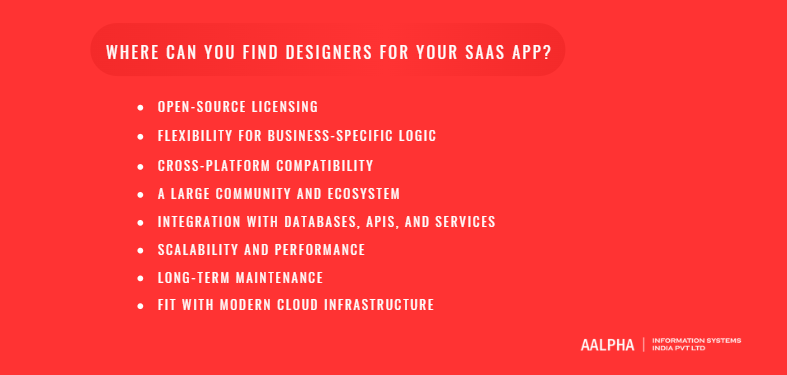
Open-source licensing. PHP is released under the PHP License and costs nothing to use, modify, or deploy. Laravel and Symfony are MIT-licensed. A business pays for development and hosting, not for runtime or framework licenses, and there is no vendor who can raise prices on the core stack.
Flexibility for business-specific logic. PHP does not force a single application shape. The same language builds a three-page internal tool, a REST API for a mobile app, and a multi-tenant SaaS platform. Developers can model unusual pricing, approval, or scheduling rules directly in code instead of working around a product’s settings screen.
Cross-platform compatibility. PHP runs on Linux, Windows, and macOS, behind Nginx, Apache, or Caddy, and on every major cloud. Most shared, VPS, and managed hosting plans support it with no extra setup, which keeps hosting options wide open.
A large community and ecosystem. According to W3Techs, PHP is used by about 70% of websites whose server-side language is known, as of August 2026. Composer, PHP’s package manager, gives access to hundreds of thousands of packages for payments, PDFs, image processing, search, and more. Hiring is easier because the talent pool is broad across the US, Europe, and India.
Integration with databases, APIs, and services. PHP has mature drivers for MySQL, MariaDB, PostgreSQL, SQL Server, SQLite, Redis, and MongoDB. Official SDKs exist for Stripe, AWS, Google Cloud, Twilio, and most other services a business application touches. HTTP clients such as Guzzle make custom REST and SOAP integrations straightforward.
Scalability and performance. The PHP 8 series added a JIT compiler and many engine improvements, and OPcache keeps compiled code in memory. Because PHP’s default model handles each request independently, scaling out means adding servers behind a load balancer. The downside: tasks such as video processing or heavy numerical work are better handed to a queue worker or a service in another language.
Long-term maintenance. Each PHP branch gets two years of active support and two more years of security fixes, as set out on the official supported versions page. That gives businesses a clear upgrade calendar. As of October 2026, PHP 8.4 and 8.5 are in active support, 8.3 receives security fixes until December 2027, and 8.2 reaches end of life on December 31, 2026.
Fit with modern cloud infrastructure. PHP applications containerize cleanly with Docker, run on Kubernetes, and deploy to managed platforms on AWS, Azure, and Google Cloud. Laravel also offers its own managed hosting products. Teams can use the same CI/CD, monitoring, and infrastructure-as-code practices they use for any other stack.
What are the business benefits of custom PHP programming?
The main business benefits of custom PHP programming are software that matches your process, full ownership of the code and data, lower recurring license costs, and easier integration with the systems you already run. The main cost is a larger upfront investment and the responsibility for maintenance that comes with owning software.
Software built around your requirements. A custom application encodes your actual rules: how quotes are priced, who approves a refund, which documents a supplier must upload. Staff stop maintaining side spreadsheets because the system already does what the spreadsheet was compensating for.
Control over features and roadmap. With packaged software, a feature you need may sit on someone else’s roadmap for years. With a custom PHP application, you decide what ships next and when. That matters most for companies whose operations change faster than vendor release cycles.
Less dependence on restrictive subscriptions. Per-seat SaaS pricing scales with headcount, not with value. A 200-person company paying USD 40 per user per month spends USD 96,000 a year on one tool. A custom system has hosting and maintenance costs, but they rarely grow in step with users. This is not an argument to replace every subscription. It is a reason to check the math on the ones that grow fastest.
Workflow automation and efficiency. Custom PHP applications can run scheduled jobs, trigger notifications, generate documents, and move data between systems without manual steps. Laravel’s queue and scheduler features make this routine work. The benefit is measured in hours saved per week and in fewer errors from re-keying data.
Easier integration with existing systems. Because you control both the code and the data model, connecting to an ERP, payment gateway, or warehouse API is a design decision, not a negotiation with a vendor’s limited integration menu.
Ownership of source code. When the contract assigns intellectual property to you, the code is a company asset. You can change vendors, bring development in-house, or sell the business without a licensing dispute. Always confirm this in writing before work starts.
Flexible architecture. A custom build can start as a modular monolith and later split heavy components into services, add a mobile API, or move to a headless front end. You choose the architecture to suit today’s scale and change it when the numbers justify it.
Better customer experiences. Customer portals, self-service account tools, and personalized dashboards can reflect each customer’s contract, history, and preferences. Packaged tools often cannot reach that depth without heavy customization.
Long-term cost and return on investment. A custom PHP system usually costs more in year one than a subscription. The return comes from years two to five: no license growth, fewer manual hours, and features that win or keep customers. The honest caveat is that ROI depends on ongoing maintenance. Budget roughly 15 to 20% of the original build cost per year to keep the application secure and current.
What custom PHP development services can a business buy?
Custom PHP development services fall into nine groups: web applications, dynamic websites, enterprise systems, eCommerce, APIs and integrations, SaaS platforms, CMS work, legacy modernization, and ongoing maintenance. Most real projects combine two or three, such as a Laravel web application with an API layer and a support retainer after launch.
-
Custom PHP web application development
This is the core service: customer portals, partner dashboards, booking tools, and internal platforms that replace spreadsheets and email chains. A typical build includes user roles, forms with validation, workflow states, reports, and notifications. Laravel is the usual framework here because it ships authentication, queues, and an admin-friendly ecosystem.
-
Custom PHP website development
Some websites need more than a page builder. Directories, listing sites, membership sites, and sites with calculators or quote engines are database-driven and benefit from custom PHP logic. The line between website and web application blurs here. If users log in and data changes per user, treat it as an application.
-
PHP-based enterprise application development
Enterprise work covers ERP modules, CRMs, HRMS, procurement, and compliance systems for larger organizations. These projects need fine-grained permissions, audit trails, SSO with Azure AD or Okta, and integration with existing finance and HR systems. Symfony and Laravel both serve this space, with Symfony often preferred where long-term support releases and strict component boundaries matter.
-
Custom PHP eCommerce development
PHP powers WooCommerce, Magento (Adobe Commerce), and many custom stores. Custom eCommerce development fits when a business needs B2B pricing tiers, quote-to-order flows, multi-vendor marketplaces, subscription boxes, or ERP-synced inventory that a hosted platform cannot handle cleanly. The downside is that payments, tax, and PCI scope become your responsibility, so use a hosted payment page or tokenized checkout to keep card data off your servers.
-
PHP API development and integration
PHP is a common choice for REST and JSON APIs that serve mobile apps, single-page front ends, and partner systems. Work in this category includes API design, versioning, authentication with OAuth 2.0 or token-based schemes, rate limiting, and documentation with OpenAPI. Integration work connects the application to payment gateways, CRMs, ERPs, shipping carriers, and AI services.
-
PHP SaaS application development
SaaS products need multi-tenancy, subscription billing, plan limits, usage metering, and tenant-level data isolation. Laravel has strong support here through Cashier for Stripe and Paddle billing, and community packages for tenancy. The key early decision is the tenancy model: a shared database with a tenant column, a schema per tenant, or a database per tenant. Each has different costs for isolation, backups, and migrations.
-
PHP CMS development and customization
WordPress, Drupal, and Craft CMS are all PHP-based. Services here include custom plugins and modules, headless setups that serve content to a separate front end, and fully custom CMS builds when an off-the-shelf CMS adds more complexity than it removes. A custom CMS makes sense for structured content with unusual workflows. For a standard marketing site, an established CMS is usually cheaper.
-
Legacy PHP application modernization
Many businesses still run applications on PHP 5.x or 7.x, which no longer receive security patches. Modernization covers version upgrades, refactoring to a framework, adding automated tests, replacing deprecated extensions, and moving to containers or the cloud. A staged approach works best: add tests around critical flows first, upgrade the runtime next, then refactor module by module. Big-bang rewrites carry the highest risk of failure.
-
PHP maintenance, support, and optimization
After launch, an application needs security patches, dependency updates, PHP version upgrades, bug fixes, and performance tuning. Maintenance is usually sold as a monthly retainer with a defined number of hours and a set response window. Ask what is included, how fast critical issues are handled, and whether unused hours roll over.
What business applications are built with custom PHP?
Custom PHP is used to build CRMs, ERPs, eCommerce platforms, booking systems, learning platforms, healthcare portals, property platforms, logistics tools, reporting dashboards, and membership sites. What they share is heavy database work, many user roles, and business rules that packaged software handles poorly.
Customer relationship management systems. Generic CRMs model a generic sales funnel. Companies with field sales, dealer networks, or long B2B cycles need their own stages, territories, and commission logic. A custom PHP CRM adds these alongside lead capture, activity logging, and email integration. Distributors, insurers, and B2B service firms get the most from it.
Enterprise resource planning software. Mid-sized manufacturers and traders often outgrow spreadsheets but find large ERP suites too rigid or costly. A custom PHP ERP can cover purchasing, inventory, production orders, and invoicing, then sync with accounting software. Build it in modules and launch the one that hurts most first.
B2B and B2C eCommerce platforms. Customer-specific price lists, credit limits, bulk ordering, and marketplace commission splits are where custom PHP stores earn their cost. Wholesalers, multi-vendor marketplaces, and brands with complex catalogs benefit most.
Online booking and reservation systems. Clinics, salons, rental companies, and venues need real-time availability, deposits, cancellation rules, reminders, and staff calendars. A custom system handles rules such as buffer times, resource sharing, and dynamic pricing that booking widgets rarely support well.
Learning management systems. Training providers and companies running internal academies use PHP for course delivery, quizzes, certificates, cohort scheduling, and progress reporting. Moodle itself is written in PHP. Custom builds make sense when the business model, such as licensing courses to other companies, does not fit a standard LMS.
Healthcare and patient management portals. Appointment booking, patient records, prescriptions, lab results, and teleconsultation links sit in PHP portals for clinics and diagnostic chains. These need strict access control, audit logs, encryption, and attention to HIPAA in the US or GDPR in Europe.
Real estate listing and property management platforms. Listing search with maps and filters, agent dashboards, lead routing, tenancy records, rent collection, and maintenance tickets are standard features. Agencies, property managers, and listing portals use them to replace scattered tools.
Logistics and inventory management applications. Warehouses and distributors use PHP applications for stock tracking across locations, barcode scanning, pick lists, shipment booking with carrier APIs, and delivery tracking. Integration with ERP and eCommerce systems keeps stock levels consistent.
Financial reporting and business dashboards. Many companies have the data but no single view of it. A PHP application can pull from accounting, CRM, and sales systems on a schedule and present KPIs by branch, product, or team, with drill-down and export. Finance teams and owners of multi-location businesses use these daily.
Membership portals and subscription platforms. Associations, clubs, publishers, and online communities need recurring billing, tiered access, member directories, event registration, and renewal reminders. PHP with Laravel Cashier or a similar billing integration handles this cleanly.
Which PHP framework is best for custom business applications?
Laravel is the best default for most custom business applications, SaaS products, and APIs because it is fast to build with and has the largest ecosystem. Symfony suits large, long-lived enterprise systems that value long-term support releases. CodeIgniter, Laminas, and Slim fit narrower cases. Core PHP is rarely the right choice for a full business application.
Laravel
Laravel uses an MVC structure and ships with routing, the Eloquent ORM, authentication scaffolding, queues, task scheduling, events, broadcasting, and a testing toolkit. Its ecosystem adds Cashier for billing, Horizon for queue monitoring, Sanctum and Passport for API authentication, and Octane for high-throughput serving. Laravel 13, released in Q1 2026, requires PHP 8.3 or newer and adds a first-party AI SDK. Its main drawback is that its conventions hide a lot of behavior, so teams need discipline to keep large codebases clean.
Symfony
Symfony is a set of decoupled, reusable components plus a full-stack framework built on them. Laravel itself uses several Symfony components. It favors explicit configuration, dependency injection, and strict architecture, which pays off in large teams and complex domains. Symfony 7.4 is the current long-term support release, and the 8.x line requires PHP 8.4 or newer, per the Symfony releases page. The trade-off is a steeper learning curve and slower early development than Laravel.
CodeIgniter
CodeIgniter 4 is small, quick to learn, and has very little configuration. It works for straightforward applications, small internal tools, and teams maintaining older CodeIgniter projects. It has a smaller ecosystem than Laravel and fewer built-in features for queues, multi-tenancy, or advanced authentication, so complex products outgrow it.
Laminas
Laminas, the successor to Zend Framework, is a component-based project focused on enterprise use, with the Mezzio microframework for middleware-based applications. It appears most often in established enterprises that already run Zend code. Its community is smaller now, which makes hiring harder than for Laravel or Symfony.
Slim Framework
Slim is a microframework for HTTP routing and middleware. It suits lean APIs, webhooks, and small focused services where a full framework would be overhead. You add the ORM, validation, and authentication libraries yourself, which gives control but also more decisions to make and maintain.
Core PHP vs. PHP frameworks
Core PHP gives full control and no framework overhead, which can help for tiny utilities. For business applications, a framework is faster to build with, more secure by default (CSRF protection, escaping, prepared queries), and far easier to hand over to new developers. Custom core PHP code with no tests or structure is the most common source of expensive rewrites.
How to select the right PHP framework
For most business web apps, portals, SaaS products, and APIs, choose Laravel, though its conventions need discipline in large codebases. For a large enterprise system with a long support horizon, choose Symfony 7.4 LTS or Laravel and accept a slower start and a steeper learning curve. For a small internal tool or simple CRUD app, CodeIgniter or Laravel both work, with CodeIgniter offering a smaller ecosystem. If you already run a Zend or Laminas estate, stay on Laminas or move gradually to Symfony, knowing the talent pool is smaller. For a lightweight API or webhook service, Slim or Laravel fits, although Slim leaves you to assemble more pieces yourself.
Beyond these defaults, weigh three practical factors: the skills your team or vendor already has, the support window of the framework version you start on, and whether the packages you need (billing, tenancy, search) exist and are maintained for that framework.
How does PHP compare with Python, Node.js, Java, .NET, and Ruby?
PHP is the most cost-efficient option for database-driven web applications, portals, eCommerce, and SaaS, thanks to cheap hosting and a large talent pool. Python leads for data science and AI-heavy products, Node.js for real-time features, and Java or .NET for large regulated enterprises with existing investments in those ecosystems. No backend wins every project.
PHP vs. Python. Both build web applications well. Django and Laravel are close in productivity. Python has the clear edge when the product’s core is machine learning, data pipelines, or scientific computing, because those libraries live in Python. PHP is usually cheaper to host and staff for a conventional web application, and it can call Python services for the AI parts.
PHP vs. Node.js. Node.js uses an event loop that suits chat, live dashboards, multiplayer features, and many open connections. It also lets one team use JavaScript or TypeScript across front end and back end. PHP’s request-per-process model is simpler to reason about and very stable for CRUD-heavy business apps. PHP can handle real-time features through Laravel Reverb, Swoole, or a separate WebSocket service, but Node.js does it more naturally.
PHP vs. Java. Java with Spring is common in banks, insurers, and large enterprises with strict typing, long release cycles, and big in-house teams. It performs well under heavy sustained load. It also costs more to build with and to staff. For mid-sized business systems, PHP reaches production faster at lower cost.
PHP vs. ASP.NET Core. ASP.NET Core is fast, well-tooled, and a natural fit for companies standardized on Microsoft, Azure, and SQL Server. Hosting is now cross-platform. PHP has the broader hosting choice and a larger freelance and agency market, which usually lowers rates. Choose .NET if your IT estate and team are already Microsoft-centric.
PHP vs. Ruby on Rails. Rails is still very productive for startup MVPs and has excellent conventions. Its talent pool is smaller and rates are often higher than for PHP. Laravel took much of its design inspiration from Rails and offers similar speed with a wider hiring market.
On development cost, PHP with Laravel or Symfony sits at the low to medium end. Python and Node.js usually land in the medium range, ASP.NET Core and Ruby on Rails at medium to high, and Java with Spring at the high end. Hosting follows a similar pattern: PHP has the lowest cost and the widest choice, Python and Node.js are low to medium, ASP.NET Core and Rails are medium, and Java is medium to high.
On raw performance for web requests, Java and ASP.NET Core are very good. PHP and Node.js are good, with Node.js strongest for I/O-heavy work, while Python and Rails are moderate. For real-time features and long-lived connections, Node.js, Java, and ASP.NET Core are strong, while PHP, Python, and Rails can handle them with extra tooling.
For AI and data science, Python is the clear leader. Node.js, Java, and .NET are moderate, Ruby is limited, and PHP typically calls external AI services rather than running models itself. Talent is very plentiful for PHP, Python, and Node.js, plentiful for Java and .NET, and scarcer for Rails.
Matched to best fit, PHP suits business web apps, portals, eCommerce, and SaaS. Python suits AI products and data platforms, Node.js suits real-time apps and JavaScript-only teams, Java suits large regulated enterprises, ASP.NET Core suits Microsoft-centric enterprises, and Rails suits fast startup MVPs.
These comparisons are directional, based on typical project experience rather than benchmarks. The right answer depends on what you are building, the team you have, and the systems you must connect to.
When PHP is the right choice. Choose PHP when the product is a web application or API with substantial database work, when budget and hiring speed matter, when you are extending an existing PHP estate, or when you need eCommerce or CMS functionality from the PHP ecosystem.
When another technology is preferable. Pick something else when the core value is machine learning (Python), when most features are real-time and event-driven (Node.js, Go, or Elixir), or when corporate standards mandate Java or .NET. A mixed architecture is also common: a Laravel application handling users, billing, and admin, with a Python service for AI tasks.
What is the custom PHP development process?
The custom PHP development process runs in eight stages: requirements analysis, feasibility and planning, UI/UX design, architecture and database design, development, testing, deployment, and post-launch maintenance. A mid-sized application usually takes 10 to 20 weeks from approved scope to launch, with design and development overlapping in agile sprints.
1. Business requirements analysis
The team maps business goals, user types, current workflows, and pain points through workshops and document reviews. The output is a requirements document or backlog of user stories with acceptance criteria. Skipping this step is the single most common cause of budget overruns, because unclear scope gets discovered during development, when changes cost the most.
2. Technical feasibility and project planning
Architects confirm what is technically possible within budget, choose the framework and hosting approach, identify integration risks, and estimate effort. The plan sets the scope, milestones, team, timeline, and budget. A good plan also lists what is out of scope and the assumptions behind the estimate.
3. UI/UX design and prototyping
Designers turn requirements into user journeys, wireframes, and then high-fidelity screens. A clickable prototype lets stakeholders test the flow before any code exists. This is the cheapest point to catch a confusing workflow or a missing screen.
4. PHP application architecture and database design
The team defines the application structure (modular monolith, services, or API plus separate front end), the data model, indexing strategy, caching plan, queue usage, and integration contracts. Decisions such as multi-tenancy, audit logging, and file storage are made here because they are expensive to change later.
5. Custom PHP programming and feature development
Developers build features in two-week sprints: backend logic, database migrations, APIs, admin tools, and front-end integration with Blade, Livewire, Vue, React, or a separate Next.js app. Code goes through version control, pull request reviews, and coding standards such as PSR-12. The client sees a working build at the end of each sprint and reprioritizes the backlog as needed.
6. Quality assurance and testing
Testing covers unit tests with PHPUnit or Pest, integration tests for APIs and databases, functional and regression tests of user flows, security testing against the OWASP Top 10, and load testing for expected traffic. Automated tests run on every commit through CI. Manual QA focuses on usability and edge cases that scripts miss.
7. Deployment and production release
The application moves to production hosting on a VPS, managed platform, or cloud provider such as AWS, Azure, or Google Cloud. CI/CD pipelines run tests, build assets, apply database migrations, and deploy with minimal downtime. Release management includes a rollback plan, environment configuration, SSL, backups, and monitoring from day one.
8. Post-launch maintenance and continuous improvement
After go-live, the team watches error logs, performance metrics, and user feedback. Regular work includes security patches, dependency and PHP version upgrades, bug fixes, and new features based on real usage data. A stable application still needs this care, because the PHP runtime and every package it uses have their own support calendars.
How much does custom PHP programming cost?
Custom PHP programming typically costs USD 8,000 to 25,000 for a simple portal, USD 20,000 to 70,000 for a CRM or internal system, and USD 40,000 to 150,000 or more for a SaaS platform, using a blended India-based team. The same scope from a US or UK agency usually costs 1.5 to 2.5 times more. Complexity, integrations, and team location drive most of the difference.
All figures in this section are illustrative ranges, not quotes. They assume a Laravel or Symfony build, a team that includes a project manager, designer, developers, and QA, responsive web front ends, and launch on standard cloud hosting. Mobile apps, data migration from old systems, and compliance audits add cost on top.
Factors influencing PHP development costs
Application complexity. The number of user roles, workflow states, and business rules sets the baseline. A portal with two roles and simple forms is a fraction of the work of a platform with ten roles, approvals, and audit trails.
Number of features and integrations. Each third-party integration, such as a payment gateway, ERP, or shipping API, adds design, build, error-handling, and testing effort. Poorly documented APIs add the most risk.
UI/UX requirements. A clean admin-style interface built on a component library costs far less than a custom-designed, animated customer experience across many breakpoints.
Developer expertise and location. Senior architects cost more per hour but often less per project, because they avoid rework. Location drives hourly rates, as shown below.
Security, compliance, and scalability. HIPAA, GDPR, PCI DSS, or SOC 2 needs add documentation, access controls, logging, and testing. Designing for high traffic from day one adds infrastructure and engineering work that a smaller launch may not need.
Estimated custom PHP development costs by project type
A simple business website or customer portal usually takes 4 to 8 weeks and costs USD 8,000 to 25,000 with an India-based team, or USD 20,000 to 60,000 with a US or UK agency. A custom CRM or internal management application takes 8 to 16 weeks, at USD 20,000 to 70,000 from India or USD 50,000 to 160,000 from a US or UK agency.
An eCommerce platform, whether custom or heavily customized, takes 10 to 20 weeks and costs USD 25,000 to 90,000 from India or USD 60,000 to 200,000 in the US or UK. A multi-tenant SaaS application with billing takes 12 to 24 weeks, at USD 40,000 to 150,000 from India or USD 100,000 to 350,000 from a US or UK agency. Enterprise PHP solutions with ERP modules, SSO, and complex integrations run 6 to 12 months, from USD 100,000 to 300,000 or more with an India-based team and USD 250,000 to 750,000 or more with a US or UK agency.
PHP developer hourly rates by region
Region | Typical agency rate (USD per hour) | Notes |
India | 20 to 45 | Largest PHP talent pool; quality varies widely between vendors |
Eastern Europe | 35 to 70 | Strong engineering culture; closer time zones for EU clients |
United Kingdom | 70 to 130 | Local contracts and meetings; higher overheads |
United States | 90 to 180 | Highest rates; easiest for on-site and same-time-zone work |
PHP developer hourly rates reflect agency pricing for mid-level to senior developers in 2026. Freelancers often charge less, with less accountability for delivery and continuity.
PHP development pricing models
Fixed price. You agree a scope and a total price, usually paid by milestone. It works well when requirements are clear and stable. The downside is that every change goes through a change request, and vendors add a risk buffer to the price.
Time and materials. You pay for hours actually worked, often against a monthly estimate. It suits evolving products and agile delivery, but you carry the budget risk, so insist on weekly reporting and a burn-down against the backlog.
Dedicated PHP developers. You hire one or more full-time developers from a vendor at a monthly rate and direct their work yourself. This works when you have product and technical leadership in-house. You can review Aalpha’s model for hiring dedicated PHP developers as one example.
Monthly development retainer. A fixed block of hours each month covers maintenance and small enhancements. It gives predictable spending after launch, though unused hours may not roll over.
Hidden and ongoing costs
Budget for hosting (USD 50 to 2,000+ per month depending on scale), a CDN, backups, email and SMS services, error monitoring, SSL, domain renewals, licensed components such as premium packages or map APIs, and third-party API fees that grow with usage. Maintenance typically runs 15 to 20% of the build cost each year, covering security patches, PHP and framework upgrades, and minor fixes.
How to reduce PHP development costs without compromising quality
Start with an MVP that solves the most painful workflow, then add features based on real usage. Prioritize the backlog ruthlessly using must-have versus nice-to-have. Use proven packages for authentication, billing, and admin panels instead of writing them from scratch. Deliver in phases so each release earns its keep before the next one is funded. Avoid cutting testing or code review to save money, because those cuts come back as more expensive bugs after launch.
How do you keep a custom PHP application secure?
A custom PHP application is secure when it runs a supported PHP version, uses a framework’s built-in protections, validates every input, stores secrets outside the code, and is tested and patched on a schedule. Most PHP breaches come from outdated versions, unpatched plugins, and hand-written database queries, not from the language itself.
SQL injection prevention. Never build SQL by joining strings with user input. Use PDO prepared statements or the framework’s query builder and ORM, which bind parameters safely.
XSS and CSRF protection. Escape all output by default, which Blade and Twig templates do automatically. Add a Content Security Policy header. Laravel and Symfony include CSRF tokens on forms. Keep them on for every state-changing request.
Authentication and role-based authorization. Use the framework’s authentication rather than custom code. Enforce permissions through policies or voters on every action, not only by hiding buttons in the interface. Add multi-factor authentication for admin and finance users.
Password hashing and session management. Store passwords with PHP’s password_hash using bcrypt or Argon2id. Regenerate session IDs on login, set cookies as Secure, HttpOnly, and SameSite, and expire idle sessions.
Secure file uploads and input validation. Validate type, size, and content of uploads, rename files, and store them outside the web root or in private object storage. Validate all request data against explicit rules on the server, even when the front end also validates it.
API security and secrets management. Protect APIs with OAuth 2.0 or scoped tokens, rate limiting, and strict CORS rules. Keep keys and passwords in environment variables or a secrets manager such as AWS Secrets Manager or HashiCorp Vault, never in the repository.
Dependency scanning and supported PHP versions. Run composer audit in CI to flag vulnerable packages. Stay on a PHP release that still receives security fixes. As of October 2026, that means PHP 8.2 (until December 31, 2026), 8.3, 8.4, or 8.5.
HTTPS, encryption, and server configuration. Force HTTPS with HSTS. Encrypt sensitive fields at rest. Disable error display in production, turn off unused PHP extensions, and restrict file permissions on the server.
Security testing, logging, and patching. Run static analysis (PHPStan or Psalm), automated security scans, and a penetration test before major launches. Log authentication events and permission failures to a central system with alerts. Patch on a fixed monthly cycle, plus emergency patches for critical issues.
Compliance for regulated businesses. Healthcare, finance, and businesses handling EU personal data need documented controls: access reviews, audit trails, data retention rules, breach procedures, and data processing agreements with vendors. Build these into the architecture early. Retrofitting compliance is slow and expensive.
How do you build scalable, high-performance PHP applications?
You scale a PHP application by keeping web servers stateless, optimizing database queries, caching aggressively with Redis and OPcache, moving slow work to background queues, and adding servers behind a load balancer as traffic grows. In most slow PHP applications, the bottleneck is the database, not PHP.
Choose an architecture that fits today’s scale. A well-structured modular monolith serves most businesses up to very high traffic and is far simpler to run than microservices. Split out a service only when one component has clearly different scaling or deployment needs, such as search, media processing, or a real-time gateway.
Index the database and optimize queries. Add indexes for columns used in filters, joins, and sorting. Find N+1 query problems with tools like Laravel Debugbar or Telescope and fix them with eager loading. Read the slow query log every week during the first months after launch. Add read replicas when reporting traffic starts competing with transactions.
Cache with Redis at the application level. Cache expensive queries, computed reports, configuration, and session data in Redis. Set clear expiry and invalidation rules so users never see stale prices or stock.
Tune OPcache and runtime settings. Enable OPcache in production with enough memory and file slots for the whole codebase, and turn off timestamp checks when deploys are atomic. Tune PHP-FPM worker counts to the server’s memory. For very high throughput, Laravel Octane on Swoole, RoadRunner, or FrankenPHP keeps the application in memory between requests.
Move slow work to queues. Sending emails, generating PDFs, calling slow APIs, and processing imports should run in background workers through Redis, Amazon SQS, or RabbitMQ. Users get a fast response, and failed jobs can retry safely.
Scale horizontally with load balancing. Keep sessions and uploaded files out of the local server, using Redis for sessions and object storage such as Amazon S3 for files. Then any number of identical web servers can sit behind a load balancer and autoscale with traffic.
Use containers and automated releases. Package the application with Docker, run it on managed container services or Kubernetes, and deploy through CI/CD pipelines. Repeatable builds remove the “works on my server” class of production bugs.
Monitor and load-test. Use application performance monitoring such as New Relic, Datadog, or Sentry to see slow endpoints and errors in real time. Run load tests with k6 or JMeter before major launches and marketing campaigns.
Avoid common bottlenecks. Watch for synchronous calls to external APIs inside web requests, unpaginated lists, large objects held in sessions, missing indexes, logging that writes to disk on every line, and cron jobs that overlap. Each of these causes slowdowns that adding servers alone will not fix.
How do custom PHP applications integrate with existing business systems?
Custom PHP applications integrate with existing systems through REST and SOAP APIs, webhooks, official SDKs, scheduled file exchanges, and message queues. PHP has client libraries for nearly every major business platform, so the real work is mapping data correctly, handling failures, and keeping both sides in sync.
CRM and ERP integrations. Salesforce, HubSpot, Zoho, Microsoft Dynamics, SAP, and Odoo all expose APIs. Typical flows push new customers and orders from the PHP app and pull account status, pricing, or stock back. Decide early which system is the source of truth for each field.
Payment gateways and billing. Stripe, PayPal, Adyen, Braintree, Razorpay, and regional gateways offer PHP SDKs. Use hosted checkout or tokenization so card data never touches your servers, and process webhooks idempotently so a retried event never charges twice.
Accounting and financial software. Integrations with QuickBooks, Xero, Sage, or Zoho Books post invoices, payments, and credit notes automatically. This removes month-end re-keying and reduces reconciliation errors.
Inventory and warehouse management. Sync stock levels, reservations, and fulfillment status with WMS platforms or ERP inventory modules, using webhooks where available and scheduled syncs as a fallback.
Email, SMS, and notifications. Amazon SES, SendGrid, Postmark, and Mailgun handle transactional email. Twilio and regional SMS and WhatsApp providers cover messaging. Laravel’s notification system sends one event to several channels.
Shipping and logistics APIs. Carrier APIs from FedEx, UPS, DHL, and aggregators such as ShipStation or EasyPost provide rates, labels, and tracking updates inside the application.
Cloud storage and document management. Store files in Amazon S3, Azure Blob Storage, or Google Cloud Storage, and connect to Google Drive, SharePoint, or DocuSign for document workflows and e-signatures.
AI services and automation platforms. PHP applications call OpenAI, Anthropic, Google, and other model APIs over HTTP, and Laravel 13 adds a first-party AI SDK. Common uses are document extraction, support reply drafts, classification, and semantic search. Zapier, Make, and n8n can connect the app to hundreds of tools through webhooks.
Data synchronization and integration security. Use queues and retries for every outbound call, log each sync with its result, and alert on repeated failures. Store API credentials in a secrets manager, verify webhook signatures, apply least-privilege API scopes, and encrypt data in transit.
What are the common challenges in custom PHP development?
The most common challenges in custom PHP development are unclear requirements, legacy code on unsupported PHP versions, technical debt, security gaps from poor implementation, slow databases, fragile integrations, thin testing, and vendor lock-in. Nearly all of them are process problems, and each has a known way to prevent it.
Poorly defined requirements. Vague scope leads to rework, disputes, and overruns. Prevent it with a paid discovery phase, written user stories with acceptance criteria, a clickable prototype, and an explicit out-of-scope list.
Legacy code and outdated PHP versions. Applications on PHP 7.x or earlier no longer get security patches and often block upgrades to modern packages. Audit the codebase, add tests around critical flows, and upgrade in stages instead of attempting a full rewrite.
Technical debt and inconsistent coding standards. Shortcuts taken under deadline pressure pile up until every change breaks something else. Enforce PSR-12 with automated formatters, require pull request reviews, run PHPStan or Psalm in CI, and reserve part of each sprint for refactoring.
Security vulnerabilities from poor implementation. Raw SQL, disabled CSRF checks, and weak access control are common in rushed builds. Use framework defaults, run automated scans, and commission a penetration test before launch.
Database performance and scalability. Missing indexes and N+1 queries make a fast app slow as data grows. Review query plans during development and load-test with realistic data volumes before launch.
Complex third-party integrations. External APIs change, rate-limit, and fail. Wrap each integration in its own service class, add retries and logging, and test against sandbox environments early in the project.
Insufficient testing and documentation. Without tests, every release is a gamble. Without documentation, only the original developer can maintain the system. Make test coverage of core flows and a maintained README, architecture notes, and API docs part of the definition of done.
Difficulty maintaining the application after launch. Teams disband and knowledge leaves with them. Agree on a maintenance plan before launch, with defined hours, a support window, and an upgrade schedule tied to PHP and framework release dates.
Vendor dependency and lack of source-code ownership. Some vendors keep code in their own accounts or license it rather than transfer it. Your contract should assign all intellectual property to you on payment, and the code should live in a repository your company owns from the first commit.
How do you choose the right custom PHP development company?
Choose a custom PHP web development company by checking framework expertise, relevant case studies, verified client reviews, a clear delivery process, written code-quality and security practices, IP ownership terms, and a post-launch support plan. Price matters, but a cheap vendor that delivers untestable code costs more over three years than a fair-priced one that delivers clean code.
Technical expertise and framework experience. Ask which PHP and framework versions the team uses today, how they handle upgrades, and who the senior engineers on your project will be. Request a short architecture outline for your project rather than a generic capabilities deck.
Portfolios and case studies. Look for projects similar to yours in complexity, not only in industry. Ask for a live demo or a reference call with a past client whose project resembles yours.
Industry-specific experience. Healthcare, finance, and eCommerce bring rules on privacy, payments, and audit. A vendor that has built under those rules will ask the right questions in discovery.
Methodology and communication. Confirm sprint length, demo frequency, who your daily contact is, which tools you will see (Jira, GitHub, Slack), and how much overlap there is with your working hours.
Pricing and contract terms. Compare what each quote includes: design, QA, project management, deployment, warranty period, and documentation. A lower quote that excludes testing is not cheaper.
Code quality, testing, and security practices. Ask about code review, automated tests, static analysis, and how they handle secrets and dependency updates. Request a code sample or a short paid technical audit before a large commitment.
Intellectual property and source-code ownership. The contract should transfer full IP to you on payment, and the repository should sit in your organization’s account.
Post-launch maintenance commitments. Clarify the warranty period for defects, the maintenance retainer, response times for critical issues, and how PHP version upgrades are planned and priced.
Questions to ask before hiring a PHP development company
- Which PHP version and framework would you use for this project, and why?
- Who exactly will work on our project, and what is their experience?
- How do you estimate, and what happens when scope changes?
- What testing do you do, and what coverage do you target?
- How do you handle security, secrets, and dependency updates?
- Who owns the code, and where will the repository live?
- What does post-launch support include, and how is it priced?
- Can we speak with a client whose project was similar to ours?
Red flags when selecting a development partner
Watch for a fixed price quoted before any discovery, refusal to share a code sample or references, no automated testing, vague answers on IP ownership, a single developer who holds all knowledge, pressure to start immediately, and proposals that copy your requirements back without asking a single clarifying question.
Why choose Aalpha Information Systems for custom PHP programming?
Aalpha Information Systems is a custom software development company founded in 2008 that builds and maintains PHP applications for startups, mid-sized businesses, and enterprises. Clients choose Aalpha for Laravel and PHP expertise, flexible engagement models, India-based pricing, and milestone-based delivery with clear communication. Projects range from focused portals to SaaS platforms and legacy upgrades.
Experience since 2008. Aalpha has delivered more than 5,500 projects for clients in over 55 countries. That volume means most PHP problems a business brings, from a stalled legacy upgrade to a multi-tenant billing model, are ones the team has solved before.
Dedicated PHP developers and cross-functional teams. You can engage individual PHP developers who work as part of your team, or a full squad with a project manager, designer, developers, and QA.
Custom web applications, SaaS, eCommerce, and enterprise software. Aalpha’s PHP work covers customer portals, B2B and marketplace eCommerce, subscription platforms, and enterprise modules. One published example is a food and beverage marketplace built from scratch on PHP and MySQL to connect businesses with distributors.
Laravel and wider PHP capability. The team builds primarily on Laravel and also works with Symfony and CodeIgniter, along with MySQL, PostgreSQL, Redis, and cloud deployment on AWS, Azure, and Google Cloud.
Flexible engagement models. Fixed-price projects suit clear scopes. Time-and-materials and dedicated developers suit evolving products. Monthly retainers cover maintenance after launch.
Cost-effective offshore PHP development. Development is delivered from India, which typically lowers project cost compared with US and UK agencies for the same scope, without moving IP or code ownership away from the client.
Transparent communication and milestone-based delivery. Projects run in sprints with regular demos, shared task boards, and payments tied to agreed milestones. Aalpha’s Clutch profile holds a 4.9 out of 5 rating from more than 215 verified client reviews, which you can read before deciding.
Maintenance, modernization, and technical support. Aalpha upgrades legacy PHP applications to supported versions, refactors them onto modern frameworks, and provides ongoing maintenance within a defined weekday support window.
If you are planning a new PHP application or need to modernize an existing one, share your requirements with Aalpha Information Systems for a scoped estimate and a recommended architecture.
What is the future of custom PHP programming?
The future of custom PHP programming is steady rather than dramatic: yearly language releases, stronger typing and performance, API-first and headless architectures, and closer integration with AI services. PHP’s share of the web is slowly declining from a very high base, but it remains the default for a large share of business web systems.
Language improvements and release cadence. The PHP 8 series added union types, enums, readonly properties, fibers, property hooks, and a JIT compiler. PHP 8.5 arrived in November 2025 and the next release is due in late 2026, each with four years of support. Applications written in modern PHP look very different from the PHP of 2010.
PHP in cloud-native development. Containers, managed platforms, and long-running application servers such as FrankenPHP and RoadRunner make PHP a first-class citizen in cloud environments, with the same deployment and observability practices as other stacks.
API-first and headless architectures. More PHP backends now serve JSON to React, Vue, Next.js, or mobile front ends rather than rendering HTML. This separates the business logic from the interface and lets one backend serve web, mobile, and partner integrations.
AI integrations in business applications. Laravel 13’s AI SDK and community libraries let PHP apps call language models for document processing, search, summarization, and support workflows. Heavy model training stays in Python, but most business AI features are API calls that PHP handles well.
Automated testing and AI-assisted development. Pest, PHPStan, and Rector speed up testing, analysis, and automated upgrades. AI coding assistants help developers write and refactor PHP faster. The benefit depends on human review, because generated code can introduce subtle security and logic errors.
Serverless PHP. Tools such as Bref run PHP on AWS Lambda for spiky or event-driven workloads. Cold starts, execution limits, and harder local debugging mean serverless suits specific functions better than whole business applications.
Continued relevance for long-term systems. A predictable support policy, broad hosting, and a huge talent pool make PHP a low-risk choice for systems that must run for ten years or more. That stability is the main reason businesses keep investing in it.
Frequently asked questions about custom PHP programming
What is custom PHP programming?
Custom PHP programming is building web applications, APIs, and business systems in PHP to match one organization’s specific workflows, data, and integrations, usually with a framework such as Laravel or Symfony and with the client owning the source code.
Is PHP still a good choice for business applications?
Yes. PHP runs about 70% of websites with a known server-side language, receives yearly releases with four years of support each, and has a large talent pool. It is a strong fit for portals, eCommerce, SaaS, and internal systems.
How much does custom PHP development cost?
Illustrative ranges with an India-based team are USD 8,000 to 25,000 for a simple portal, USD 20,000 to 70,000 for a CRM or internal system, and USD 40,000 to 150,000 or more for SaaS. US and UK agencies typically charge 1.5 to 2.5 times more.
How long does it take to develop a custom PHP application?
A simple portal takes 4 to 8 weeks, a CRM or internal system 8 to 16 weeks, a SaaS platform 12 to 24 weeks, and enterprise systems 6 to 12 months. Clear requirements shorten every one of these.
Is PHP suitable for enterprise software development?
Yes, for most enterprise web systems. Symfony and Laravel support SSO, audit trails, fine-grained permissions, and complex integrations. Organizations standardized on Java or .NET may still prefer those stacks for consistency.
Can PHP be used to build SaaS applications?
Yes. Laravel offers subscription billing through Cashier, queues, multi-tenancy packages, and API authentication. Many SaaS products run on PHP. Choose the tenancy model early, as it is hard to change later.
Which PHP framework is best for custom development?
Laravel is the best default for most business applications and SaaS. Symfony suits large, long-lived enterprise systems. CodeIgniter fits small, simple apps, and Slim fits lightweight APIs.
Is custom PHP development secure?
It is secure when built on a supported PHP version, with framework protections, prepared queries, proper authentication, secrets management, dependency scanning, and regular patching. Most PHP breaches come from outdated software and poor implementation.
Can PHP applications handle large numbers of users?
Yes. With stateless servers, load balancing, Redis caching, queues, and an optimized database, PHP applications scale horizontally to millions of requests per day. The database is usually the first bottleneck.
What is the difference between core PHP and Laravel?
Core PHP is the plain language with no framework. Laravel is a framework built on PHP that adds routing, an ORM, authentication, queues, and testing tools, which makes development faster and code easier to maintain.
Can an existing PHP application be modernized?
Yes. Typical steps are a code audit, tests around critical flows, an upgrade to a supported PHP version, then gradual refactoring onto a framework and cloud hosting. Staged modernization is safer than a full rewrite.
Should I hire dedicated PHP developers or a development company?
Hire dedicated developers if you have in-house product and technical leadership to direct them. Hire a development company if you need a full team, including project management, design, and QA, accountable for delivery.
Can PHP integrate with AI services and third-party APIs?
Yes. PHP calls AI model APIs, payment gateways, CRMs, ERPs, and shipping services over HTTP or official SDKs. Laravel 13 includes a first-party AI SDK for text generation, embeddings, and agents.
Who owns the source code of a custom PHP application?
The client should own it. Make sure the contract transfers full intellectual property on payment and that the code lives in a repository under your company’s account.
What maintenance does a PHP application require?
Ongoing maintenance covers security patches, PHP and framework upgrades, dependency updates, bug fixes, backups, monitoring, and performance tuning. Budget roughly 15 to 20% of the original build cost per year.
Is custom PHP programming right for your business?
Custom PHP programming is right for your business if you need a web application, portal, eCommerce platform, or SaaS product that fits your own workflows, and you want to own the code at a sensible cost. It is the wrong choice if a packaged tool already covers your process, or if your core product is machine learning or heavily real-time.
The case for PHP rests on practical points: low hosting and licensing costs, a large hiring pool, mature frameworks with clear support calendars, and a deep library ecosystem for payments, integrations, and AI services. The risks are just as practical. Vague requirements, unsupported PHP versions, missing tests, and unclear IP terms cause most failed projects, and none of them is a language problem.
Before choosing any technology, write down the workflows the software must support, the systems it must connect to, the users it must serve in three years, and the budget you can sustain for maintenance as well as the build. If PHP fits that picture, choose a partner who will show you their architecture, testing, and ownership terms up front.
To discuss a new PHP application or the modernization of an existing one, contact Aalpha Information Systems with your requirements. You will get a scoped estimate, a recommended framework and architecture, and a delivery plan you can compare against other vendors.