


Selecting a fintech development partner is one of the most critical decisions any startup founder, CTO, or financial institution can make. Unlike general software projects, fintech products operate in a high-stakes environment where security, compliance, performance, and trust are non-negotiable. A poorly executed system can lead to regulatory penalties, financial loss, and reputational damage, while a well-built platform can unlock scalable growth, customer loyalty, and long-term competitive advantage.
Decision-makers often ask what truly separates a reliable fintech development partner from a generic software vendor. The answer lies in a combination of domain expertise, regulatory understanding, security-first engineering, and the ability to build systems that can handle real-time financial transactions at scale. This section establishes why the choice of partner is not just a technical decision, but a strategic business move that directly impacts outcomes such as time to market, compliance readiness, and customer trust.
The Rise of Fintech and Digital Financial Products
The global financial ecosystem has undergone a fundamental transformation over the past decade, driven by the rapid adoption of digital technologies. Fintech now spans a wide range of products, including digital banking platforms, payment gateways, lending systems, investment apps, insurance technology, and wealth management tools. Consumers increasingly expect seamless, real-time financial experiences similar to what they encounter in eCommerce or social media platforms.
This shift has accelerated the demand for systems that are not only user-friendly but also highly secure and scalable. For example, digital payment platforms must process thousands of transactions per second while maintaining strict compliance with financial regulations. Similarly, lending platforms must integrate real-time credit scoring, identity verification, and fraud detection mechanisms.
What does this mean for businesses entering the fintech space? It means that building a fintech product is no longer just about writing code. It requires deep expertise in financial workflows, regulatory frameworks, and infrastructure capable of handling sensitive data at scale. Companies that fail to meet these expectations struggle to gain user trust and often face operational bottlenecks early in their growth journey.
The Risks of Choosing the Wrong Development Partner
Choosing the wrong fintech development partner can introduce risks that extend far beyond delayed delivery timelines. One of the most critical concerns is compliance failure. Financial applications must adhere to strict regulations such as KYC (Know Your Customer), AML (Anti-Money Laundering), GDPR, and PCI-DSS. A partner without experience in these areas may overlook key requirements, exposing the business to legal penalties and operational shutdowns.
Security vulnerabilities represent another major risk. Fintech systems are prime targets for cyberattacks due to the sensitive nature of financial data. Weak encryption, poor authentication mechanisms, or insecure APIs can lead to data breaches, fraud, and loss of customer trust. In many cases, recovering from such incidents is significantly more expensive than preventing them.
Cost overruns and delays are also common when working with inexperienced vendors. Poor architectural decisions, lack of planning, and ineffective project management can result in repeated rework, missed deadlines, and escalating budgets. Businesses often underestimate how quickly these inefficiencies compound, especially in complex fintech projects that require multiple integrations and compliance checks.
In practical terms, selecting the wrong partner can mean rebuilding the entire product from scratch within a year, which is a scenario many fintech startups encounter after initial failure.
What This Guide Will Help You Achieve
This guide is designed to provide a clear, structured approach to evaluating and selecting the right fintech development partner. Instead of relying on surface-level factors such as pricing or generic portfolios, it focuses on the criteria that actually determine long-term success.
Readers will learn how to define their product requirements in a way that aligns with both business goals and regulatory constraints. The guide explains how to assess a partner’s domain expertise, technical capabilities, and experience with financial systems. It also covers how to evaluate security practices, compliance knowledge, and the ability to build scalable architectures that can support future growth.
A common question decision-makers face is how to compare multiple vendors offering similar services. This guide addresses that by breaking down each evaluation step, from reviewing case studies and conducting technical assessments to understanding pricing models and post-launch support. By the end, readers will be equipped to identify not just a vendor, but a strategic partner capable of supporting the entire lifecycle of a fintech product.
Ultimately, the goal is to help businesses make informed decisions that reduce risk, accelerate development, and position their fintech solutions for long-term success in an increasingly competitive market.
Understanding Fintech Development: What Makes It Different
Fintech development is fundamentally different from traditional software development because it operates at the intersection of finance, technology, and regulation. Unlike standard applications where performance and usability are primary concerns, fintech platforms must meet strict compliance standards, ensure airtight security, and process sensitive financial data in real time. Even a minor flaw in system design can lead to financial loss, regulatory penalties, or reputational damage.
This is why many decision-makers ask whether any experienced software development company can build a fintech product. The reality is that fintech requires specialized expertise that goes beyond coding skills. It demands a deep understanding of financial systems, risk management, compliance frameworks, and high-availability infrastructure. The following sections break down what makes fintech development unique and why choosing the right partner is critical.
What Is Fintech Development?
Fintech development refers to the process of designing, building, and maintaining software solutions that enable financial services through digital platforms. These solutions cover a wide spectrum of applications, including digital banking apps, payment gateways, lending platforms, trading systems, insurance technology, and wealth management tools.
For example, a digital banking application must allow users to manage accounts, transfer funds, and track transactions securely in real time. A payment system must integrate with multiple financial institutions and handle high transaction volumes with near-zero latency. Trading platforms require advanced data processing capabilities to execute transactions instantly based on market conditions.
What distinguishes fintech development from other domains is the need to integrate financial logic directly into the system architecture. Developers must account for transaction integrity, audit trails, reconciliation processes, and regulatory reporting. This level of complexity means that fintech development is not just about building features, but about creating systems that can reliably handle financial operations at scale.
Core Characteristics of Fintech Applications
One of the defining characteristics of fintech applications is a security-first architecture. Every component of the system, from user authentication to data storage, must be designed with security as the primary consideration. This includes encryption protocols, multi-factor authentication, secure APIs, and continuous monitoring for suspicious activity. Unlike general applications, fintech platforms cannot treat security as an afterthought.
Regulatory compliance is another critical factor that shapes fintech development. Financial systems must adhere to a range of regulations depending on the region and use case. These may include KYC and AML requirements, data protection laws such as GDPR, and payment security standards like PCI-DSS. Compliance is not a one-time task but an ongoing process that influences system design, data handling, and operational workflows.
Real-time data processing is equally essential. Fintech applications often need to process transactions, update balances, and generate insights instantly. For example, when a user makes a payment, the system must validate the transaction, update account balances, and notify all relevant parties within seconds. This requires robust backend architecture capable of handling high throughput and low latency.
Together, these characteristics create a development environment where reliability, accuracy, and speed are critical. Any compromise in these areas can directly impact user trust and business performance.
Key Technologies Used in Fintech
Modern fintech solutions rely on a combination of advanced technologies to meet the demands of scalability, security, and performance. APIs play a central role by enabling seamless integration between different financial systems, such as banks, payment processors, and third-party services. Open banking initiatives, for example, rely heavily on APIs to allow secure data sharing between institutions.
Blockchain technology is increasingly used in fintech for its ability to provide transparent and tamper-resistant transaction records. It is particularly relevant in areas such as cross-border payments, digital identity verification, and decentralized finance. While not every fintech product requires blockchain, it offers significant advantages in use cases where trust and transparency are critical.
Artificial intelligence is another key component, especially in areas like fraud detection, credit scoring, and personalized financial recommendations. AI models can analyze large volumes of transaction data to identify patterns and anomalies that would be difficult to detect manually.
Cloud infrastructure enables fintech platforms to scale efficiently while maintaining high availability. Cloud-based systems allow businesses to handle fluctuating workloads, deploy updates quickly, and ensure redundancy in case of system failures. Combined, these technologies form the backbone of modern fintech solutions and require specialized expertise to implement effectively.
Why Generic Software Vendors Often Fail in Fintech
Many businesses assume that any experienced software vendor can build a fintech product, but this assumption often leads to costly mistakes. Generic software vendors typically lack the domain knowledge required to navigate the complexities of financial systems. Without a clear understanding of compliance requirements, they may design systems that fail regulatory audits or require extensive rework to meet legal standards.
Another common issue is the improper handling of financial data. Fintech applications deal with highly sensitive information, including personal identities, transaction histories, and account details. Vendors without fintech experience may overlook critical security practices, such as data encryption, secure storage, and access control mechanisms. This can result in vulnerabilities that expose the system to breaches and fraud.
In addition, generic vendors often underestimate the importance of financial workflows, such as reconciliation, settlement, and reporting. These processes are essential for maintaining system integrity and ensuring accurate financial records. Failure to implement them correctly can lead to inconsistencies that disrupt operations and erode user trust.
In practice, businesses that choose non-specialized vendors frequently find themselves facing delays, compliance issues, and increased costs. This reinforces the importance of selecting a fintech development partner with proven expertise in the domain.
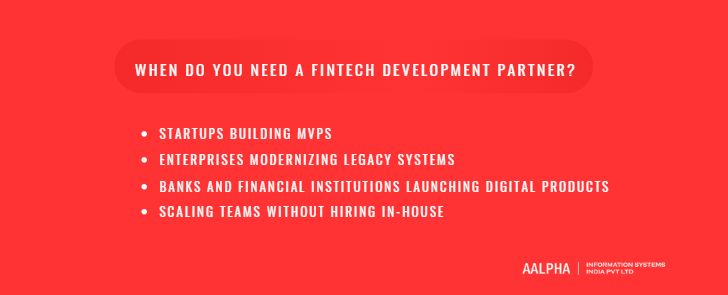
When Do You Need a Fintech Development Partner?
Understanding when to engage a fintech development partner is a strategic decision that directly impacts speed, cost, compliance readiness, and long-term scalability. Many organizations delay this decision, assuming they can build internally or rely on general-purpose vendors. However, fintech projects involve complexities that often require specialized expertise from the outset.
A common question founders and executives ask is whether they should hire in-house developers or work with a fintech partner. The answer depends on factors such as time to market, regulatory requirements, technical complexity, and available internal resources. In most cases, organizations turn to fintech development partners when they need to accelerate development, reduce risk, or access domain-specific knowledge that is difficult to build internally.
The following scenarios highlight the most common situations where partnering with a fintech development company becomes not just beneficial, but essential.
-
Startups Building MVPs
For startups entering the fintech space, building a minimum viable product (MVP) quickly is critical to validating the business model and attracting early users or investors. However, fintech MVPs are inherently more complex than typical software prototypes because they must include secure transaction handling, compliance workflows, and reliable integrations with financial systems.
Many founders initially consider assembling a small in-house team to build the product. While this approach may work for simpler applications, fintech MVPs often require expertise in areas such as payment gateway integration, KYC verification, fraud detection, and regulatory compliance. Without this expertise, startups risk launching a product that fails to meet basic industry standards.
A fintech development partner enables startups to move faster by providing ready access to experienced engineers, proven architectures, and pre-built components. This reduces development time while ensuring that the product is built on a secure and compliant foundation. As a result, startups can focus on refining their value proposition and gaining market traction instead of troubleshooting technical and regulatory issues.
-
Enterprises Modernizing Legacy Systems
Many established financial institutions and enterprises operate on legacy systems that were built years or even decades ago. These systems often lack the flexibility, scalability, and integration capabilities required to support modern digital experiences. As customer expectations evolve, organizations face increasing pressure to modernize their technology stack.
Modernization is not simply about replacing old systems with new ones. It involves re-architecting core infrastructure, migrating data securely, and ensuring compliance with current regulations. This process is complex and carries significant risk, especially when dealing with large volumes of sensitive financial data.
Fintech development partners bring specialized expertise in system modernization, including cloud migration, microservices architecture, and API-driven integration. They can help enterprises transition from monolithic systems to more flexible, scalable platforms without disrupting existing operations. This approach allows organizations to introduce new digital services, improve performance, and remain competitive in a rapidly evolving market.
-
Banks and Financial Institutions Launching Digital Products
Traditional banks and financial institutions are increasingly investing in digital products such as mobile banking apps, digital wallets, lending platforms, and investment tools. These initiatives are often driven by the need to compete with fintech startups and meet the expectations of digitally savvy customers.
Launching a digital financial product requires more than just software development. It involves integrating with core banking systems, ensuring compliance with regulatory frameworks, and delivering a seamless user experience. In many cases, internal IT teams may lack the capacity or specialized skills required to execute these projects efficiently.
A fintech development partner can accelerate product launches by providing end-to-end support, from architecture design to deployment and maintenance. They bring experience in building similar solutions, which reduces the risk of errors and ensures that best practices are followed. This allows financial institutions to bring new products to market faster while maintaining high standards of security and compliance.
-
Scaling Teams Without Hiring In-House
As fintech products grow, the demand for development resources increases. Scaling an in-house team can be time-consuming and expensive, particularly when hiring for specialized roles such as security engineers, compliance experts, or blockchain developers. The recruitment process alone can take months, delaying critical development milestones.
Many organizations reach a point where they need additional expertise but do not want to commit to long-term hiring. This is especially true for projects with fluctuating workloads or specific technical requirements. In such cases, partnering with a fintech development company provides a flexible and efficient solution.
Fintech partners offer access to a diverse pool of talent that can be scaled up or down based on project needs. This flexibility allows businesses to maintain momentum without overextending their internal resources. Additionally, experienced partners bring established workflows, tools, and best practices that improve overall development efficiency.
In practical terms, this approach enables companies to scale faster, reduce operational overhead, and focus on strategic priorities rather than managing recruitment and team expansion.
Types of Fintech Development Partners
Choosing the right fintech development partner is not only about technical expertise but also about selecting the right engagement model. Different types of partners offer varying levels of control, scalability, cost efficiency, and domain specialization. Understanding these distinctions helps decision-makers align their choice with business goals, project complexity, and long-term strategy.
Organizations often ask whether they should work with freelancers, agencies, or dedicated teams, or whether outsourcing to offshore providers is a better option than hiring locally. The answer depends on factors such as project scope, compliance requirements, and the level of collaboration needed. The following sections provide a structured comparison of the most common fintech development partner types.
-
Freelancers vs Agencies vs Dedicated Teams
Freelancers are typically individual developers or small groups offering specialized skills at a lower cost. They can be suitable for small, well-defined tasks such as building a specific feature or integrating a third-party API. However, fintech projects rarely remain simple. They require coordination across multiple domains, including backend architecture, security, compliance, and user experience. Freelancers often lack the capacity to manage such complexity, which can lead to fragmented development and increased risk.
Agencies, on the other hand, provide a structured team that includes developers, designers, project managers, and quality assurance specialists. This setup allows for better coordination and accountability. Agencies are generally more reliable than freelancers for fintech projects, as they follow established processes and can handle end-to-end development. However, not all agencies have deep fintech expertise, so evaluating their domain experience is essential.
Dedicated teams represent a more integrated approach, where a group of developers works exclusively on your project as an extension of your internal team. This model offers the highest level of control, continuity, and collaboration. For fintech projects that require ongoing development, frequent updates, and long-term scalability, dedicated teams are often the most effective option. They combine the flexibility of outsourcing with the consistency of an in-house team, making them well-suited for complex financial applications.
-
Offshore vs Onshore vs Nearshore Partners
Geographic location plays a significant role in determining cost, communication, and operational efficiency. Onshore partners are located in the same country as the client, which simplifies communication, ensures alignment with local regulations, and reduces time zone differences. However, onshore development is typically the most expensive option, especially in regions with high labor costs.
Offshore partners are based in distant countries, often offering significantly lower development costs. Countries such as India, Eastern Europe, and Southeast Asia have become major hubs for fintech development due to their strong technical talent pools. Offshore partnerships can provide substantial cost savings, but they require careful management to address potential challenges such as time zone gaps, cultural differences, and communication delays.
Nearshore partners operate in neighboring or nearby countries, offering a balance between cost efficiency and collaboration. They typically share similar time zones and cultural contexts, which makes communication smoother than offshore arrangements while still being more affordable than onshore options.
For fintech projects, the choice between these models should consider not only cost but also regulatory requirements and the need for real-time collaboration. For example, projects involving region-specific compliance may benefit from onshore or nearshore expertise, while large-scale development efforts can leverage offshore teams to optimize costs.
Read: Offshore vs Onshore vs Nearshore
-
Product Development Companies vs Staff Augmentation
Product development companies take full responsibility for building and delivering a fintech solution. They handle everything from requirement analysis and architecture design to development, testing, and deployment. This model is ideal for organizations that want a turnkey solution without managing the technical details internally. It is particularly useful for startups or non-technical founders who need end-to-end support.
Staff augmentation, in contrast, involves hiring external developers to work alongside your internal team. This model provides flexibility and allows businesses to fill specific skill gaps without outsourcing the entire project. For example, a company might augment its team with blockchain specialists or security engineers for a particular phase of development.
The key difference lies in control and responsibility. Product development companies manage the entire project lifecycle, while staff augmentation requires strong internal leadership to coordinate and guide the augmented team. For fintech projects with complex requirements, the choice depends on whether the organization has the internal expertise to oversee development effectively.
-
Boutique Fintech Specialists vs General IT Firms
Boutique fintech specialists focus exclusively on financial technology solutions. They bring deep domain knowledge, including experience with payment systems, banking integrations, regulatory compliance, and financial data management. This specialization allows them to anticipate challenges and implement best practices specific to fintech projects.
General IT firms, while capable of building a wide range of software solutions, often lack this level of domain expertise. They may excel in areas such as web or mobile development but struggle with the unique requirements of fintech, such as compliance frameworks, transaction processing, and risk management systems.
For businesses building financial products, the choice between these two types of partners can significantly impact outcomes. Boutique fintech specialists are better equipped to handle the complexities of the domain, reduce development risks, and ensure compliance from the start. General IT firms may still be suitable for less complex projects, but for mission-critical fintech applications, specialized expertise is often the safer and more effective choice.
Step-by-Step Guide to Choosing the Right Fintech Development Partner
Selecting a fintech development company or partner is not a one-dimensional decision based on cost or portfolio alone. It requires a structured evaluation process that considers business objectives, regulatory constraints, technical architecture, and long-term scalability. Organizations that follow a systematic approach significantly reduce the risk of project failure and ensure that their fintech product is built on a strong foundation.
This step-by-step framework provides a practical, decision-oriented methodology to identify, evaluate, and select the right fintech partner.
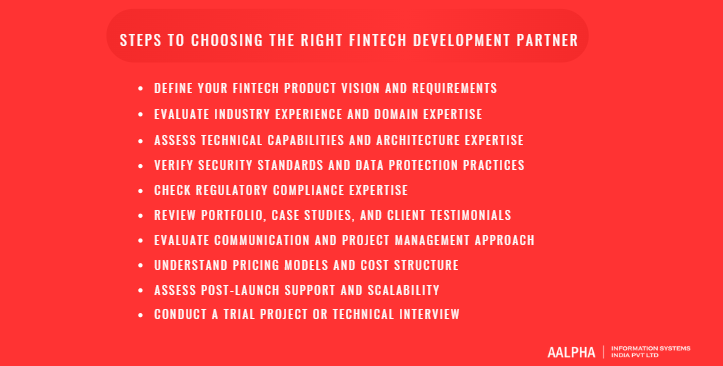
Step 1: Define Your Fintech Product Vision and Requirements
Before approaching any development partner, it is essential to clearly define what you are building and why. Many fintech projects fail at the outset because requirements are vague or constantly changing. A well-defined vision ensures alignment between business goals and technical execution.
Start by identifying your core business objectives. Are you building a digital banking platform, a lending solution, or a payment gateway? Each use case has distinct technical and regulatory implications. Alongside this, define your target users and their needs. For example, a retail banking app will prioritize user experience and transaction speed, while a B2B payment platform may focus on bulk processing and reconciliation.
Next, outline the core features your product must include. These may involve payment processing, KYC verification, loan management, fraud detection, or portfolio tracking. Prioritizing features helps in building an MVP while ensuring that critical functionalities are not overlooked.
Compliance requirements must also be defined at this stage. Depending on your market, this may include KYC, AML, data protection laws, and payment security standards. These requirements influence system architecture, data storage, and user workflows.
A clear product vision not only helps you communicate effectively with potential partners but also enables them to provide accurate estimates, realistic timelines, and appropriate technical solutions.
Step 2: Evaluate Industry Experience and Domain Expertise
Fintech is a domain where experience matters significantly. A development partner with prior fintech experience is more likely to understand the complexities of financial systems and avoid common pitfalls.
Begin by reviewing the partner’s past projects. Have they built solutions similar to yours, such as payment platforms, digital wallets, or lending systems? Experience in relevant use cases indicates familiarity with the technical and regulatory challenges involved.
It is equally important to assess their experience with banking systems and payment gateways. Integration with financial institutions requires knowledge of protocols, APIs, and transaction flows. A partner who has already worked with these systems can streamline development and reduce integration risks.
Understanding financial workflows is another critical factor. Processes such as transaction reconciliation, settlement, reporting, and auditing are integral to fintech applications. A partner without this knowledge may build systems that function technically but fail operationally.
When evaluating expertise, ask specific questions about how they handled compliance, security, and scalability in previous projects. Their ability to provide detailed, practical answers is a strong indicator of genuine domain knowledge.
Step 3: Assess Technical Capabilities and Architecture Expertise
A fintech application must be built on a robust and scalable architecture. Technical capabilities go beyond programming skills and include the ability to design systems that can handle high transaction volumes, ensure low latency, and maintain reliability under load.
Scalability and performance should be key evaluation criteria. Ask how the partner designs systems to handle growth, such as increasing user numbers or transaction volumes. Look for experience with distributed systems, load balancing, and performance optimization.
An API-first architecture is essential in fintech, where integration with third-party services is common. Whether it is payment processors, credit bureaus, or identity verification services, APIs enable seamless communication between systems. A partner should demonstrate expertise in designing secure and efficient APIs.
Cloud and microservices architecture further enhance scalability and flexibility. Cloud platforms allow for dynamic resource allocation, while microservices enable modular development and easier updates. A partner experienced in these approaches can build systems that are resilient and adaptable to future changes.
Ultimately, technical expertise determines whether your fintech product can scale, perform reliably, and integrate effectively with the broader financial ecosystem.
Step 4: Verify Security Standards and Data Protection Practices
Security is the backbone of any fintech application. Financial data is highly sensitive, and even a minor vulnerability can lead to significant financial and reputational damage.
Start by evaluating the partner’s approach to encryption. Data should be encrypted both at rest and in transit using industry-standard protocols. This ensures that sensitive information remains protected from unauthorized access.
Secure authentication mechanisms are equally important. Multi-factor authentication, biometric verification, and role-based access control help prevent unauthorized access and reduce the risk of fraud.
Secure coding practices should also be part of the evaluation. This includes adherence to coding standards that minimize vulnerabilities such as SQL injection, cross-site scripting, and API exploits. Regular code reviews, penetration testing, and vulnerability assessments are indicators of a mature security approach.
Additionally, inquire about incident response and monitoring systems. A reliable partner should have processes in place to detect, respond to, and mitigate security threats in real time.
Choosing a partner with strong security practices is not optional in fintech. It is a fundamental requirement that directly impacts user trust and regulatory compliance.
Step 5: Check Regulatory Compliance Expertise
Regulatory compliance is a defining aspect of fintech development. Different regions and use cases require adherence to specific regulations, and failure to comply can result in severe penalties or operational restrictions.
A competent fintech partner should demonstrate familiarity with key standards such as GDPR for data protection, PCI-DSS for payment security, PSD2 for open banking, and KYC/AML requirements for identity verification and fraud prevention.
However, compliance is not one-size-fits-all. Regulations vary by country and financial product type. For example, a lending platform in the United States will have different compliance requirements compared to a payment app in Europe or India. A strong partner understands these regional nuances and incorporates them into system design.
Ask how the partner has handled compliance in previous projects. Have they implemented KYC workflows, integrated with regulatory reporting systems, or ensured audit readiness? Their ability to provide concrete examples is a strong indicator of their capability.
Compliance expertise ensures that your product can operate legally and scale across markets without encountering regulatory barriers.
Step 6: Review Portfolio, Case Studies, and Client Testimonials
A partner’s portfolio provides tangible evidence of their capabilities. Reviewing past projects helps you assess whether they can deliver solutions similar to your requirements.
Focus on case studies that highlight real-world fintech implementations. Look for details such as project scope, challenges faced, solutions implemented, and measurable outcomes. For example, a case study describing how a partner improved transaction processing speed or reduced fraud rates demonstrates practical expertise.
Client testimonials add another layer of validation. Feedback from previous clients can reveal insights into the partner’s reliability, communication, and ability to meet deadlines.
It is also useful to request references and speak directly with past clients. This allows you to verify claims and gain a deeper understanding of the partner’s working style.
A strong portfolio combined with credible testimonials indicates a track record of delivering successful fintech projects.
Step 7: Evaluate Communication and Project Management Approach
Effective communication is critical for the success of any development project, especially in fintech where requirements can be complex and evolving.
A reliable partner should follow structured project management methodologies, such as Agile, which enable iterative development and continuous feedback. This approach allows for flexibility and ensures that the product evolves based on user needs and market conditions.
Transparency is another key factor. Regular updates, progress reports, and clear documentation help maintain alignment between stakeholders. Tools for collaboration and tracking should be part of the partner’s workflow.
Evaluate how the partner handles communication across time zones and teams. Clear communication channels and defined processes reduce misunderstandings and improve efficiency.
Strong project management practices ensure that the project stays on track, within budget, and aligned with business objectives.
Step 8: Understand Pricing Models and Cost Structure
Pricing is an important consideration, but it should be evaluated in the context of value and risk rather than cost alone. Different partners offer various pricing models, including fixed price, hourly rates, and dedicated team arrangements.
A fixed-price model provides cost certainty but may lack flexibility if requirements change. Hourly pricing offers flexibility but requires careful monitoring to avoid budget overruns. Dedicated team models provide a balance, offering consistent resources with predictable costs over time.
It is essential to identify potential hidden costs, such as additional charges for integrations, maintenance, or compliance updates. A transparent partner will provide a detailed breakdown of costs and clearly define what is included.
Understanding the cost structure helps you make informed decisions and avoid unexpected expenses during the development process.
Step 9: Assess Post-Launch Support and Scalability
Fintech development does not end with product launch. Continuous maintenance, updates, and scaling are essential to ensure long-term success.
A reliable partner should offer post-launch support, including bug fixes, performance optimization, and feature enhancements. This ensures that the product remains stable and responsive as user demand grows.
Scalability is another critical consideration. As your user base expands, the system must handle increased traffic and transaction volumes without compromising performance. A partner experienced in scalable architecture can help you plan for future growth.
Long-term partnership potential is also important. Fintech products often evolve over time, requiring ongoing collaboration with the development team. Choosing a partner who can support this journey ensures continuity and reduces the need for frequent transitions.
Step 10: Conduct a Trial Project or Technical Interview
Before committing to a long-term partnership, it is advisable to conduct a trial project or technical evaluation. This step helps validate the partner’s capabilities in a real-world scenario.
A small pilot project allows you to assess their technical skills, communication style, and ability to meet deadlines. It also provides insight into how they approach problem-solving and handle feedback.
Alternatively, a technical interview process can help evaluate the expertise of key team members. This may involve reviewing code samples, discussing architectural decisions, or presenting hypothetical scenarios.
This final step reduces risk by ensuring that the partner meets your expectations before entering into a full-scale engagement. It provides confidence that the chosen partner is capable of delivering a successful fintech solution.
Key Features Your Fintech Development Partner Should Deliver
When selecting a fintech development partner, it is essential to evaluate not just their capabilities but also the tangible outcomes they can deliver. A competent partner should go beyond writing code and provide a complete, production-ready system that meets industry standards for security, compliance, scalability, and performance.
Many decision-makers ask what features truly define a high-quality fintech solution. The answer lies in a combination of core functionalities that ensure the system operates reliably under real-world financial conditions. These features form the backbone of any successful fintech product and directly influence user trust, regulatory approval, and long-term scalability.
-
Secure Payment Processing
Secure payment processing is one of the most fundamental features any fintech partner must deliver. Whether the product involves digital wallets, peer-to-peer transfers, or merchant payments, the system must handle transactions with absolute reliability and security.
A well-designed payment system ensures that transactions are processed accurately and instantly, with minimal latency. It should support multiple payment methods, including cards, bank transfers, and digital payment networks, while maintaining consistent performance under high transaction volumes.
Security is a critical component of payment processing. The system must implement end-to-end encryption to protect transaction data during transmission and storage. Tokenization is often used to replace sensitive card information with secure tokens, reducing the risk of data exposure.
In addition, the system should include transaction validation mechanisms to detect anomalies and prevent unauthorized activities. This ensures that every transaction is authenticated, verified, and recorded accurately.
A fintech development partner that delivers secure payment processing enables businesses to build trust with users while ensuring compliance with global payment standards.
-
KYC and Identity Verification Integration
Know Your Customer (KYC) and identity verification are essential for onboarding users in any fintech application. These processes ensure that users are who they claim to be and help prevent fraud, money laundering, and other illegal activities.
A reliable fintech partner should integrate automated KYC solutions that streamline the onboarding process while maintaining compliance. This includes document verification, biometric authentication, and database checks against regulatory watchlists.
The goal is to create a seamless user experience where verification is completed quickly without compromising accuracy or security. Efficient KYC integration reduces onboarding friction, improves conversion rates, and ensures that the platform meets regulatory requirements from the outset.
-
Fraud Detection and Risk Management
Fraud detection is a critical capability in fintech systems, as financial platforms are frequent targets for malicious activities. A strong development partner should implement advanced risk management systems that monitor transactions in real time and identify suspicious behavior.
These systems often use machine learning algorithms to analyze transaction patterns and detect anomalies. For example, unusual spending behavior, rapid transaction sequences, or geographic inconsistencies can trigger alerts for further investigation.
Risk management frameworks should also include rule-based controls, transaction limits, and automated responses such as temporary account suspension. By combining predictive analytics with predefined rules, fintech platforms can minimize fraud while maintaining a smooth user experience.
Effective fraud detection not only protects users but also safeguards the business from financial losses and regulatory issues.
-
Real-Time Analytics and Reporting
Fintech platforms rely heavily on real-time data to support decision-making, monitoring, and compliance reporting. A capable development partner should deliver robust analytics systems that provide actionable insights into transactions, user behavior, and system performance.
Real-time dashboards allow businesses to track key metrics such as transaction volumes, revenue, and user activity. These insights help identify trends, detect anomalies, and optimize operations.
Reporting capabilities are equally important for regulatory compliance. Financial institutions are often required to generate detailed reports for audits, tax filings, and regulatory submissions. Automated reporting systems ensure accuracy and reduce the administrative burden on internal teams.
By enabling real-time visibility into operations, analytics systems empower businesses to make informed decisions and respond quickly to changing conditions.
-
Seamless API Integrations
APIs are the backbone of modern fintech ecosystems, enabling integration with banks, payment processors, credit bureaus, and third-party services. A fintech development partner should design systems with an API-first approach to ensure flexibility and interoperability.
Seamless API integration allows fintech platforms to connect with external systems efficiently, enabling features such as payment processing, identity verification, and data sharing. It also supports open banking initiatives, where secure data exchange between institutions is essential.
Well-designed APIs should be secure, scalable, and easy to maintain. This includes implementing authentication mechanisms, rate limiting, and version control to ensure reliability and performance.
A partner skilled in API development ensures that the fintech platform can evolve and integrate with new services as business needs grow.
-
Scalable Cloud Infrastructure
Scalability is a critical requirement for fintech applications, as user growth and transaction volumes can increase rapidly. A robust cloud infrastructure enables the platform to handle this growth without compromising performance or reliability.
A fintech development partner should design systems that leverage cloud platforms for flexibility and scalability. This includes using distributed architectures, auto-scaling mechanisms, and load balancing to manage varying workloads.
Cloud infrastructure also enhances reliability through redundancy and failover mechanisms. In the event of a system failure, backup systems ensure continuity of operations, minimizing downtime and data loss.
In addition, cloud-based environments support faster deployment and updates, allowing businesses to introduce new features and improvements بسرعة and efficiently.
By delivering scalable infrastructure, a fintech partner ensures that the platform can grow with the business and adapt to future demands without requiring major architectural changes.
Common Mistakes to Avoid When Choosing a Fintech Partner
Selecting a fintech development partner is a high-impact decision that directly affects product quality, regulatory readiness, and long-term scalability. Despite the availability of experienced vendors, many organizations make avoidable mistakes during the selection process. These mistakes often stem from prioritizing short-term gains over long-term stability, or from underestimating the complexity of fintech development.
A common concern among founders and executives is why some fintech projects fail even after partnering with seemingly capable vendors. In most cases, failure is not due to a lack of technical skill alone, but rather due to poor decision-making during the evaluation phase. The following are the most critical mistakes to avoid when choosing a fintech development partner.
-
Choosing Based Only on Cost
One of the most frequent mistakes is selecting a development partner solely based on cost. While budget considerations are important, choosing the lowest-cost option often leads to compromised quality, delays, and higher long-term expenses.
Fintech applications require specialized expertise in security, compliance, and financial workflows. Vendors offering significantly lower prices may lack this expertise or may cut corners to meet budget constraints. This can result in poorly designed systems that require extensive rework or fail to meet regulatory standards.
For example, a low-cost vendor might deliver a functional application but fail to implement proper encryption or compliance mechanisms. Fixing these issues later can be far more expensive than building them correctly from the start.
A more effective approach is to evaluate cost in relation to value. This includes assessing the partner’s expertise, track record, and ability to deliver a secure and scalable solution. Investing in the right partner upfront reduces the risk of costly mistakes and ensures better outcomes in the long run.
-
Ignoring Compliance and Security Expertise
Fintech operates in a highly regulated environment, and ignoring compliance and security considerations can have severe consequences. Some organizations focus heavily on features and user experience while overlooking the importance of regulatory requirements and data protection.
A development partner without strong compliance expertise may fail to implement essential processes such as KYC, AML checks, and secure data handling. This can lead to regulatory violations, fines, or even suspension of operations.
Security is equally critical. Financial applications handle sensitive data, making them prime targets for cyberattacks. Weak security practices, such as inadequate encryption or poor authentication mechanisms, can expose the system to breaches and fraud.
Businesses should prioritize partners who demonstrate a clear understanding of compliance frameworks and security standards. This includes experience with regulations like GDPR and PCI-DSS, as well as the ability to implement secure architectures.
Ignoring these factors not only increases risk but also undermines user trust, which is essential for any fintech product.
-
Overlooking Communication Gaps
Effective communication is a key factor in the success of any development project, yet it is often underestimated. Misalignment between stakeholders and development teams can lead to misunderstandings, delays, and suboptimal outcomes.
Communication gaps are particularly problematic in fintech projects, where requirements can be complex and subject to change. Without clear and consistent communication, critical details may be overlooked, resulting in errors that are difficult and expensive to correct later.
Organizations should evaluate how potential partners handle communication, including their use of collaboration tools, reporting practices, and responsiveness. Regular updates and transparent workflows are essential for maintaining alignment throughout the project lifecycle.
Addressing communication early ensures smoother collaboration and reduces the likelihood of project disruptions.
-
Not Checking References or Case Studies
Relying solely on a partner’s marketing materials or sales presentations is another common mistake. Without verifying their track record, businesses risk partnering with vendors who lack proven experience in fintech development.
Case studies provide valuable insights into how a partner has handled real-world projects, including the challenges faced and solutions implemented. They demonstrate the partner’s ability to deliver results in similar contexts.
Client references offer an additional layer of validation. Speaking directly with previous clients can reveal important details about the partner’s reliability, communication, and overall performance.
Skipping this step increases the risk of selecting a partner who cannot meet expectations, leading to delays, rework, and potential project failure.
-
Failing to Define Clear Requirements
A lack of clear requirements is one of the most significant contributors to project failure. When business objectives and technical specifications are not well-defined, development teams are forced to make assumptions, which can lead to misaligned outcomes.
In fintech projects, unclear requirements can result in missing features, compliance gaps, or inefficient system design. For example, failing to define regulatory requirements early can necessitate major changes later in the development process.
Organizations should invest time in documenting their goals, user needs, and core functionalities before engaging with a development partner. This clarity enables more accurate planning, better communication, and smoother execution.
Defining requirements upfront ensures that both parties have a shared understanding of the project, reducing the risk of costly revisions and delays.
Cost of Hiring a Fintech Development Partner
Understanding the cost of hiring a fintech development partner is essential for planning budgets, setting expectations, and making informed decisions. Unlike generic software projects, fintech development involves additional layers of complexity, including regulatory compliance, security infrastructure, and integration with financial systems. These factors significantly influence overall fintech development pricing.
A common question decision-makers ask is how much it actually costs to build a fintech product. The answer varies widely depending on geographic location, project complexity, and the specific capabilities required. This section breaks down the key cost components to provide a clear and practical understanding of what to expect.
-
Average Cost by Region
The cost of hiring a fintech development partner varies significantly by region due to differences in labor rates, expertise availability, and market demand.
In North America and Western Europe, development costs are typically the highest. Hourly rates for fintech developers can range from $100 to $250 or more, reflecting the high cost of living and strong demand for specialized talent. While these regions offer proximity and regulatory alignment, the overall project cost can quickly escalate, making them less suitable for startups with limited budgets.
Eastern Europe offers a more balanced option, with hourly rates generally ranging from $40 to $120. Countries in this region are known for strong engineering talent and experience in fintech projects, making them a popular choice for companies seeking quality at a moderate cost.
Asia, particularly India and Southeast Asia, provides some of the most cost-effective options. Hourly rates typically range from $20 to $60, depending on the level of expertise and the complexity of the project. Many companies in these regions specialize in fintech development and offer scalable teams, making them attractive for both startups and enterprises.
However, cost should not be evaluated in isolation. Factors such as communication, time zone alignment, and domain expertise play a crucial role in determining the overall value of the partnership.
-
Cost Based on Project Complexity
The complexity of the fintech product is one of the most significant factors influencing development cost. Simple applications with limited features require fewer resources and shorter development timelines, while complex systems demand extensive planning, development, and testing.
A basic fintech MVP, such as a simple payment app or budgeting tool, may cost between $30,000 and $80,000. These projects typically include core features, basic security measures, and limited integrations. They are designed to validate the business idea rather than provide a fully scaled solution.
Mid-level fintech applications, such as lending platforms or digital wallets with multiple integrations, can range from $80,000 to $200,000. These systems require more advanced features, including KYC integration, transaction management, and enhanced security protocols.
Highly complex fintech platforms, such as digital banking systems, trading platforms, or large-scale financial ecosystems, can exceed $200,000 and may reach $500,000 or more. These projects involve sophisticated architectures, real-time data processing, and strict compliance requirements.
The key takeaway is that cost increases with complexity, and attempting to reduce costs by simplifying critical components can lead to long-term issues in performance, security, and compliance.
-
Factors That Influence Pricing
Several factors influence the overall cost of hiring a fintech development partner, and understanding these variables helps in making more accurate budget estimates.
One of the primary factors is the scope of features. The number and complexity of features directly affect development time and resource requirements. Features such as fraud detection, real-time analytics, and multi-currency support add to the overall cost.
Compliance requirements also play a significant role. Implementing KYC, AML, and data protection measures requires additional development effort and often involves integrating third-party services. These requirements can increase both development time and cost.
Integration complexity is another important factor. Fintech applications often need to connect with multiple external systems, such as banks, payment gateways, and credit bureaus. Each integration adds to the complexity and requires careful testing to ensure reliability.
Team composition and expertise further impact pricing. Projects requiring specialized roles, such as security experts or blockchain developers, will have higher costs compared to those with standard development needs.
Finally, ongoing maintenance and support should be considered as part of the total cost. Fintech systems require regular updates, security patches, and performance optimization to remain effective and compliant.
By understanding these factors, businesses can better evaluate proposals, avoid unexpected expenses, and choose a partner that offers the best balance between cost and value.
How Long Does It Take to Build a Fintech Product?
The timeline for building a fintech product depends on multiple variables, including product complexity, regulatory requirements, integration needs, and team expertise. Unlike standard applications, fintech systems require additional layers of security, compliance, and real-time processing, which extend development timelines.
A common question founders and CTOs ask is how quickly they can launch a fintech product without compromising quality. The answer lies in understanding the difference between building a minimum viable product (MVP) and developing a full-scale, production-ready platform. Each stage serves a different purpose and requires a different level of effort and time investment.
-
MVP Timeline
A fintech MVP typically takes 3 to 6 months to build, depending on the scope and complexity of features. The goal of an MVP is to validate the core business idea with a functional product while minimizing time and cost.
During this phase, development focuses on essential features such as user onboarding, basic transaction processing, and limited integrations. For example, a simple payment app MVP might include wallet functionality, fund transfers, and basic KYC verification. Advanced features such as fraud detection, analytics, and multi-currency support are usually deferred to later stages.
However, even at the MVP stage, fintech applications cannot ignore security and compliance. Basic encryption, secure authentication, and regulatory checks must still be implemented. This is one reason why fintech MVPs take longer than MVPs in other industries.
An experienced fintech development partner can accelerate this process by using pre-built modules, standardized architectures, and proven workflows. This allows businesses to launch faster while ensuring that the product is stable and compliant enough for early users and investors.
-
Full-Scale Product Timeline
Building a full-scale fintech product typically takes 6 to 12 months or more, depending on the level of sophistication required. These platforms are designed for large user bases, high transaction volumes, and strict regulatory compliance.
At this stage, the system includes advanced features such as real-time analytics, fraud detection, automated compliance workflows, and integration with multiple financial institutions. The architecture must support scalability, high availability, and seamless performance under load.
For example, a digital banking platform or trading system requires extensive backend development, secure API integrations, and rigorous testing. Regulatory approvals and audits may also be part of the process, further extending the timeline.
Testing and quality assurance play a significant role in full-scale development. Fintech systems must undergo extensive validation to ensure accuracy, reliability, and security. This includes performance testing, penetration testing, and compliance checks.
While the timeline may seem long, it reflects the level of precision required to build a robust fintech solution. Cutting corners at this stage can lead to significant issues after launch.
-
Factors That Affect Development Time
Several factors influence how long it takes to build a fintech product. One of the most important is project complexity, including the number of features, integrations, and compliance requirements. More complex systems naturally require longer development cycles.
Regulatory requirements also impact timelines. Implementing KYC, AML, and data protection measures involves additional development and testing efforts, especially when operating across multiple regions.
Integration with external systems, such as banks, payment gateways, and credit bureaus, can introduce delays due to dependency on third-party APIs and approval processes.
Finally, team expertise and project management efficiency play a crucial role. Experienced fintech partners with established processes can significantly reduce development time, while inexperienced teams may face delays due to rework and poor planning.
Understanding these factors helps businesses set realistic expectations and plan their product roadmap effectively.
Future Trends in Fintech Development
The fintech industry continues to evolve rapidly, driven by advancements in technology, changing consumer expectations, and regulatory shifts. Businesses building fintech products today must not only focus on current requirements but also anticipate future trends that will shape the industry over the next decade.
A common question decision-makers face is how to future-proof their fintech platform in an environment where innovation cycles are shortening. The answer lies in understanding the technologies and models that are redefining financial services. The following trends highlight where fintech development is heading and how organizations can position themselves to stay competitive.
-
AI and Automation in Finance
Artificial intelligence is becoming a central component of modern fintech solutions, and AI in fintech is driving innovation through automation, predictive analytics, and personalized user experiences. Financial institutions are increasingly using AI to streamline operations, reduce costs, and improve decision-making accuracy.
One of the most impactful applications of AI is in fraud detection. Machine learning models can analyze vast amounts of transaction data in real time to identify unusual patterns and flag potential fraud. This proactive approach significantly reduces financial losses and enhances system security.
AI is also transforming customer interactions through intelligent chatbots and virtual assistants. These systems can handle account inquiries, transaction support, and even financial advice, reducing the need for human intervention while improving response times.
In lending and credit scoring, AI enables more accurate risk assessment by analyzing alternative data sources such as spending behavior and transaction history. This allows financial institutions to extend services to underserved populations while maintaining risk control.
Automation, combined with AI, is further streamlining backend processes such as compliance checks, reporting, and reconciliation. As these technologies continue to mature, fintech platforms that leverage AI will gain a significant competitive advantage in efficiency, accuracy, and user experience.
-
Open Banking and API Ecosystems
Open banking is reshaping the financial landscape by enabling secure data sharing between financial institutions and third-party providers through APIs. This approach allows users to access a wide range of financial services from a single platform, creating a more connected and flexible ecosystem.
For fintech developers, this trend emphasizes the importance of building API-first architectures that support seamless integration. Open banking frameworks encourage innovation by allowing new entrants to build services on top of existing financial infrastructure.
As adoption grows, businesses that embrace open banking will be better positioned to offer integrated solutions, improve customer experiences, and expand their service offerings without building everything from scratch.
-
Blockchain and Decentralized Finance
Blockchain technology is driving the rise of decentralized finance, commonly referred to as DeFi. Unlike traditional financial systems, DeFi platforms operate without centralized intermediaries, enabling peer-to-peer transactions, smart contracts, and transparent record-keeping.
This technology is particularly valuable for cross-border payments, where it can reduce transaction costs and processing times. Blockchain also enhances transparency and security by providing immutable transaction records that cannot be altered.
While DeFi is still evolving and faces regulatory challenges, its potential to disrupt traditional financial models is significant. Fintech companies exploring blockchain-based solutions can unlock new opportunities in areas such as digital assets, tokenization, and decentralized lending.
-
Embedded Finance and Super Apps
Embedded finance is transforming how financial services are delivered by integrating them directly into non-financial platforms. For example, eCommerce platforms can offer payment processing, lending, or insurance services within their existing user experience.
This trend is closely linked to the rise of super apps, which combine multiple services such as payments, shopping, and transportation into a single platform. Users benefit from convenience, while businesses gain new revenue streams and deeper customer engagement.
For fintech developers, this shift requires building modular, scalable systems that can be easily integrated into different platforms. It also highlights the importance of user-centric design, as financial services become part of broader digital ecosystems.
Organizations that adopt embedded finance strategies can expand their reach, create new business models, and deliver more value to their users without requiring them to switch between multiple applications.
FAQs: Choosing a Fintech Development Partner
What is a fintech development partner?
A fintech development partner is a specialized software company or team that designs, builds, and maintains financial technology solutions such as payment systems, banking apps, lending platforms, and investment tools. Unlike general developers, they understand financial regulations, security requirements, and transaction workflows.
How do I choose the best fintech development company?
Evaluate domain expertise, past fintech projects, security practices, and compliance knowledge. Look for partners with proven experience in payment systems, banking integrations, and scalable architectures. Communication, transparency, and post-launch support are equally important.
What skills should a fintech developer have?
A fintech developer should have expertise in secure coding, API development, cloud infrastructure, and real-time data processing. They should also understand financial workflows, compliance requirements like KYC and AML, and data protection standards.
How much does fintech app development cost?
Costs typically range from $30,000 for a basic MVP to $200,000 or more for complex platforms. Pricing depends on features, integrations, compliance requirements, and the location of the development team.
How long does it take to build a fintech app?
A fintech MVP usually takes 3 to 6 months, while a full-scale product can take 6 to 12 months or longer. Timelines depend on complexity, integrations, and regulatory requirements.
Is outsourcing fintech development safe?
Yes, if you choose a partner with strong security practices, compliance expertise, and a proven track record. Ensure they follow encryption standards, secure authentication methods, and data protection regulations.
What compliance standards should fintech apps follow?
Common standards include GDPR for data protection, PCI-DSS for payment security, PSD2 for open banking, and KYC/AML regulations for identity verification and fraud prevention. Requirements vary by region and product type.
Can a fintech partner help with regulatory approvals?
Experienced fintech partners can guide you through compliance requirements, implement necessary workflows, and prepare systems for audits. While they may not directly obtain approvals, they ensure your product meets regulatory standards.
What is the difference between a fintech partner and a regular software company?
A fintech partner has specialized knowledge of financial systems, compliance, and security, while a regular software company may lack this expertise. This difference is critical for building reliable and regulation-ready financial products.
Can I scale my fintech product with the same development partner?
Yes, a strong fintech partner supports long-term growth by providing scalable architecture, ongoing maintenance, and feature expansion. This continuity reduces the need to switch teams as your product evolves.
Final Thoughts
Choosing the right fintech development partner is a strategic decision that directly impacts security, compliance, scalability, and time to market. The right partner brings more than technical execution. They provide domain expertise, reduce risk, and help build a product that can grow in a highly regulated and competitive environment.
Instead of focusing only on cost or speed, prioritize experience in fintech, strong security practices, and a clear understanding of financial workflows. A well-chosen partner can accelerate your product journey, while the wrong one can lead to delays, compliance issues, and costly rework.
If you are planning to build or scale a fintech product, working with an experienced fintech development company can significantly improve your chances of success. Consider consulting a trusted partner like Aalpha to evaluate your requirements, define the right approach, and build a secure, scalable fintech solution tailored to your business goals. Contact now!